
Intelligent therapy recommendation algorithim and method of using the same
a recommendation algorithm and intelligent technology, applied in the field of diabetes management, can solve the problems of limited pump capacity, limited ability of infusion pump to replicate all of the functions of the pancreas,
- Summary
- Abstract
- Description
- Claims
- Application Information
AI Technical Summary
Benefits of technology
Problems solved by technology
Method used
Image

Examples
Embodiment Construction
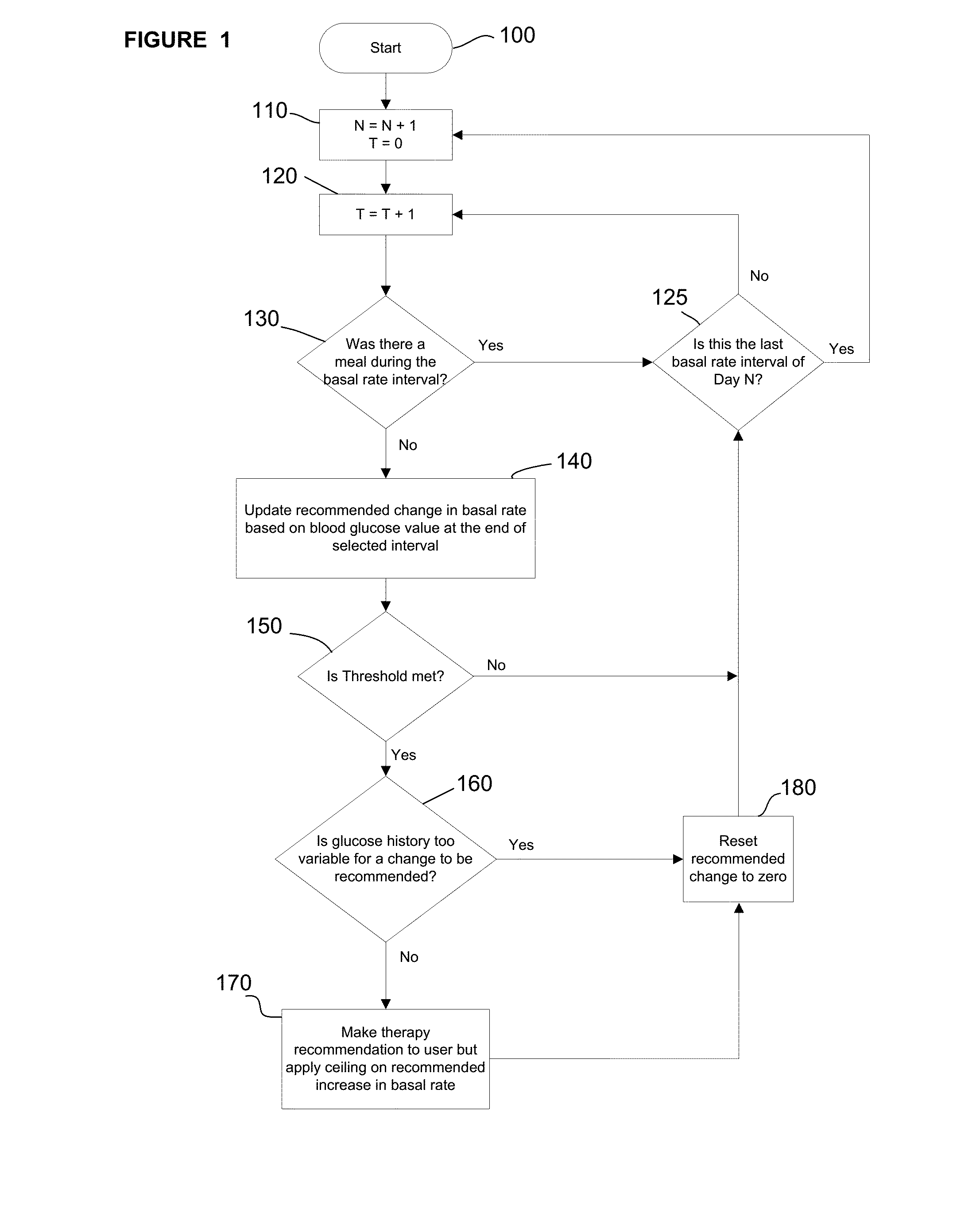
[0011]An insulin pump is designed to mimic the insulin delivery of a normal pancreas. To do so, an insulin pump delivers steady amounts of insulin throughout a day known as a basal rate. The basal rate on an insulin pump delivers the amount of insulin needed in the fasting state to maintain target glucose levels. The basal rate insulin is intended to account for the baseline insulin needs of the body, and makes up approximately fifty percent of the body's total daily insulin requirements. Thus, similar to the pancreas, the insulin pump delivers basal rate insulin continuously over the twenty-four hours in the day. The insulin pump can be set to provide one or more different rates during different time intervals of the day. These different basal rates at various time intervals during the day usually depend on a patient's lifestyle and insulin requirements. For example, many insulin pump users require a lower basal rate overnight while sleeping and a higher basal rate during the day, ...
PUM
 Login to View More
 Abstract
Description
Claims
Application Information
 Login to View More