
System and method for processing a beacon based purchase transaction
a technology of purchase transaction and beacon, applied in the field of electronic payment transactions, can solve the problems of not being the reader is only able, and the merchant is not typically able to provide information directly to the customer phone, so as to reduce the risk of damage to the customer device, and reduce the risk of a customer acquiring illness.
- Summary
- Abstract
- Description
- Claims
- Application Information
AI Technical Summary
Benefits of technology
Problems solved by technology
Method used
Image

Examples
Embodiment Construction
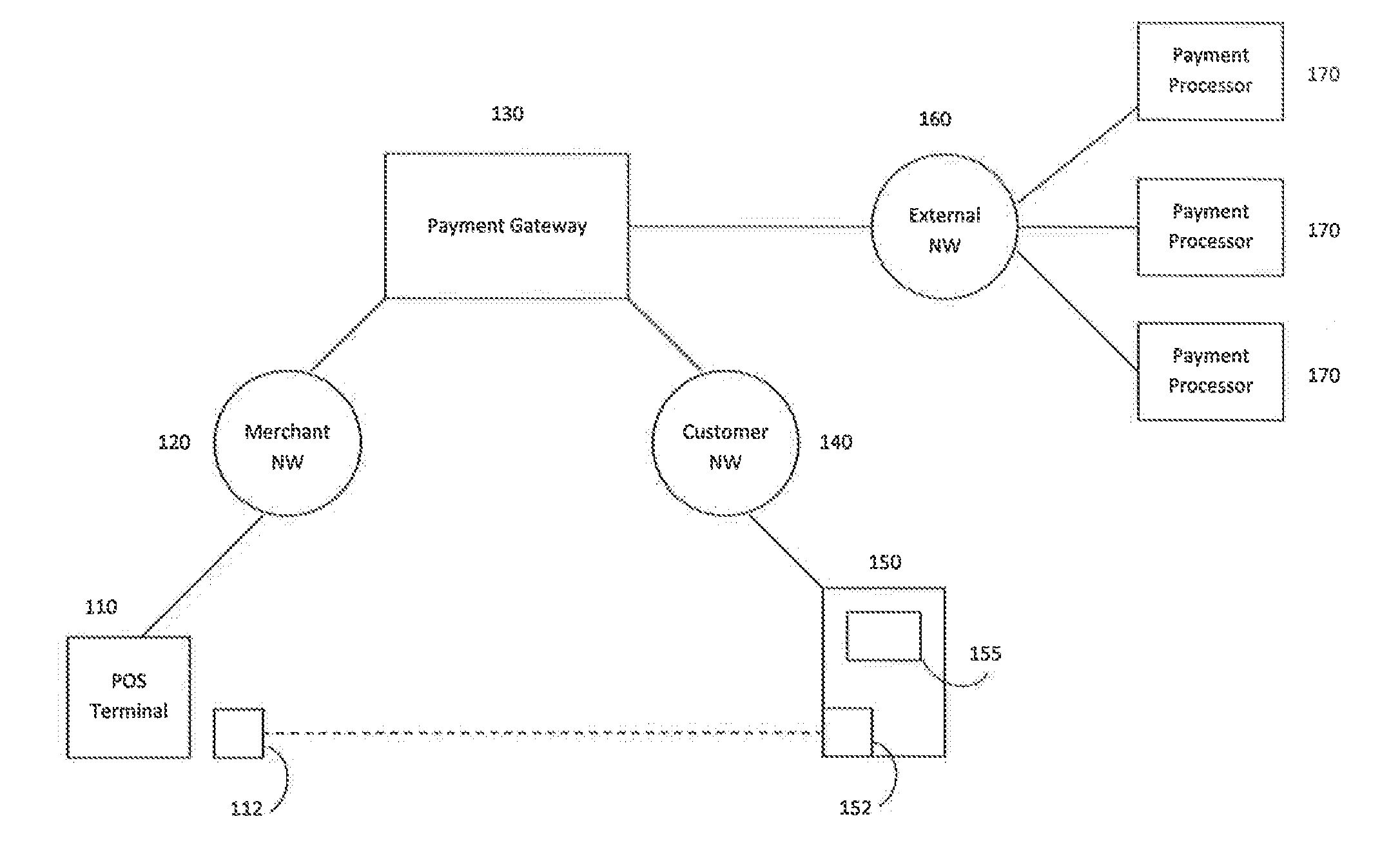
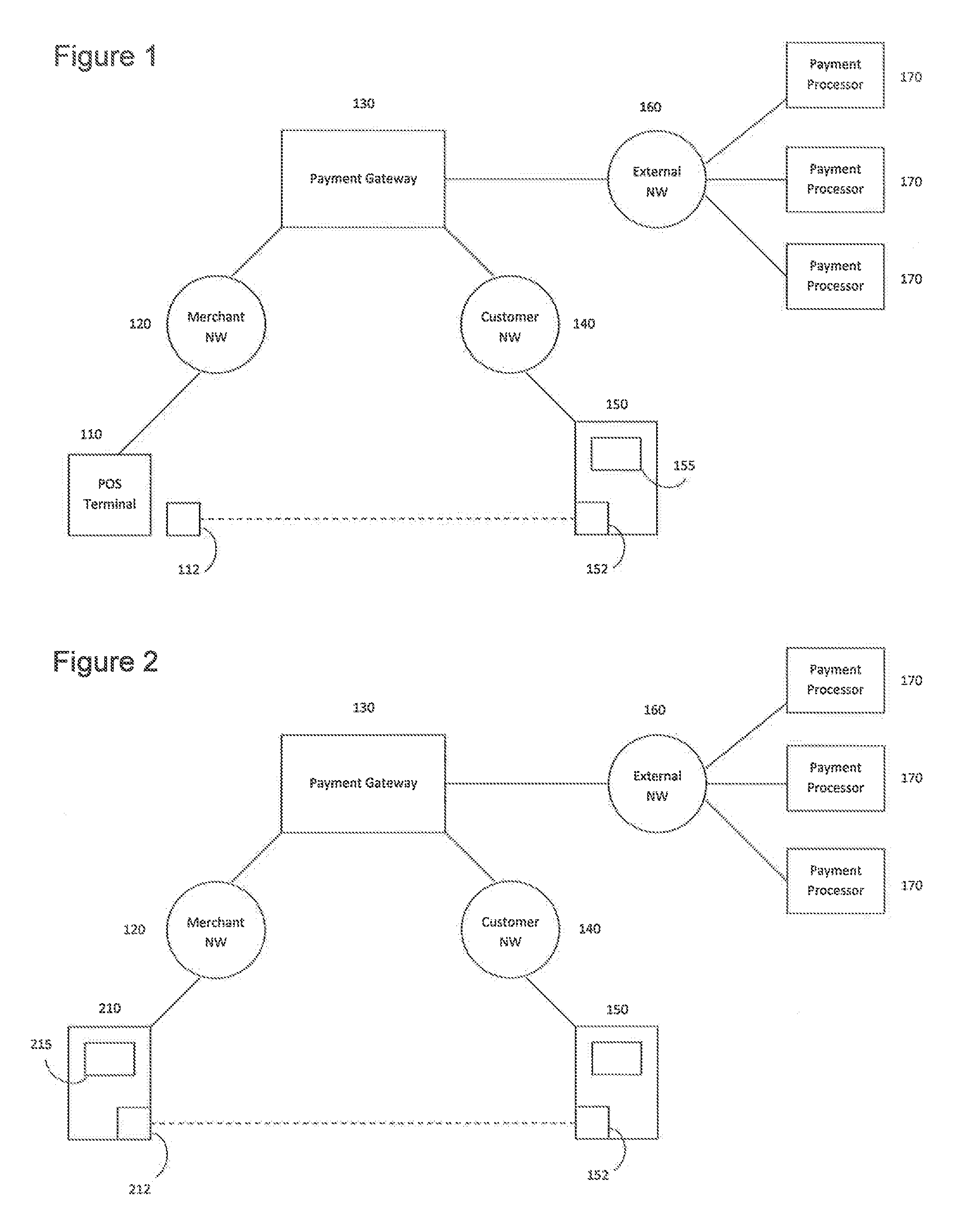
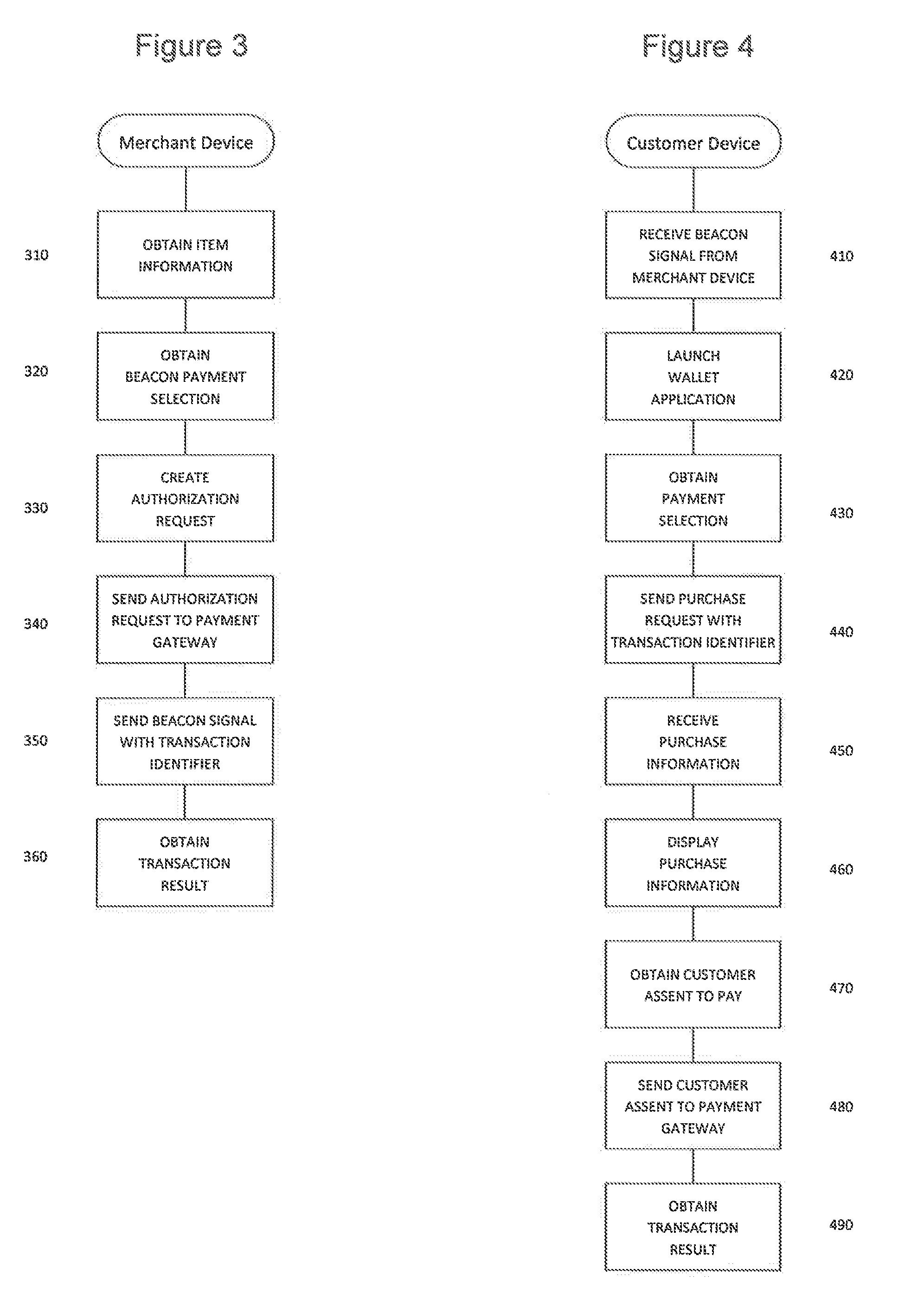
[0025]A purchase transaction system is described below which facilitates a purchase transaction between a merchant and a customer. As used herein and where appropriate in the context of the description, the term “merchant” may refer to a business, a particular store location or mobile unit of such a business, a specific employee or agent of such a business, and so forth. Similarly, as used herein and appropriate to the context of the description, the term “customer” may refer to an individual who possesses, interacts with and / or owns the customer device, an individual who communicates with the merchant and / or takes possession of the item or items, or an individual, group or entity who maintains a payment account from which funds are drawn to pay for the purchase. The terms “merchant” and “customer” may also apply to private parties engaged in private transactions such as a person-to-person transaction in which one individual is a merchant who provides an item or items to another ind...
PUM
 Login to View More
 Abstract
Description
Claims
Application Information
 Login to View More