
Methods and pharmaceutical compositions for treating cancer
a technology of pharmaceutical compositions and cancer, applied in the direction of drug compositions, biocide, anhydride/acid/halide active ingredients, etc., can solve the problems of reducing tumor recurrence rate, cell loss of tumorigenicity, and inability of current treatments to eliminate glioma-initiating cells (gics) to eliminate tumors
- Summary
- Abstract
- Description
- Claims
- Application Information
AI Technical Summary
Benefits of technology
Problems solved by technology
Method used
Image

Examples
example
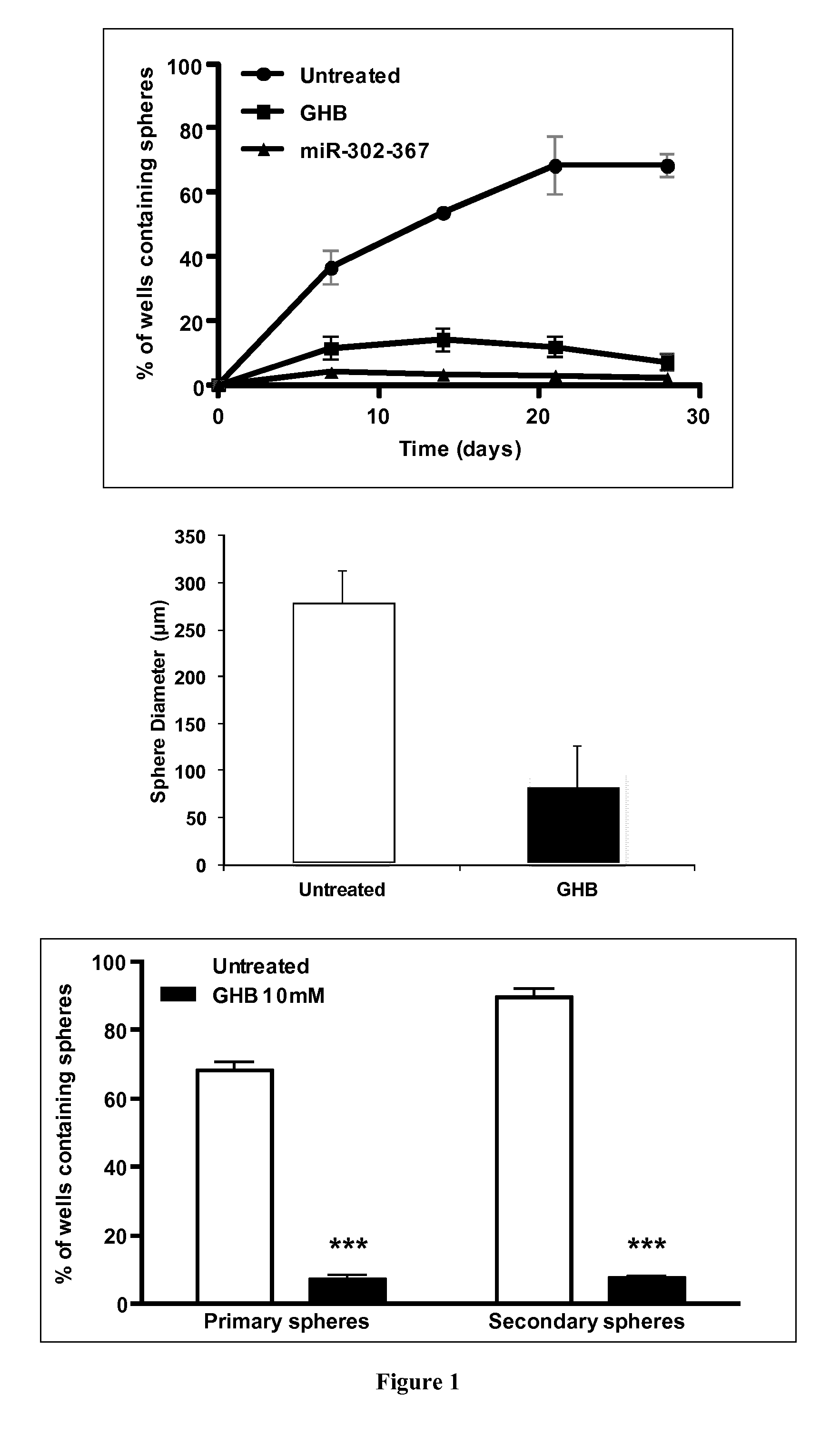
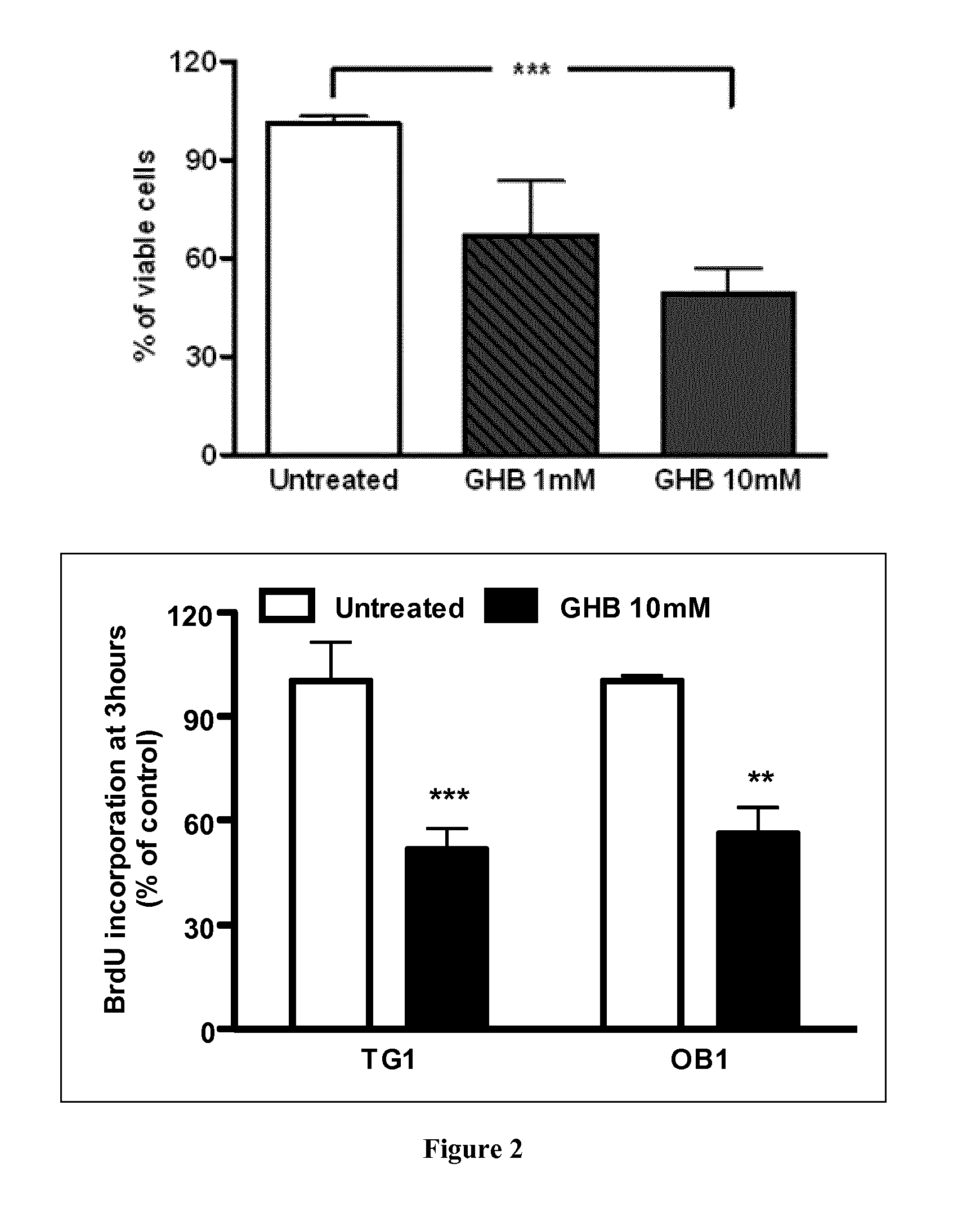
[0057]Irreversible repression of stem and tumor inducing properties. Since we previously observed ', as others 10, 13-15, that serum exposure results in loss of stem-like and tumorigenic properties, we used this paradigm to identify miRs over or under expressed in comparison with untreated bona fide glioma-initiating cells (GICs). Functional evaluation of the miR identified as being expressed de novo in serum-treated cells demonstrated that transduction of GICs with the miR-302-367 cluster was sufficient to trigger loss of stem-like and tumor-inducing properties of GICs 11. We further demonstrated that stable miR-302-367 cluster expression in self-renewing GICs (GICs-miR-302-367) promotes their irreversible exit from the stem-like state. Loss of self-renewal properties is was accompanied with repression of self-renewal markers (such as NANOG) and clonal proliferation ability. Most strikingly, the final outcome of miR-302-367 expression is the loss of the ability of GICs to initiate ...
PUM
| Property | Measurement | Unit |
|---|---|---|
| Electrical resistance | aaaaa | aaaaa |
| Chemotherapeutic properties | aaaaa | aaaaa |
Abstract
Description
Claims
Application Information
 Login to View More