Rapid computation of local eye vectors in a fixed point lighting unit

a fixed point lighting unit and local eye vector technology, applied in computing, digital computers, instruments, etc., can solve the problems of large processing capacity of applications which display three-dimensional graphics, difficult to achieve the effect of achieving the effect of difficult to achieve the effect of achieving the effect of achieving the effect of achieving the effect of reducing the size of the required hardwar
US6141013AInactive Publication Date: 2000-10-31SUN MICROSYSTEMS INC

Patent Information

Authority / Receiving Office
US ยท United States
Patent Type
Patents(United States)
Current Assignee / Owner
SUN MICROSYSTEMS INC
Publication Date
2000-10-31
Estimated Expiration
Not applicable ยท inactive patent

Smart Images

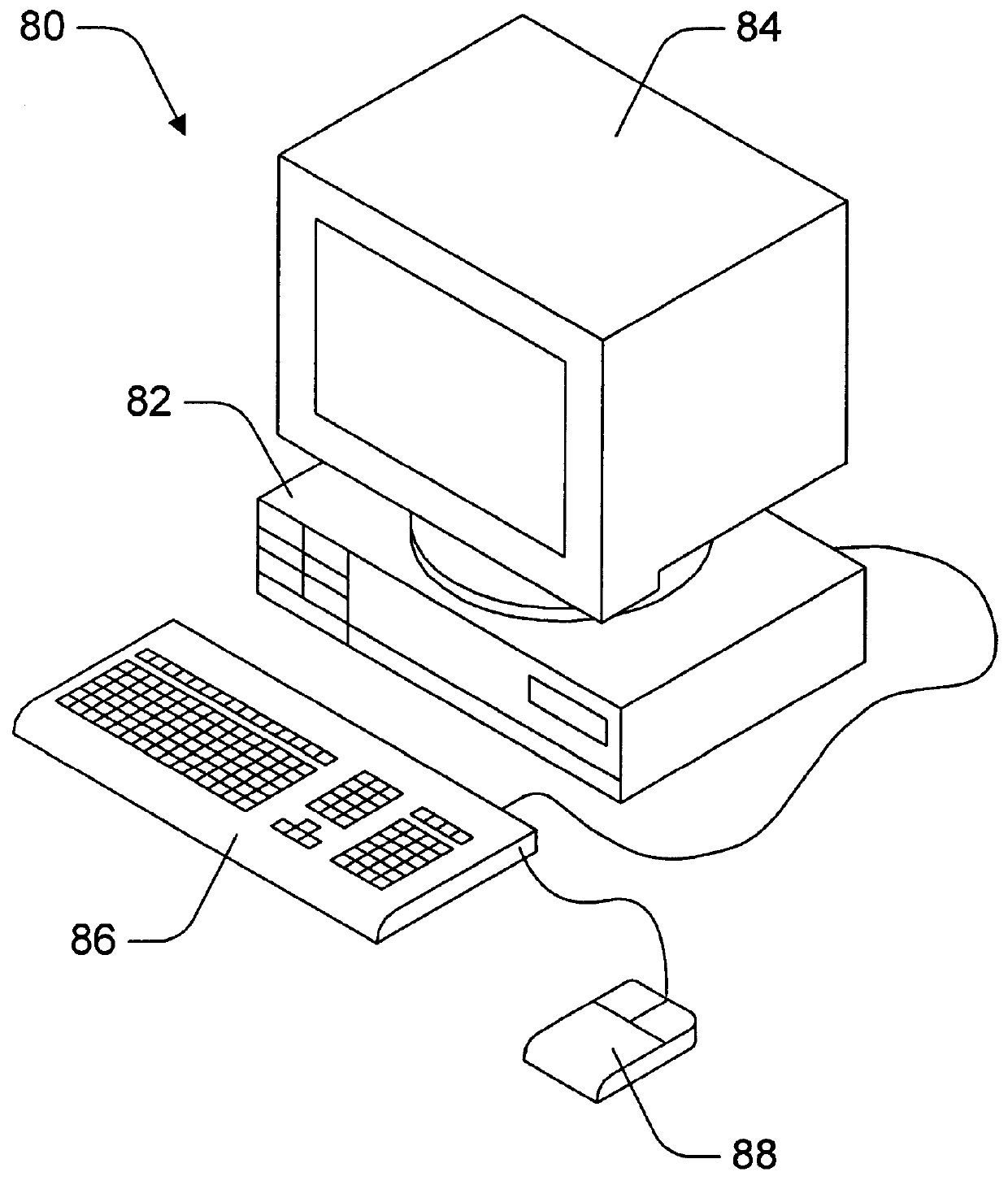
  • Figure 1
    Figure 1
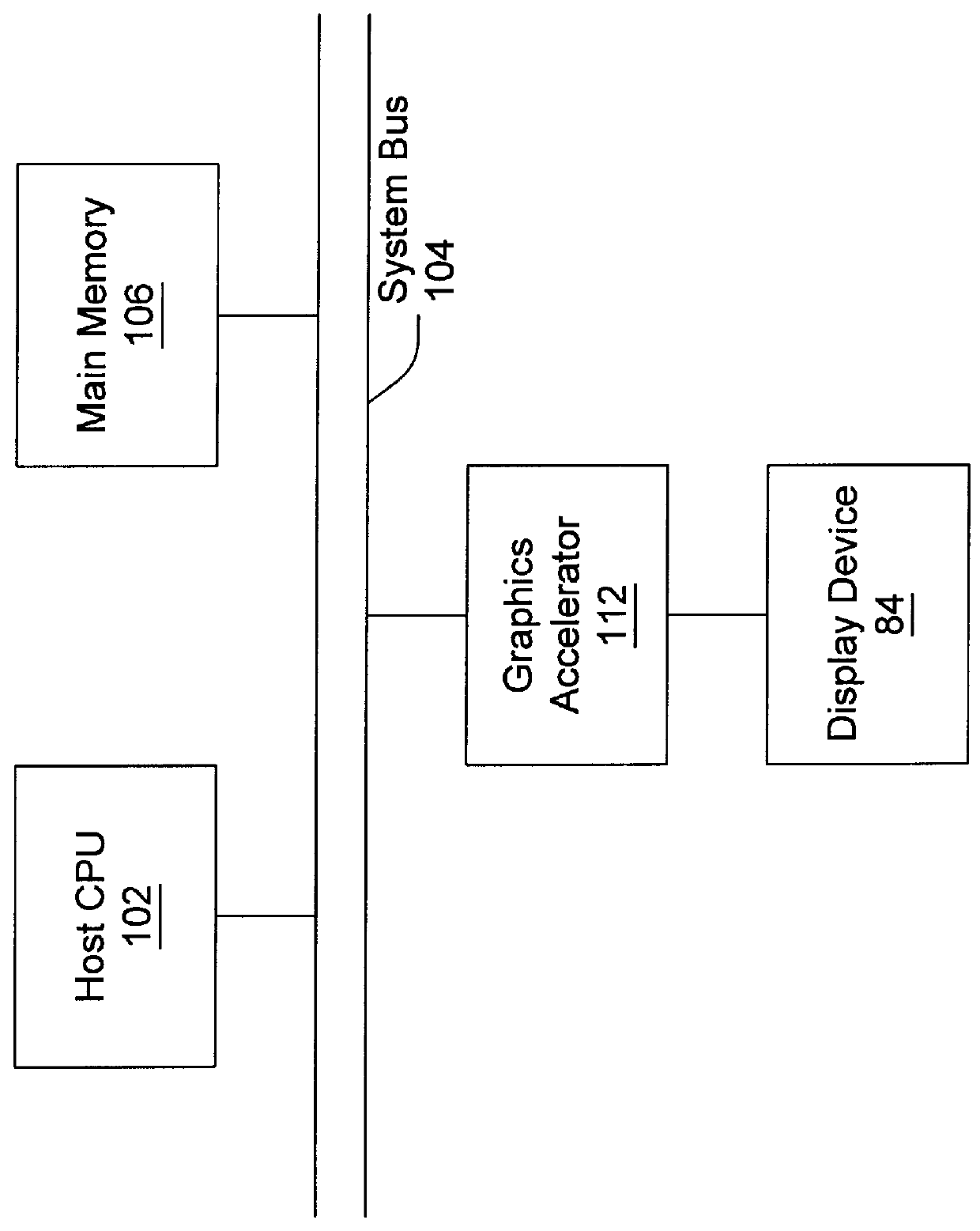
  • Figure 2
    Figure 2
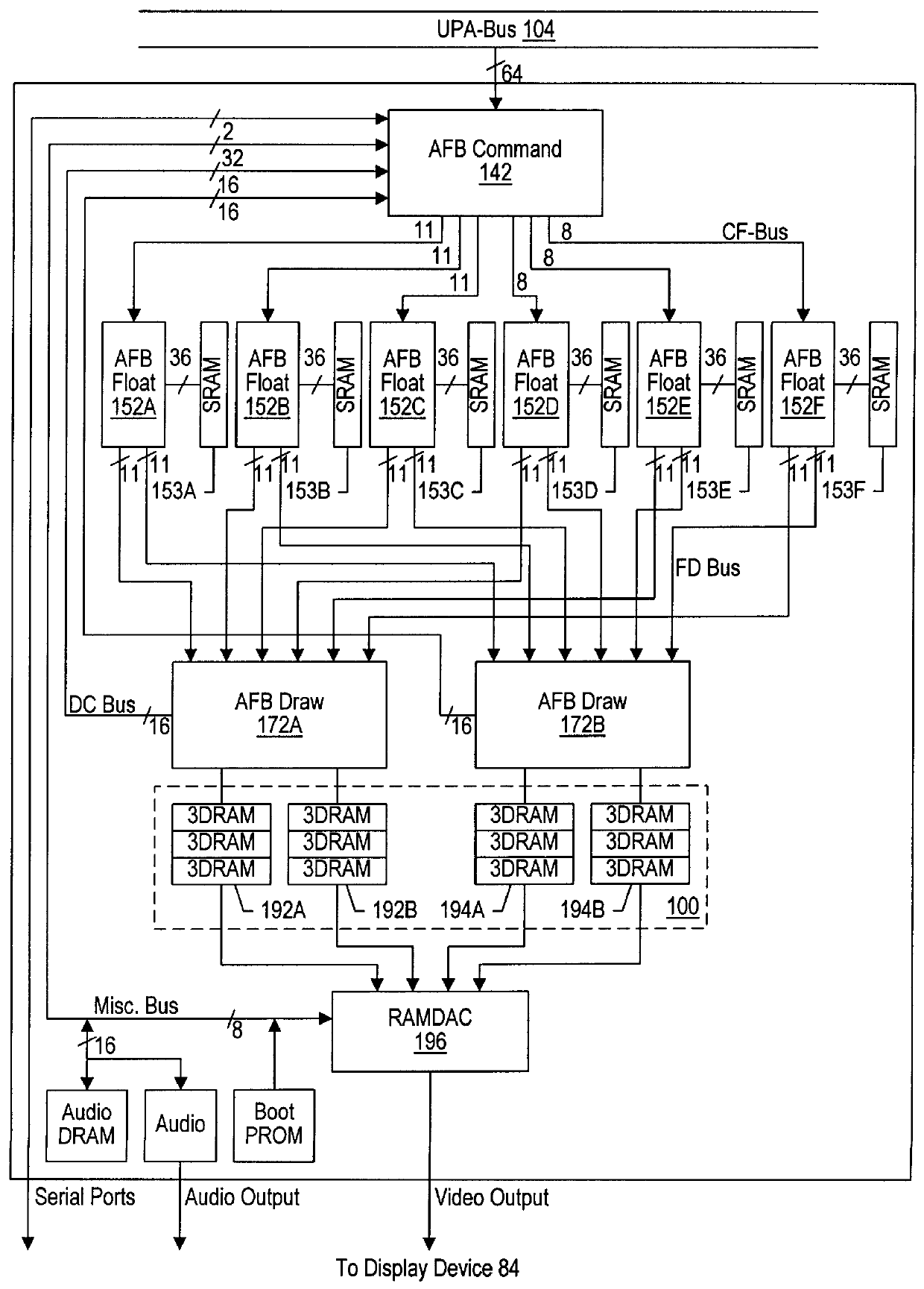
  • Figure 3
    Figure 3
Patent Text Reader

Abstract

A rapid method for calculating a local eye vector in a fixed point lighting unit. For a given triangle primitive which is to be projected into a given viewport in screen space coordinates, the local eye vector corresponds to a given eye position and a first vertex of the given triangle primitive. (A different local eye vector is calculated for each vertex of the given triangle primitive). The method first comprises generating a view vector matrix which corresponds to the given eye position and corner coordinates of the given viewport, where the corner coordinates are expressed in screen space coordinates. The view vector matrix is usable to map screen space coordinates to an eye vector space which corresponds to the given viewport. The method next includes receiving a first set of coordinates (in screen space) which correspond to the first vertex. The first set of coordinates are then scaled to a numeric range which is representable by the fixed point lighting unit. Next, the first set of coordinates are transformed using the view vector matrix, which produces a non-normalized local eye vector within the eye vector space for the given viewport. The non-normalized local eye vector is normalized to form a normalized local eye vector. The normalized local eye vector is then usable to perform subsequent lighting computations such as computation of specular reflection values for infinite light sources, producing more realistic lighting effects than if an infinite eye vector were used. These more realistic lighting effects do not come at decreased performance, however, as the local eye vector may be calculated rapidly using this method.
Need to check novelty before this filing date? Find Prior Art

Description

The present invention relates to a 3-D graphics accelerator, and more particularly to a fixed point lighting unit within the 3-D graphics accelerator which performs rapid computation of local eye vectors.DESCRIPTION OF THE RELATED ARTA three dimensional (3-D) graphics accelerator is a specialized graphics rendering subsystem for a computer system which is designed to off-load the 3-D rendering functions from the host processor, thus providing improved system performance. In a system with a 3-D graphics accelerator, an application program executing on the host processor of the computer system generates three dimensional geometry data that defines three dimensional graphics elements for output on a display device. The application program causes the host processor to transfer the geometry data to the graphics accelerator. The graphics accelerator receives the geometry data and renders the corresponding graphics elements on the display device.One of the goals of many computer graphics s...

Claims

the structure of the environmentally friendly knitted fabric provided by the present invention; figure 2 Flow chart of the yarn wrapping machine for environmentally friendly knitted fabrics and storage devices; image 3 Is the parameter map of the yarn covering machine
Login to View More