
Content distribution system for generating content streams to suit different users and facilitating e-commerce transactions using broadcast content metadata
- Summary
- Abstract
- Description
- Claims
- Application Information
AI Technical Summary
Problems solved by technology
Method used
Image

Examples
Embodiment Construction
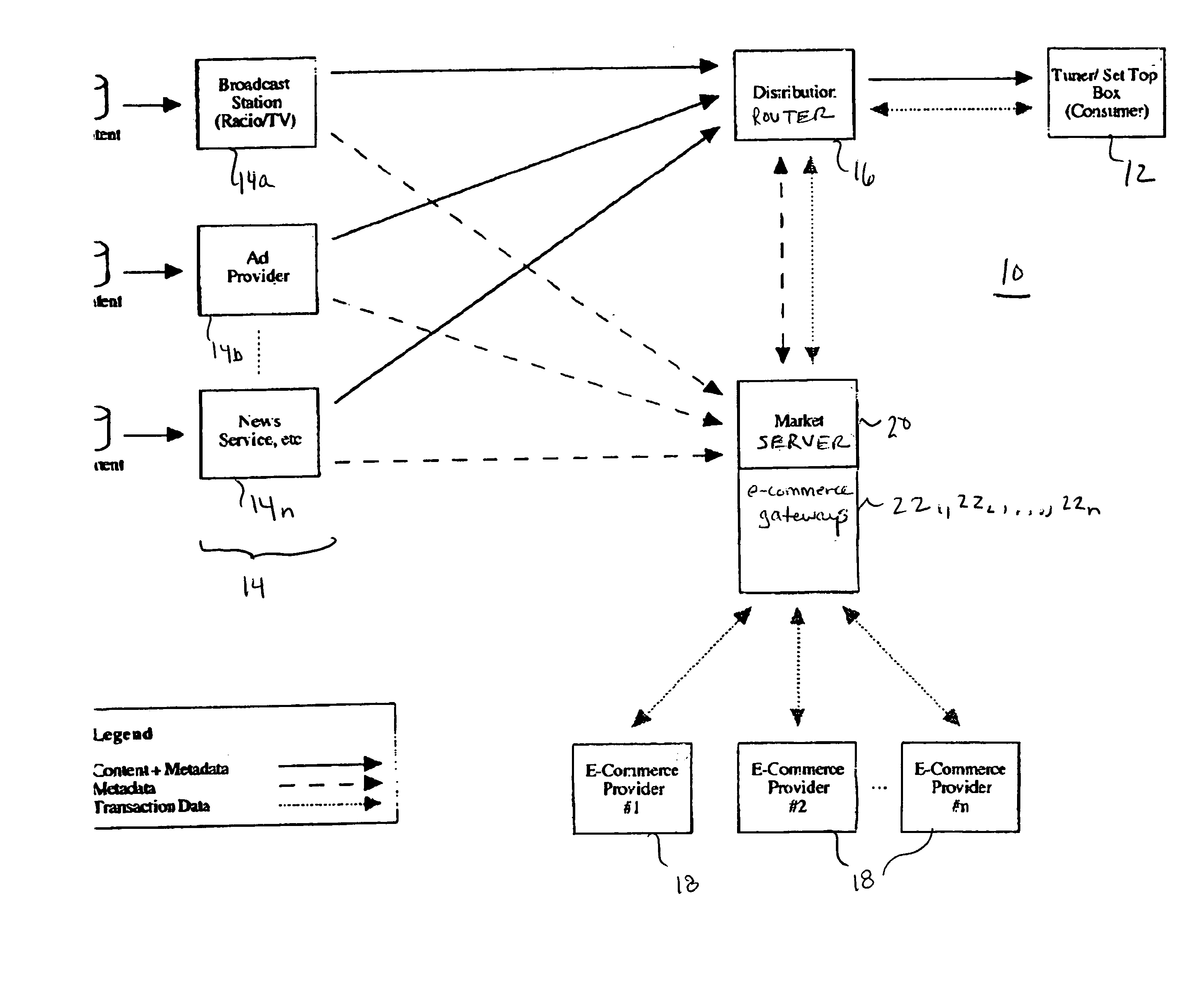
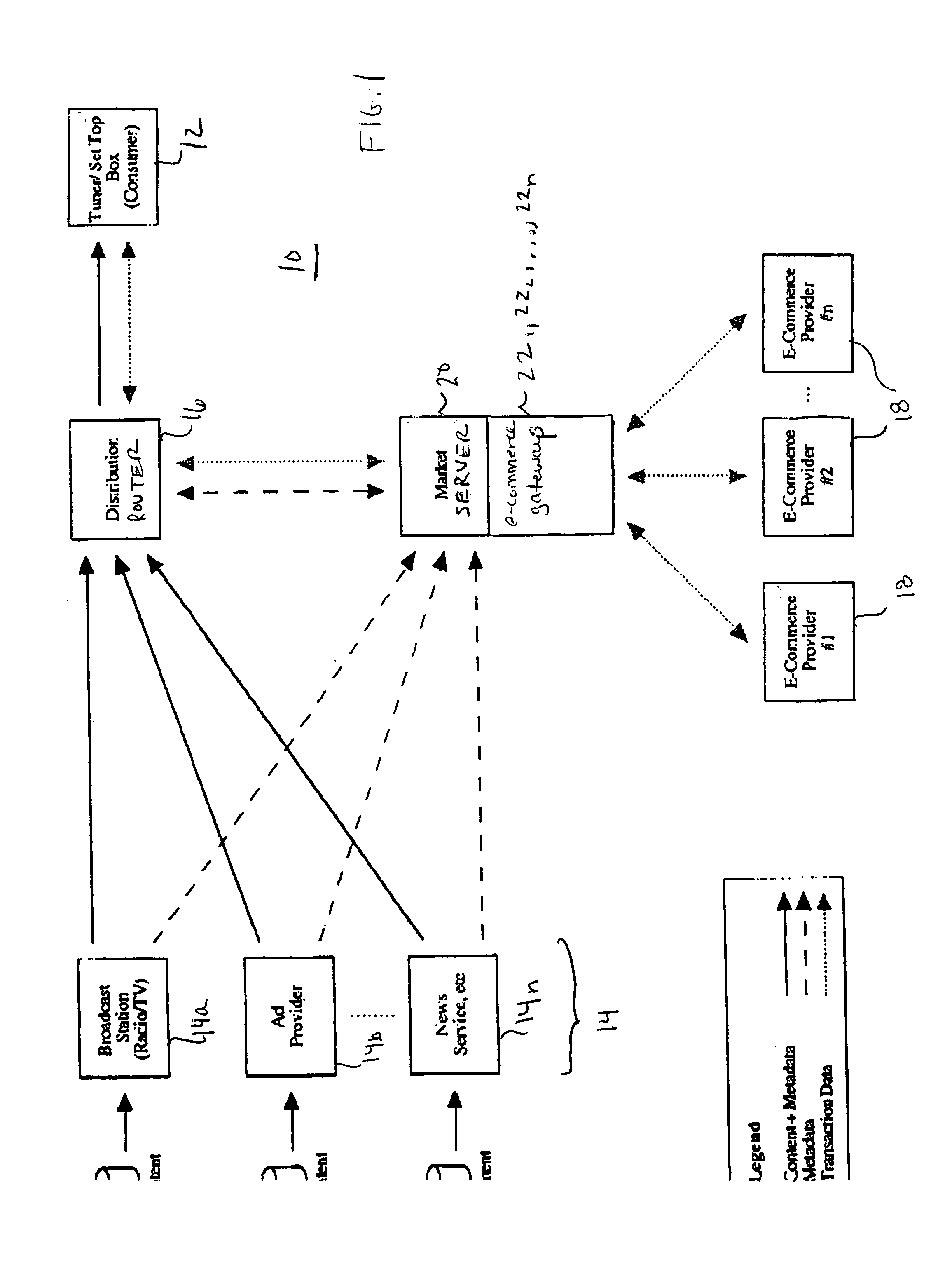
[0018]A content distribution system (CDS) 10 constructed in accordance with the present invention is depicted in FIG. 1. The CDS 10 associates products and services with broadcast content to allow users to conduct e-commerce transactions when they are most likely to purchase. The resulting, increased revenue stream provided by the CDS 10 can then be shared by content providers, broadcast providers, broadband providers and e-commerce providers, as described below.
[0019]Content can be, but is not limited to, audio, video, data, graphics, text and multimedia information. The content is preferably transmitted via a distribution system which can be a communications network including, but not limited to, direct network connections, server-based environments, telephone networks, the Internet, intranets, local area networks (LAN), wide area networks (WAN), the WWW or other webs, transfers of content via storage devices, coaxial cable, power distribution lines (e.g., either residential or co...
PUM
 Login to View More
 Abstract
Description
Claims
Application Information
 Login to View More