[0013]Another embodiment of the invention relates to a system and method for creation and automatic deployment of personalized, dynamic and interactive voice services, including information derived from on-line analytical processing (OLAP) systems and other data repositories. The system and method enables the ability to capture user selections to facilitate closed-loop transaction processing and processing of other requests. One aspect of the invention relates to an interactive voice broadcasting system and method that enables analytical reporting and advanced transactional services via the telephone or other voice-enabled terminal device. One advantage of the invention is that a voice service may leverage the power of OLAP or other data repository systems and provide critical information to the user, in a timely fashion, by phone. Another advantage of this method and system is that it provides a user with the opportunity to immediately act upon information received during a interactive voice broadcast.
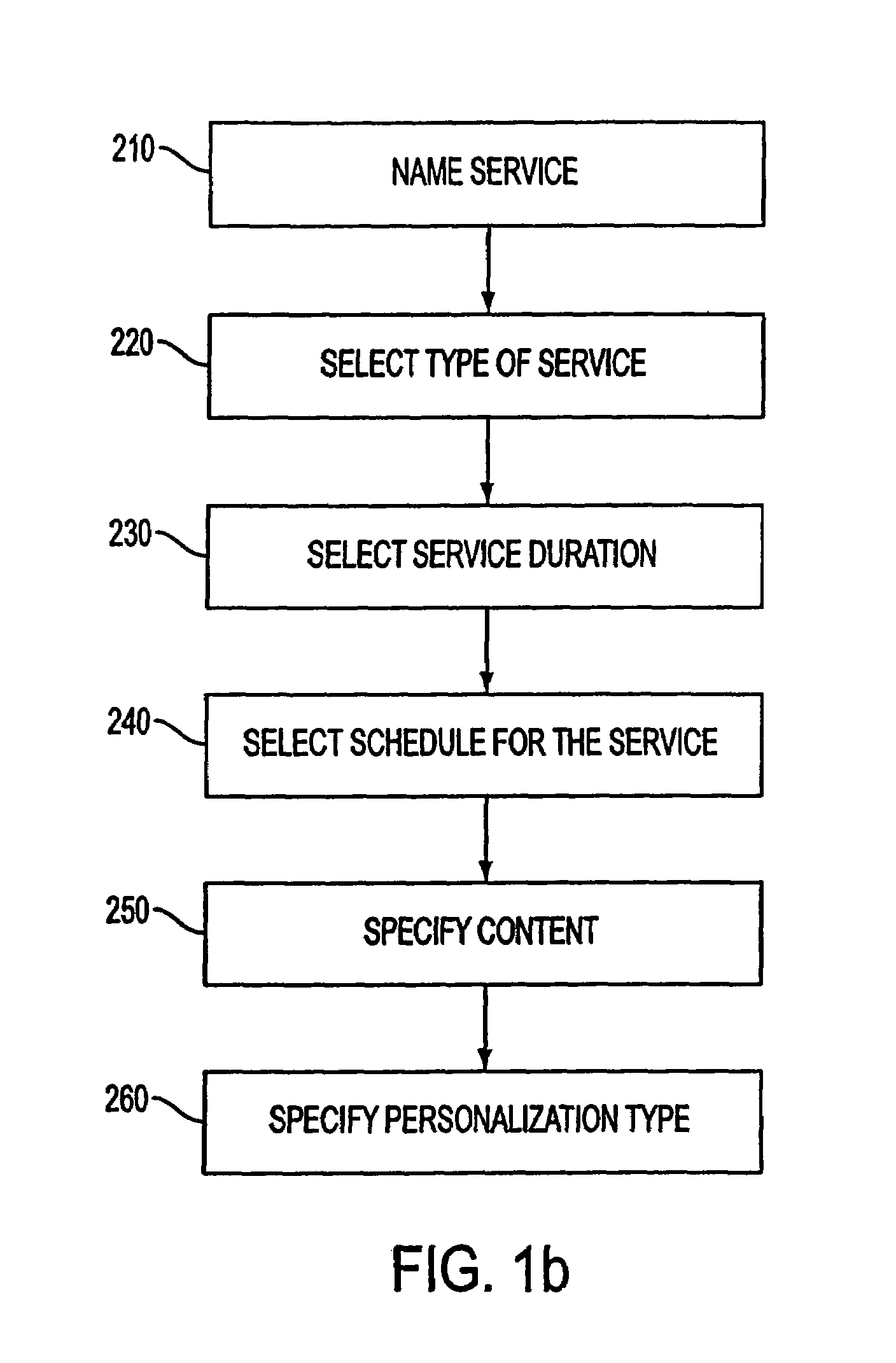
[0014]A voice service is created and can have many users subscribed to the voice service. Each user can specify personal preferences for the content and presentation of the contents for a voice service. The specification of the elements of a voice service may be done using a set of interfaces (such as GUIs) that take the form of a voice service wizard.
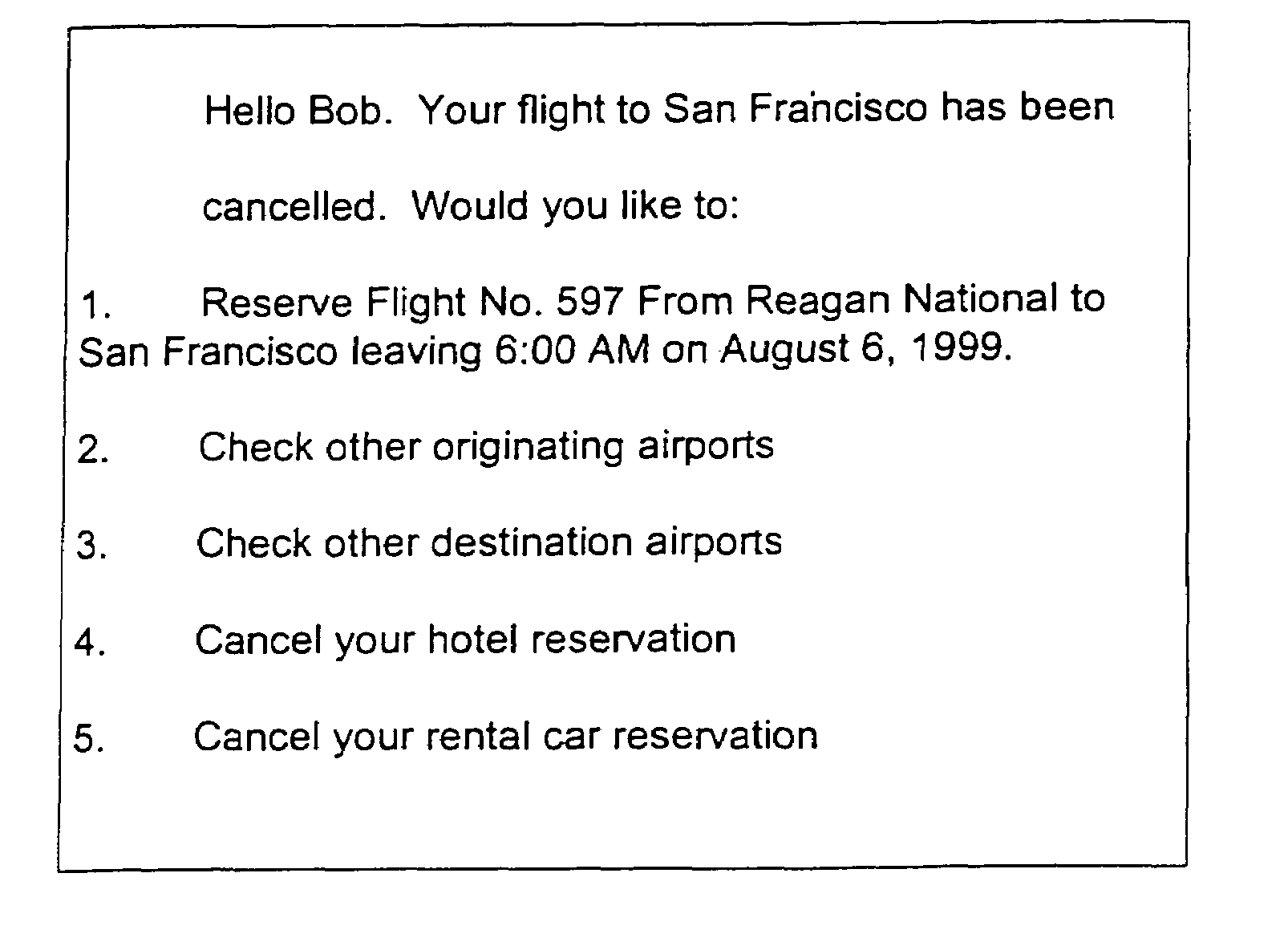
[0015]A voice service includes one or more Dialog elements. Dialog elements may include one or more of Speech elements, Input elements and Error elements. An Input element may include a Prompt element and / or an Option element. An Input element enables the system to request input from the user, capture the input and direct the call flow based on the user's input. An Option element associates a key (e.g., on a telephone touch pad dial) with a destination Dialog that is executed when that number is pressed by a user during an interactive voice broadcast. A Prompt requests a user to enter numeric or other information. An Input element may enable a user to request, during an interactive voice broadcast, a transaction, a service or other requests. The term transactions, services and requests are to be interpreted broadly.
[0016]According to one embodiment, the user's responses to Input elements are stored during an interactive voice broadcast and, during or after the voice broadcast, the stored information is processed by the system or is passed to another system or application for processing. The transaction (or other request) processing can be accomplished either in real-time, during the voice broadcast, or after the interactive voice broadcast is completed. The results or confirmation of a transaction or other request can be provided to the user during the call or subsequently.
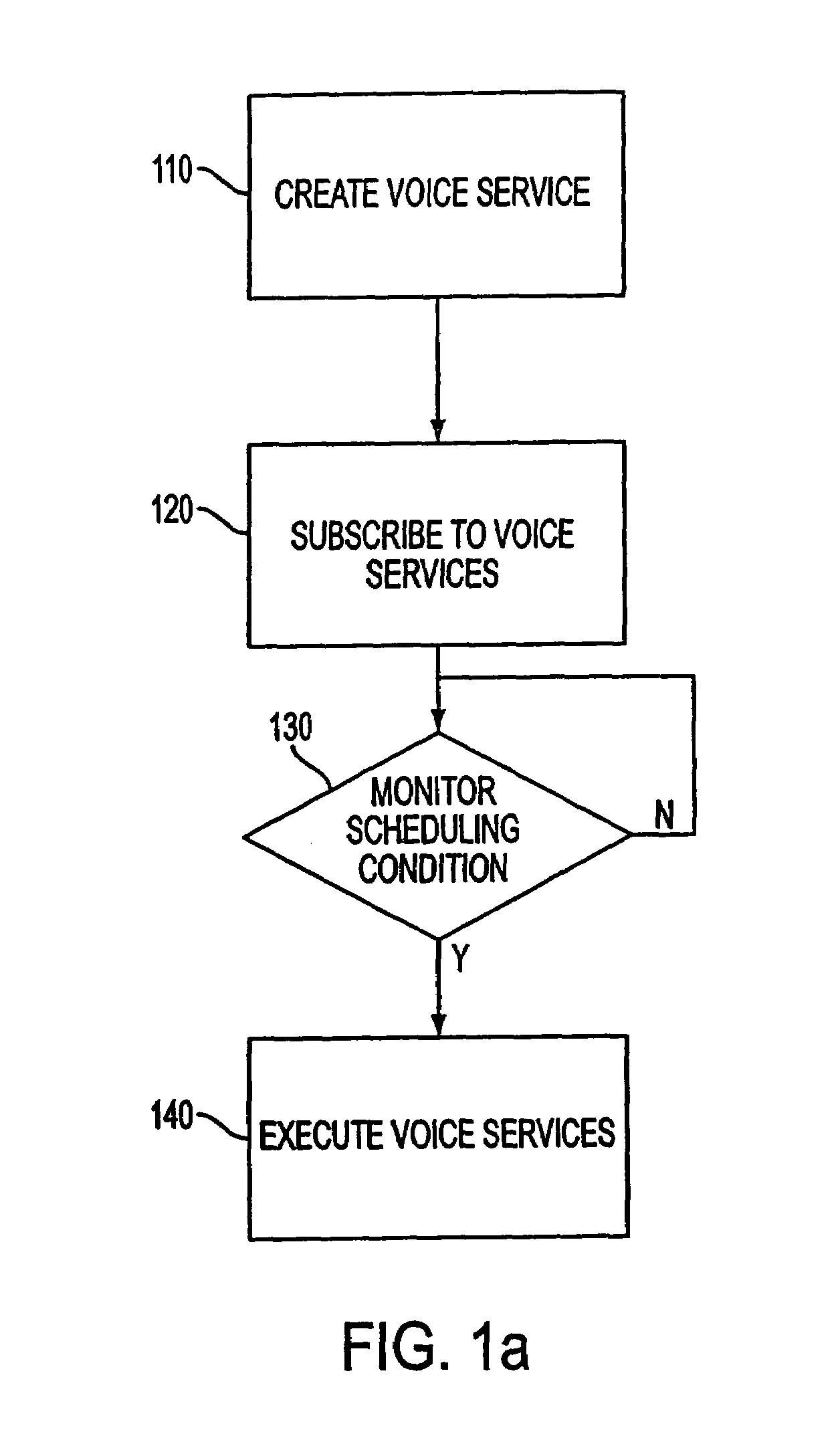
[0017]Once a voice service is created, the system monitors predetermined conditions to determine when the voice service should be executed. Each voice service is executed when one or more predetermined conditions are met as specified during creation of the voice service. For example, a voice service may be executed according to a predetermined schedule (time-based) or based on a triggering event (e.g. one or more conditions are met based on the output of an OLAP or other report).
[0018]When the predetermined condition is satisfied, the voice service is executed. Executing a voice service, includes the steps of generating the content specified by the voice service and the user preferences. Some users may have identical personalization options and, thus, a single call structure may be generated for a group of users with identical personalization options. The content of the voice service includes the information that is to delivered to users of that voice service, and the Input to be requested from the user, among other things. The content may include, for example, static text messages, dynamic content (e.g. text based on information output from an OLAP report, other database or other sources) or blended text (e.g. static text combined with dynamic content).


 Login to View More
  Login to View More