
Composite material for turbine support structure
a technology of composite materials and support structures, applied in the field of composite materials, can solve problems such as leakage that is detrimental to turbine performance and turbine malfunction
- Summary
- Abstract
- Description
- Claims
- Application Information
AI Technical Summary
Problems solved by technology
Method used
Image

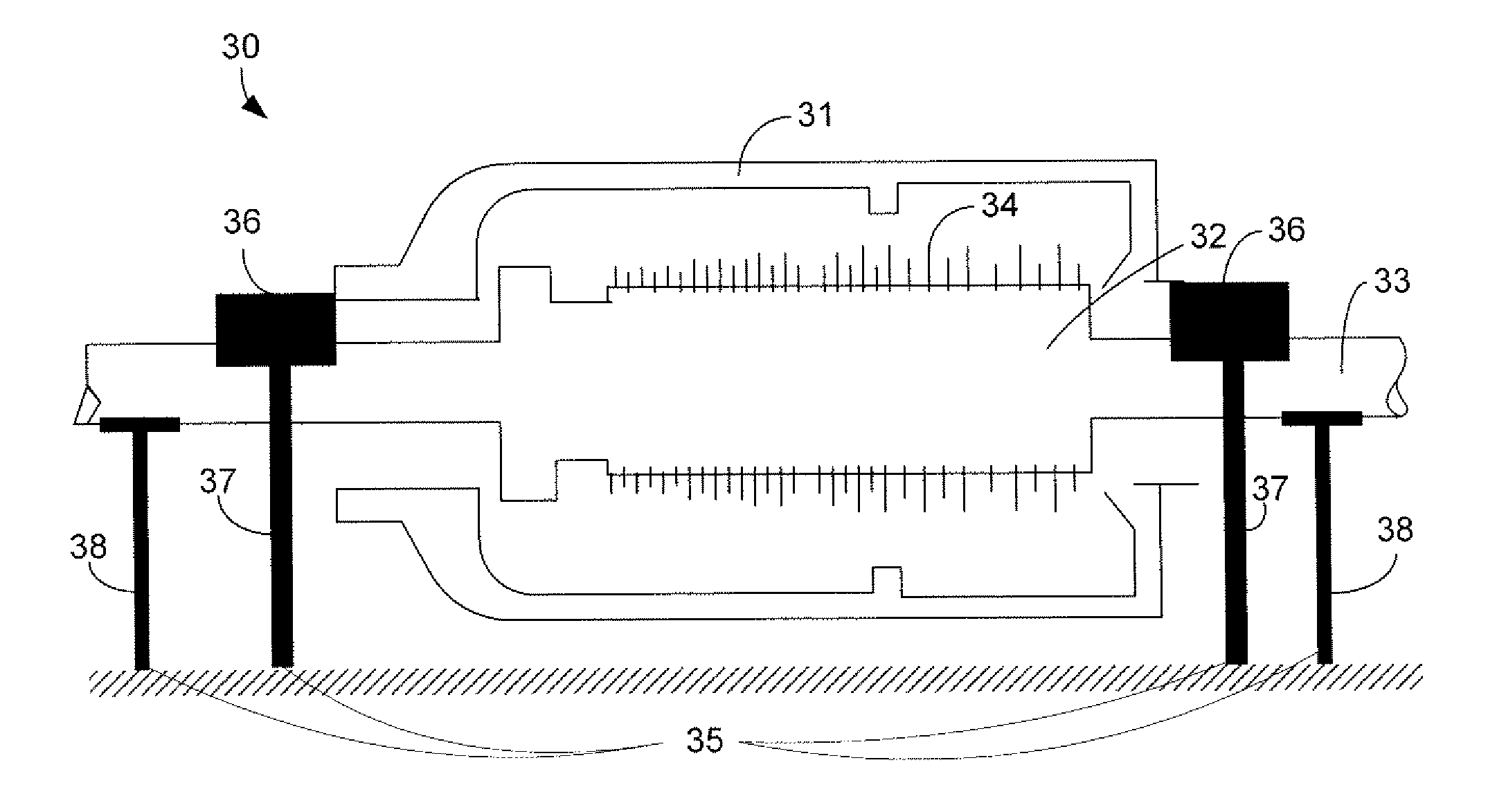
Examples
Embodiment Construction
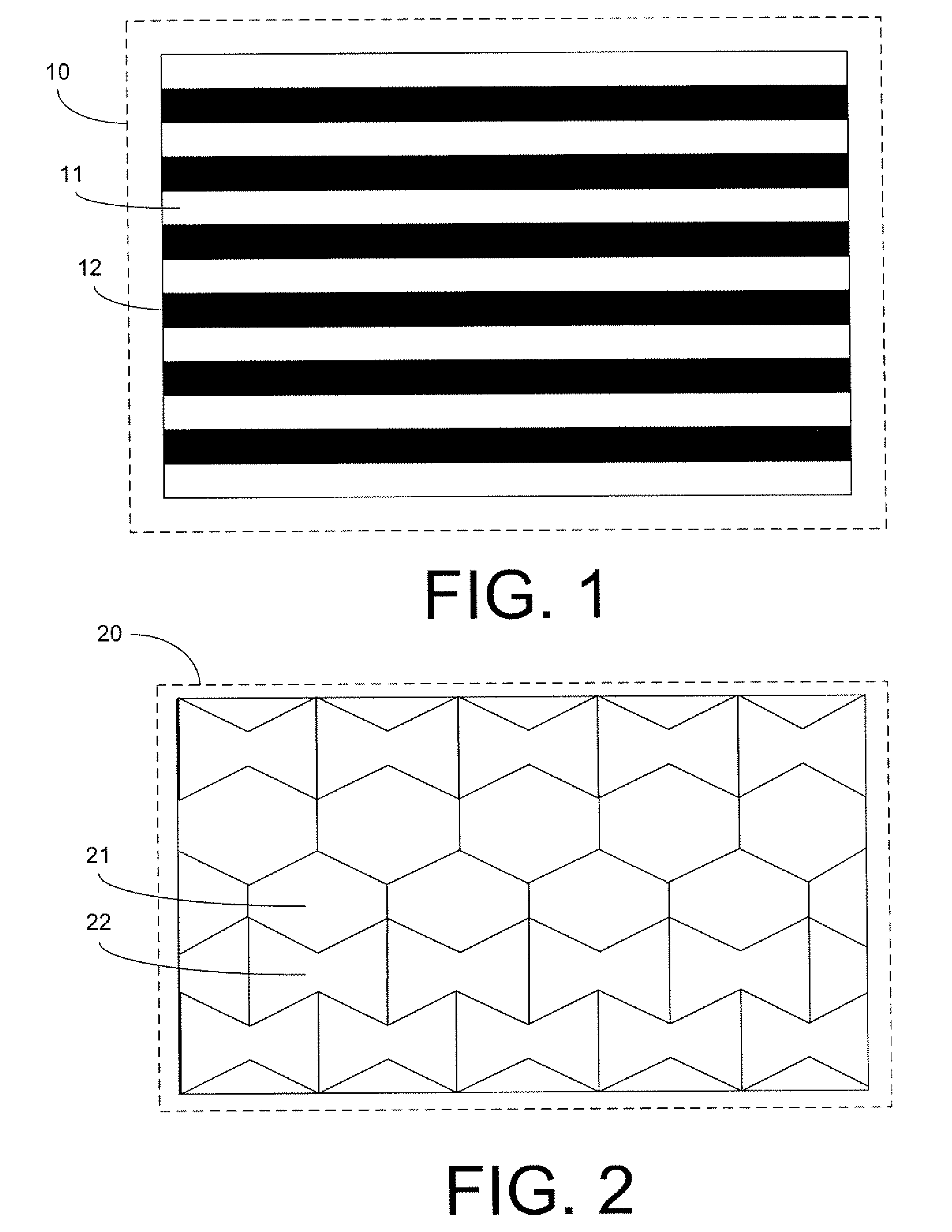
[0013]Referring now to the drawings, in which like numerals indicate like elements throughout the separate views, FIG. 1 shows a cross-sectional view of a composite material 10 of a particular embodiment of the present application. Composite materials are materials that result when two or more distinct materials, each having its own, usually different, characteristics, are combined. The combination may provide a composite with useful properties for specific applications. For example, composites may be useful in applications where thermal expansion is to be controlled. Thermal expansion is the dimensional change exhibited by a material as the temperature of the material changes.
[0014]The composite material 10 includes a first material 11 and a second material 12. The first material 11 has a positive coefficient of thermal expansion. A coefficient of thermal expansion is the fractional change in length or volume of a material per degree of temperature change. A material having a posit...
PUM
| Property | Measurement | Unit |
|---|---|---|
| coefficient of thermal expansion | aaaaa | aaaaa |
| thermal expansion | aaaaa | aaaaa |
| friction | aaaaa | aaaaa |
Abstract
Description
Claims
Application Information
 Login to View More