
Method for regulating the relative position of an analyte in relation to a light beam
a technology of relative position and light beam, which is applied in the direction of analysis by material excitation, instruments, measurement devices, etc., can solve the problem of imposing a relatively long alignment tim
- Summary
- Abstract
- Description
- Claims
- Application Information
AI Technical Summary
Benefits of technology
Problems solved by technology
Method used
Image

Examples
second embodiment
[0166]the optical system is also shown in FIG. 24.
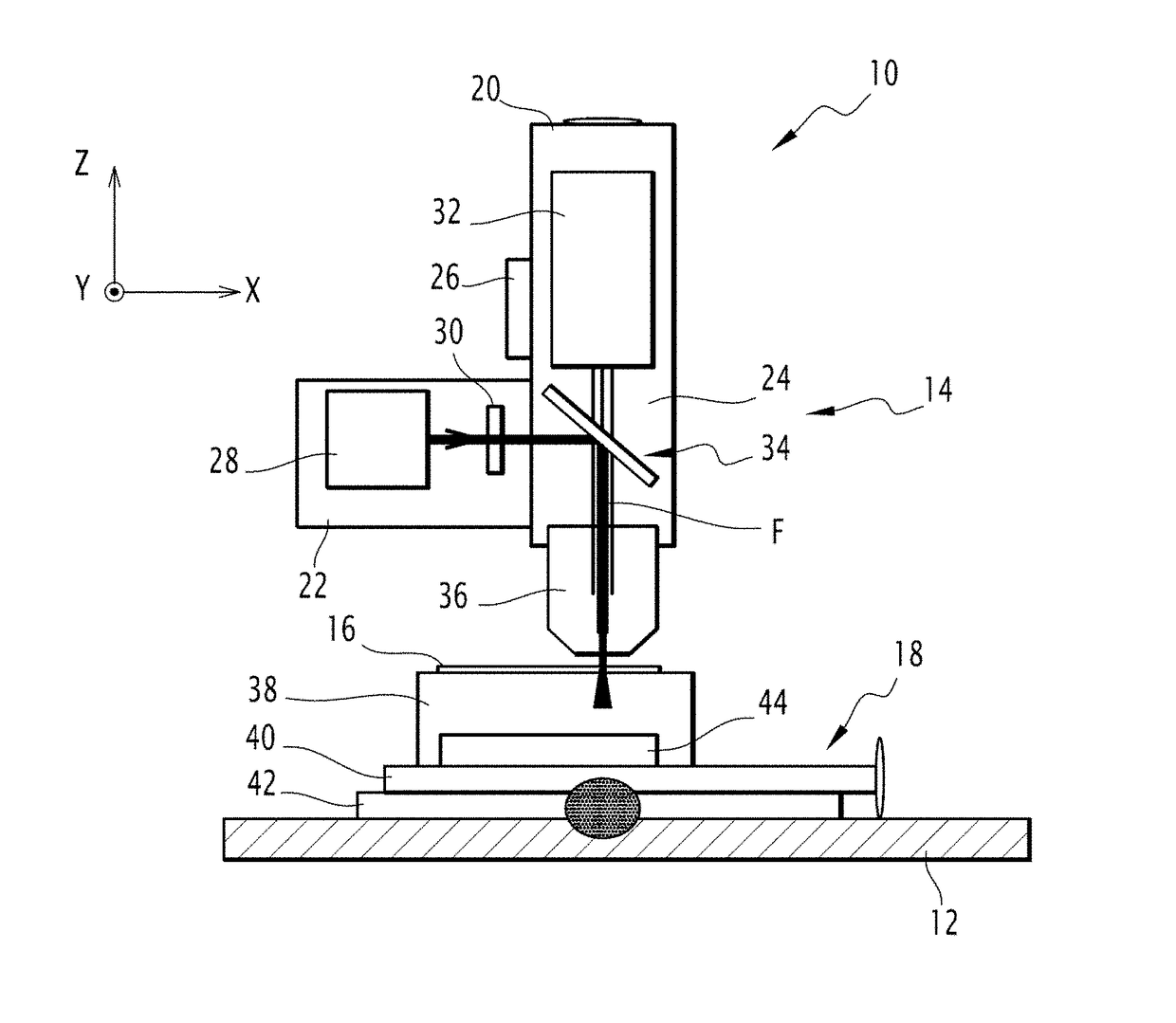
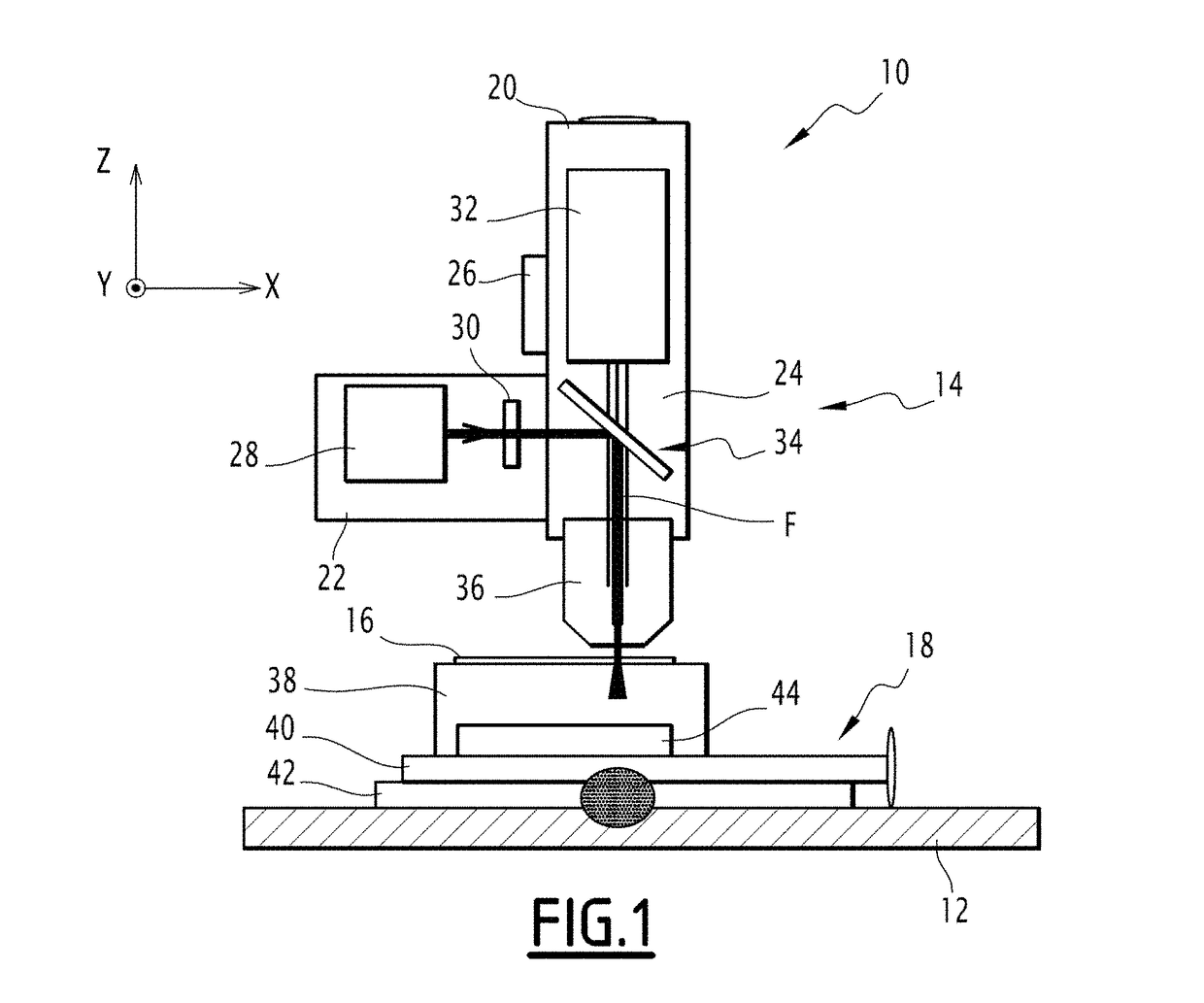
[0167]The optical system 10 includes the same elements as the optical system of FIG. 1.
[0168]The optical system 10 also includes a mirror 100 positioned between the analysis device 32 and the splitter plate 34.
[0169]The mirror 100 is a planar mirror.
[0170]The mirror 100 is movable between a first position in which it reflects the beam transmitted by the splitter plate 34 and a second position in which it does not interact with the transmitted beam.
[0171]The optical system 10 also includes a fluorescence filter 102 able to filter a light beam.
[0172]The filter 102 is positioned so as to filter a beam reflected by the mirror 100 and the splitter plate 34 when the mirror 100 is in the first position.
[0173]The optical system 10 also includes an imaging device with a lens 104.
[0174]According to the example of FIG. 24, the imaging device with the lens 104 comprises magnification optics 106 and a camera 108.
[0175]The magnification optics 106...
first embodiment
[0180]This optical system 10 also allows the application of the alignment method proposed for the optical system 10.
[0181]Consequently, in the proposed embodiment, it is possible to perform a single alignment in order to conduct two successive different analyses on the sample 16.
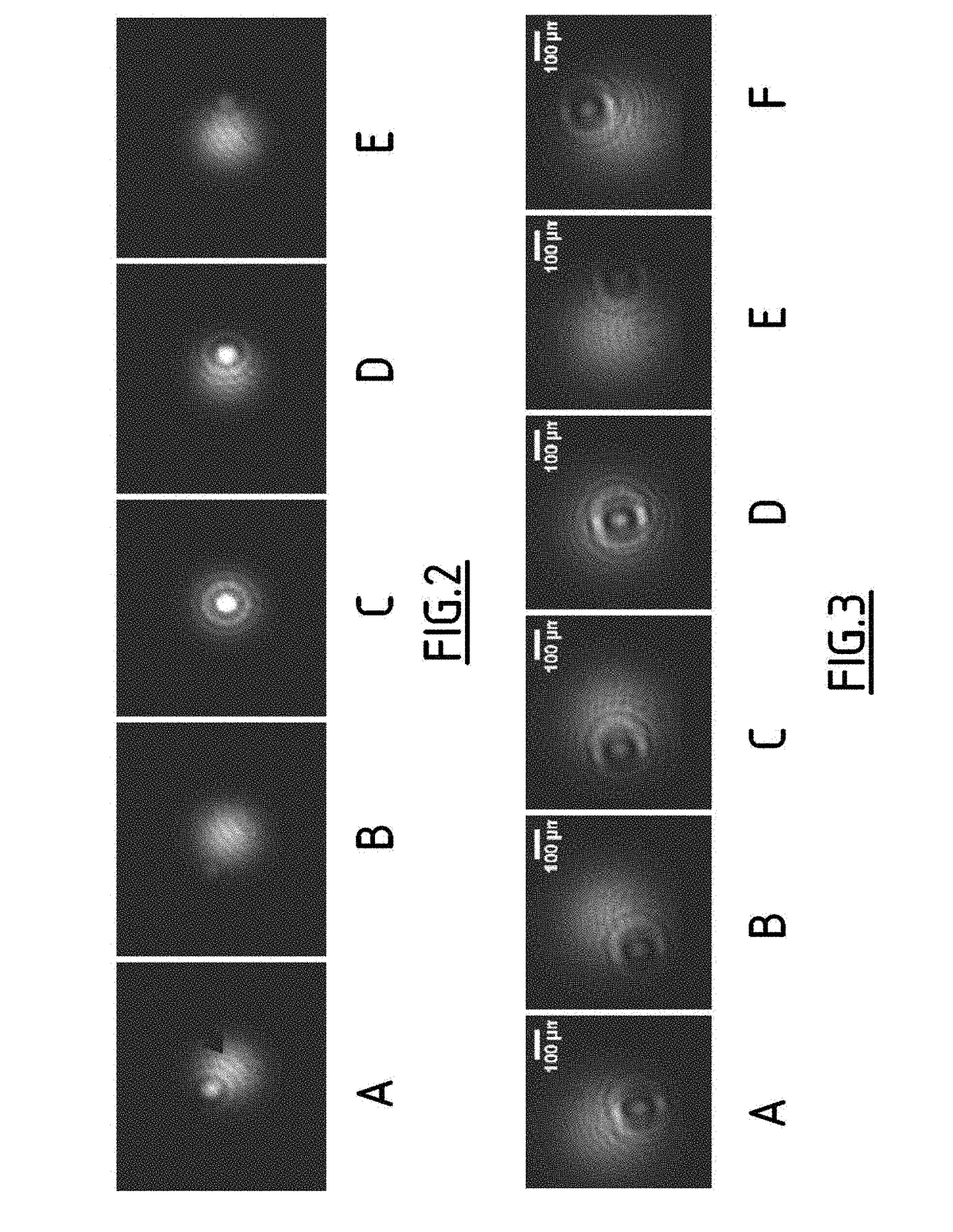
[0182]Further, although the different embodiments have been presented with reference to an imaging device 38 without any lenses, the method may also be applied with an imaging device 38 with lenses provided that the latter allows observations in Fourier space. Indeed, according to the invention, alignment of an analyte is proposed by using properties observed in Fourier space and not in direct space as this is the case in the state of the art. The regulation method which results from this is faster to apply than the regulation methods of the state of the art.
PUM
 Login to View More
 Abstract
Description
Claims
Application Information
 Login to View More