
Adding method of organic carbon dissolved in ballast water
A technology of organic carbon and ballast water, which is applied in the field of ships to achieve the effect of low price
Patent Information
- Authority / Receiving Office
- CN · China
- Current Assignee / Owner
- Publication Date
- 2010-08-18
Smart Images

Figure 1 
Figure 2 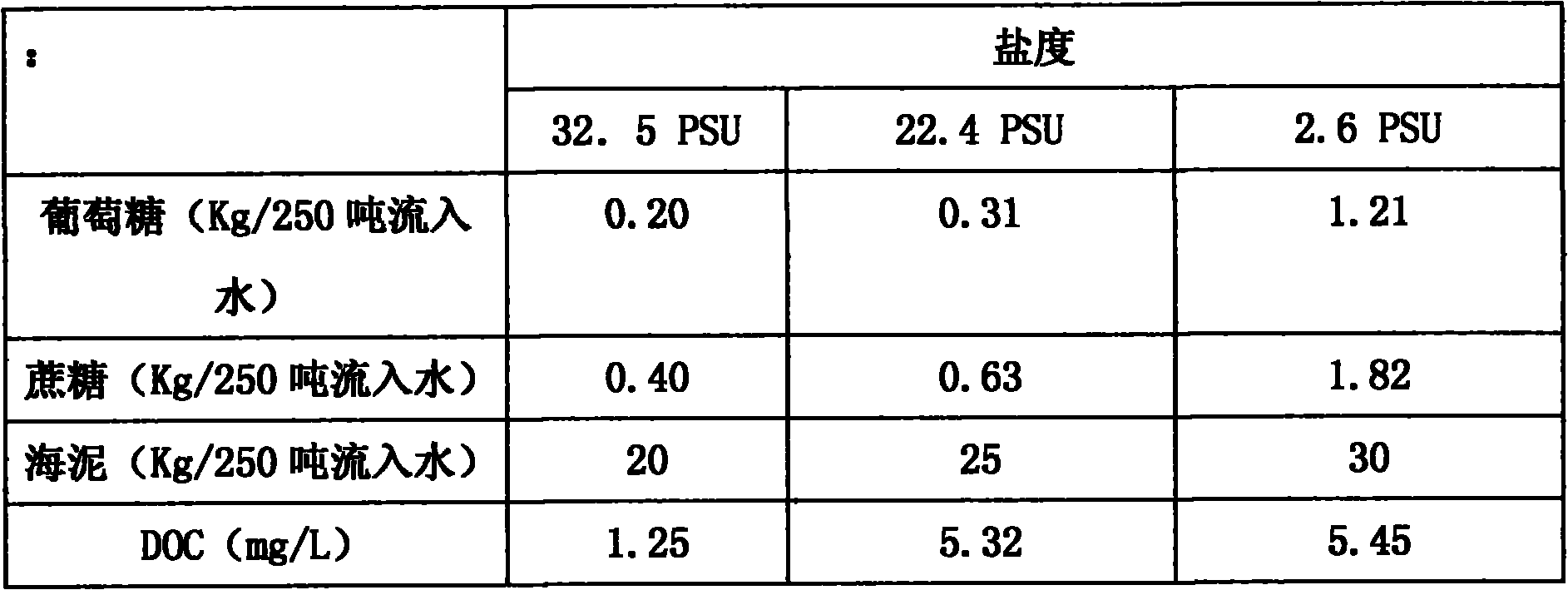
Figure 3
Abstract
Description
Technical field:
[0001] The invention relates to the field of ships, in particular to an experimental technology for ship ballast water treatment. Background technique:
[0002] In order to effectively control and prevent the transmission of harmful aquatic organisms and pathogens in the ballast water of ships, in 2004, the International Maritime Organization (IMO) adopted the International Convention on the Management and Control of Ballast Water and Sediments of Ocean-going Ships (hereinafter referred to as the "Convention") , the "Convention" stipulates that since 2009, all newly built ships must be installed with ballast water treatment devices, and the device must be used on ships and must undergo land-based experiments to obtain type approval. According to the requirements of the IMO G8 guidelines, the dissolved organic carbon (DOC) in the influent water of land-based experiments must meet certain indicators, while the content of DOC in natural seawater is generally le...
Examples
Embodiment Construction
[0011] see Figure 1-2 , this specific embodiment adopts the following technical scheme: add 0.20-1.23Kg glucose, 0.40-1.85Kg sucrose and 20-33Kg sea mud to 250 tons of influent water with different salinities, so that the DOC content in the influent water just reaches the G8 guideline Provisions.
[0012] The substance of this embodiment is inexpensive, non-toxic, non-polluting, readily available, and very effective. For the seawater with high, medium and low salinity, the dissolved organic carbon in the seawater is adjusted respectively, so that the DOC content in the influent water just meets the requirements of the G8 guideline, which not only ensures that the land-based experiment can be carried out effectively, but also does not cause Too high DOC content increases the difficulty of processing.