
Transgenic rice cry1ab/ac protein aptamer
An aptamer and rice technology, applied in the field of protein aptamers, can solve the problems of rare reports on the screening and application of exogenous proteins of transgenic products, and achieve the effects of simple and feasible method, simple procedure and clear judgment standard.
Patent Information
- Authority / Receiving Office
- CN · China
- Patent Type
- Patents(China)
- Current Assignee / Owner
- Publication Date
- 2014-10-01
- Estimated Expiration
- Not applicable · inactive patent
Smart Images
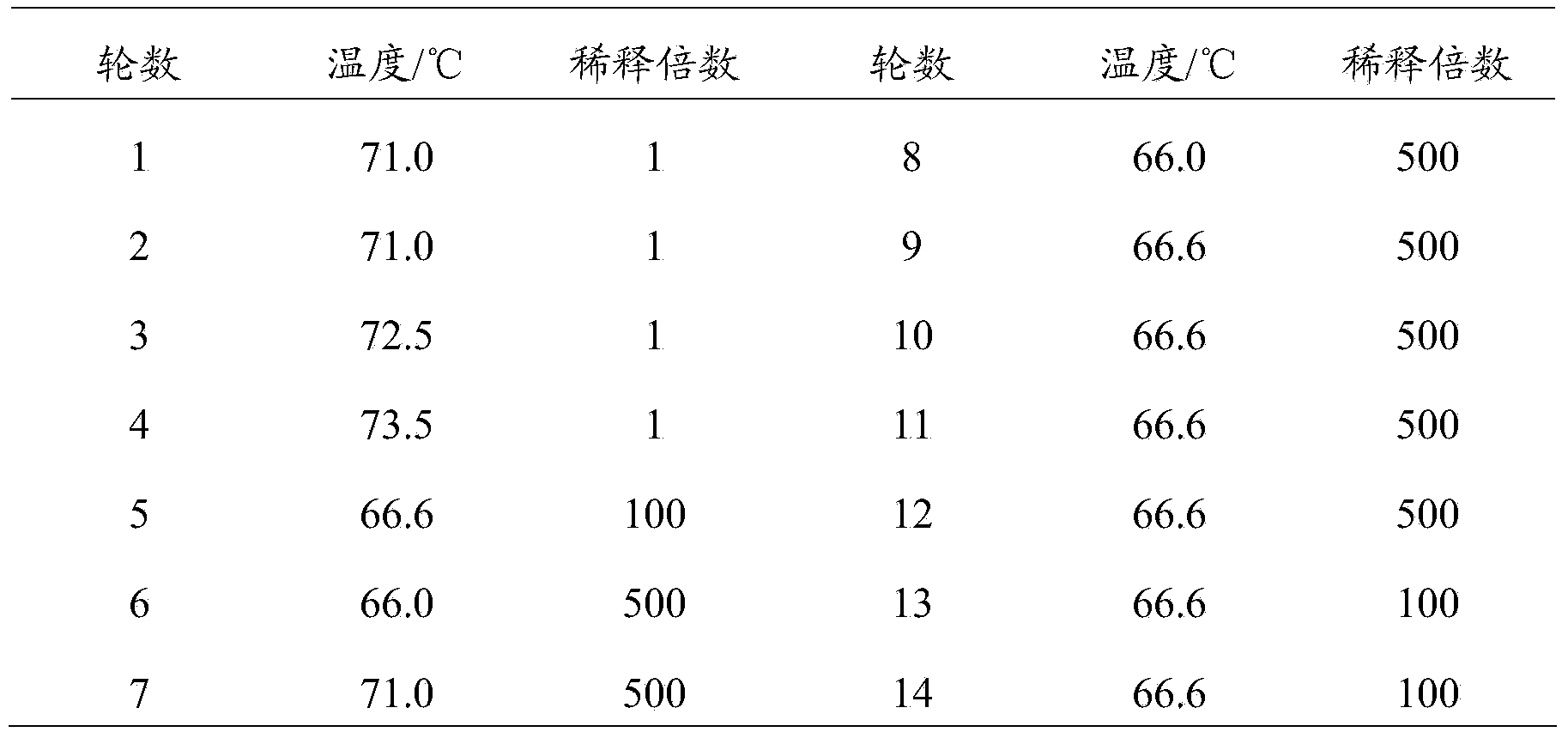
Figure 1 
Figure 2 
Figure 3
Abstract
Description
Technical field
[0001] The invention relates to a protein aptamer, in particular to a BT gene transgenic rice Cry1Ab / Ac protein aptamer.
Background technique
[0002] Bacillus thuringiensis (BT) was discovered by Japanese scientist S Ishiwata in 1901 and named by German scientist Berliner in 1915. Insects (such as diamondback moth) have a strong killing effect. BT gene-transformed crops can kill insects by lysing intestinal epithelial cells of insects. In order to overcome the threat of insect disasters to crops, food containing BT toxin gene-transferred crops has entered human life. In 1995, transgenic crops began to enter the stage of large-scale commercial planting. Up to now, BT genetically modified crops are the most rapidly commercialized insect-resistant genetically modified crops in the world, such as tobacco, corn, cotton, rice, etc. In my country, the BT gene has been introduced into rice -- "Huahui No. 1", "BT Shanyou 63" transgenic rice. For special popula...
Examples
Embodiment Construction
[0008] The ssDNA library used in the present invention is synthesized by Shanghai Sangon Bioengineering Technology Service Co., Ltd. The ssDNA library is 5′-GGG AGC TCA GAA TAA ACG CTC AA-N70-TT CGA CAT GAG GCC CGG ATC-3′, two of which The end is a fixed sequence, and the middle N70 is a random region of the library, that is, a random sequence of 70 bases, with a total length of 113 bases, of which N70 is also the final target product aptamer to be obtained in the present invention.
[0009] The screening method for the Cry1Ab / Ac protein aptamer of transgenic rice of the present invention, the specific operation steps are as follows:
[0010] step 1:
[0011] A. Immobilize the BT-transgenic rice Cry1Ab / Ac protein on ethylene oxide acrylic beads to prepare Cry1Ab / Ac protein-acrylic acid ethylene oxide beads, and at the same time coat Cry1Ab / Ac protein-acrylic acid epoxy beads with mercaptoethanol hydrate Ethane beads were prepared as 5.6mg / mL glycine-empty beads, and blank be...