
Ultraviolet light cured antifogging coating
A technology of anti-fog coating and ultraviolet light, applied in the direction of coating, etc., can solve the problems of wear resistance, water resistance and anti-fog performance, the inability to achieve anti-fog effect, swelling of the anti-fog coating surface, etc., to achieve good Long-lasting anti-fog performance, excellent anti-fog durability, effect of reducing migration tendency
Patent Information
- Authority / Receiving Office
- CN · China
- Patent Type
- Applications(China)
- Current Assignee / Owner
- Publication Date
- 2013-02-06
Smart Images
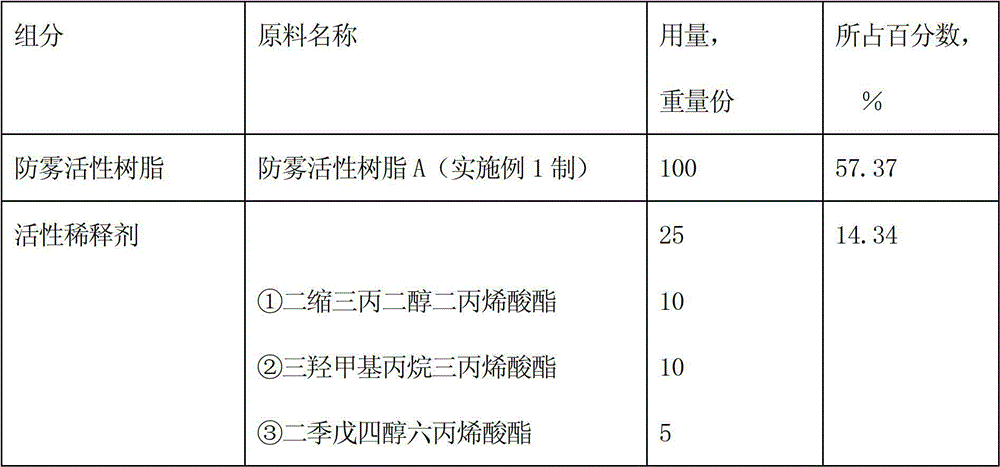
Figure 1 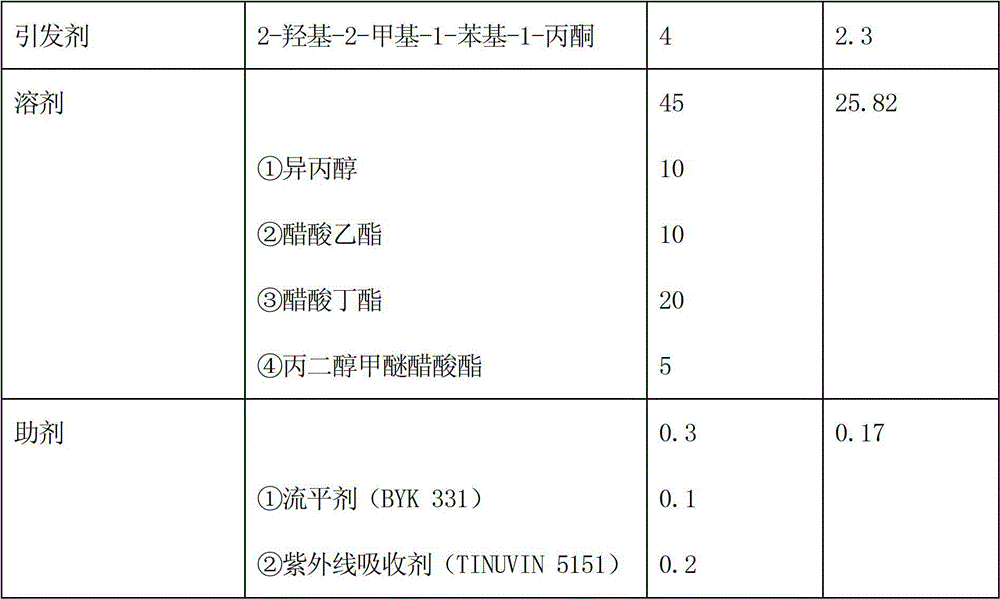
Figure 2 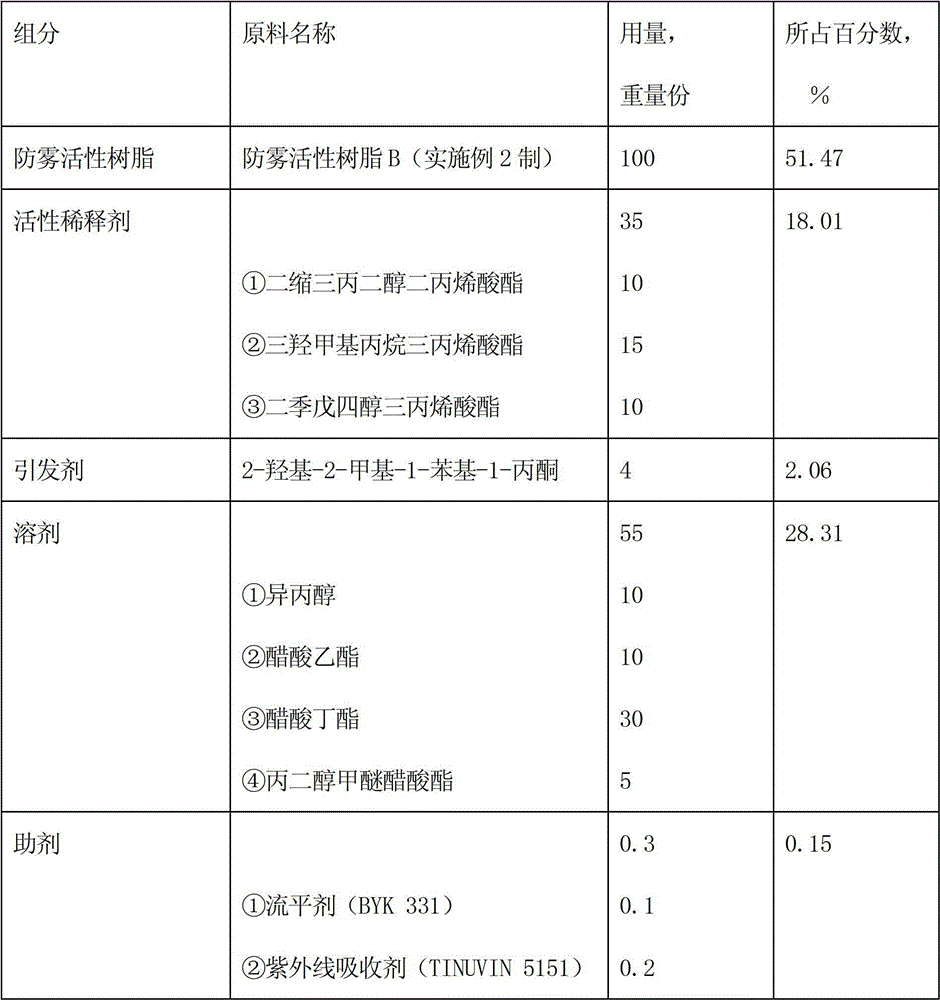
Figure 3
Abstract
Description
Technical field
[0001] The invention relates to an ultraviolet light curing anti-fog coating. Background technique
[0002] Fog is a common natural phenomenon in the meteorological environment. When the water vapor in the air reaches or approaches the dew point, it condenses into tiny droplets to form mist. The result of atomization of water droplets on the surface of transparent materials not only reduces the light transmittance and affects vision, but sometimes even causes harm. For example, when the fog droplets condense on agricultural plastic films in greenhouses or solar cell light-transmitting panels, the fog blocks the transmission of sunlight. As a result, the solar energy absorption efficiency is reduced, which is not conducive to the full play of these facilities. In order to prevent the surface of transparent materials from atomizing, people have taken various measures to eliminate the condensation of fog droplets. There are three commonly used methods: ① Heati...
Examples
Embodiment 1
[0017] Example 1 Preparation of UV-curable anti-fog coating
[0018] (1) Preparation of anti-fog active resin A
[0019] Specific steps are as follows:
[0020] ① Prepare the ingredients
[0021] The specific dosage is: 40 parts by weight of reactive nonionic surfactant SN-10, 15 parts by weight of acrylic acid, 45 parts by weight of butyl acrylate, the total amount of the three is 100 parts by weight; 50 parts by weight of butyl acetate, 50 parts by weight of propylene glycol methyl ether parts by weight, 1.6 parts by weight of initiator azobisisobutyronitrile; 20 parts by weight of glycidyl methacrylate (the ratio of glycidyl methacrylate to acrylic acid is 20:15=1.33);
[0022] ②Preparation process
[0023] 40 parts by weight of butyl acetate and all propylene glycol methyl ether were mixed and put into the reactor, and the temperature was raised to 90 ° C and began to drip a total of 100 parts by weight of reactive nonionic surfactant SN-10, acrylic acid and butyl acryl...
Embodiment 2
[0032] Example 2 Preparation of UV-curable anti-fog coating
[0033] (1) Preparation of anti-fog active resin B
[0034] Specific steps are as follows:
[0035] ① Prepare the ingredients
[0036] The specific dosage is: 30 parts by weight of reactive nonionic surfactant SN-15, 15 parts by weight of acrylic acid, 55 parts by weight of butyl methacrylate, the total amount of the three is 100 parts by weight; 50 parts by weight of butyl acetate, propylene glycol methyl ether 50 parts by weight, 1.6 parts by weight of initiator azobisisobutyronitrile; 20 parts by weight of glycidyl methacrylate (the ratio of glycidyl methacrylate to acrylic acid is 20:15=1.33);
[0037] ②Preparation process
[0038] The specific preparation steps are the same as those in Example 1 except that the raw materials and the dosage are different, and the anti-fog active resin B is prepared.
[0039] (2) Preparation of UV-curable anti-fog coatings
[0040] ①The coating formula is shown in Table 2.
...
Embodiment 3
[0045] Example 3 Preparation of UV-curable anti-fog coating
[0046] (2) Preparation of anti-fog active resin C
[0047]Specific steps are as follows:
[0048] ① Prepare the ingredients
[0049] The specific dosage is: 25 parts by weight of reactive nonionic surfactant SN-20, 20 parts by weight of methacrylic acid, 55 parts by weight of butyl acrylate, the total amount of the three is 100 parts by weight; 50 parts by weight of butyl acetate, propylene glycol methyl ester 50 parts by weight of ether, 1.6 parts by weight of initiator azobisisobutyronitrile; 22 parts by weight of glycidyl methacrylate (the ratio of glycidyl methacrylate to methacrylic acid is 22:20=1.1);
[0050] ②Preparation process
[0051] The specific preparation steps are the same as those in Example 1, except that the raw materials and the dosage are different, and the anti-fog active resin C is obtained.
[0052] (2) Preparation of UV-curable anti-fog coatings
[0053] ①The coating formula is shown in...