
Method for identifying rice and dry rice
A technology of rice and identification value, applied in the directions of biochemical equipment and methods, microbial determination/inspection, etc., can solve the problems of water and terrestrial ecotype confusion of cultivated rice germplasm resources, and problems of germplasm resource utilization and research, etc. Good promotion and application prospects, simple identification method, fast and efficient effect
Patent Information
- Authority / Receiving Office
- CN · China
- Current Assignee / Owner
- Publication Date
- 2013-06-12
- Estimated Expiration
- Not applicable · inactive patent
Smart Images
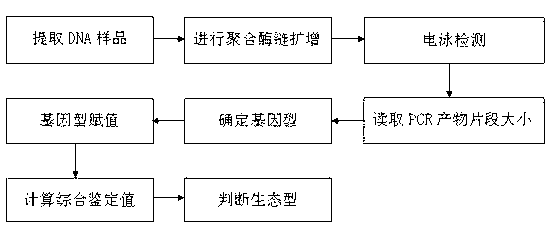
Figure 1 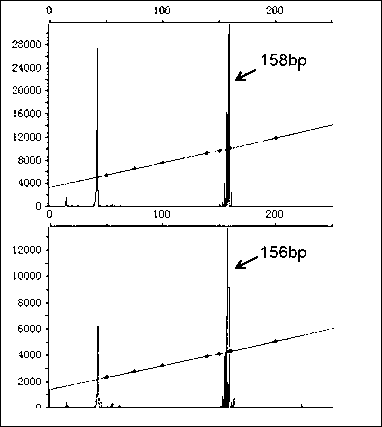
Figure 2 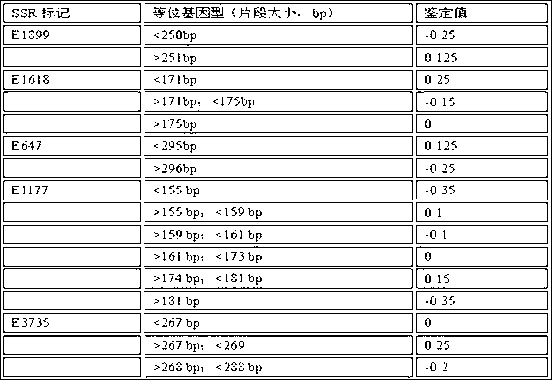
Figure 3
Abstract
Description
technical field
[0001] The invention relates to a method for identifying the ecotype of cultivated rice or upland rice, in particular to a molecular method for quickly and efficiently identifying the ecotype of cultivated rice landrace rice or upland rice by using SSR markers. technical background
[0002] Cultivated rice is one of the most important food crops in the world, providing food for more than half of the global population. Cultivated rice production consumes more than half of all agricultural water, and more than 60% of paddy fields in my country will be affected by drought to varying degrees. Therefore, drought and water shortage have become one of the important issues threatening my country's food security. In such a severe situation, the research and development of water-saving and drought-resistant rice (WDR) has become an important direction in rice breeding, which can contribute to the sustainable development of rice production and the harmonious ecological ...
Examples
Embodiment 1
[0047]The rice and upland rice ecotypes of 30 domestic cultivated rice germplasm resources were identified by 5 pairs of SSR molecular markers. The specific experimental materials are shown in Table 4.
[0048] Table 4. 30 local species of rice and upland rice from different regions in my country.
[0049]
[0050] Extract a DNA sample from any organ or tissue of a rice plant (including seeds, seedlings, adult plants, stems, leaves, etc.), and carry out polymerase chain amplification to the sample DNA. The polymerase chain amplification system used in the present invention is conventional The three-primer PCR system, the PCR instrument produced by any company and the reagents produced and synthesized by any biological reagent company can be used to achieve the purpose. PCR reaction conditions and program are as follows among the present invention (20 μ l system):
[0051] PCR reaction conditions:
[0052] 1) 10×Taq buffer (containing 25mM MgCl2) 2μl
[0053] 2) 10mM dNT...
Embodiment 2
[0074] Using 5 pairs of SSR molecular markers to identify the rice and upland rice ecotypes of 20 international cultivated rice germplasm resources. The specific experimental materials are shown in Table 6.
[0075] Table 6. 20 rice and upland rice landrace materials from different regions of the world.
[0076]
[0077] DNA samples are extracted from any organs or tissues of rice plants (including seeds, seedlings, adult plants, stems, leaves, etc.), and polymerase chain amplification is performed on the sample DNA. The polymerase chain amplification system used in the present invention is a conventional three-primer PCR system, and the PCR instrument produced by any company and the reagents produced and synthesized by any biological reagent company can be used to achieve the purpose. The PCR reaction conditions and procedures are as follows (20 μl system):
[0078] PCR reaction conditions
[0079] 1) 10×Taq buffer (containing 25mM MgCl2) 2μl
[0080] 2) 10mM dNTP Mixt...