
Method for authenticating pork, beef, mutton and products thereof
A technology for mutton and its products, which is applied in the identification of mutton and its products, cattle, and pigs. It can solve the problems that the average efficiency cannot reach the theoretical value, and achieve the effect of simple method, high sensitivity and improved sensitivity.
Patent Information
- Authority / Receiving Office
- CN · China
- Patent Type
- Applications(China)
- Current Assignee / Owner
- Publication Date
- 2012-02-01
Smart Images
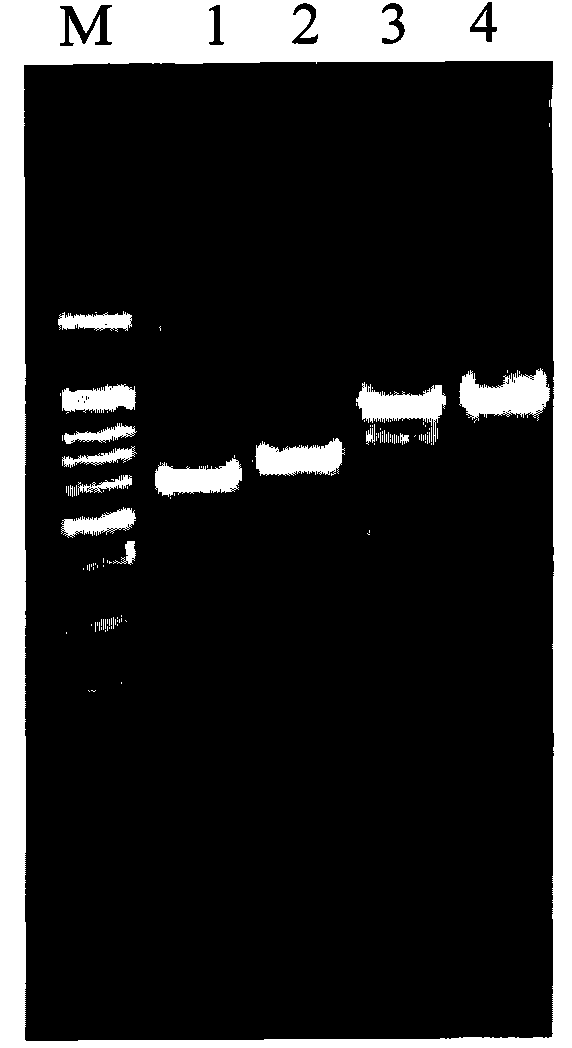
Figure 1 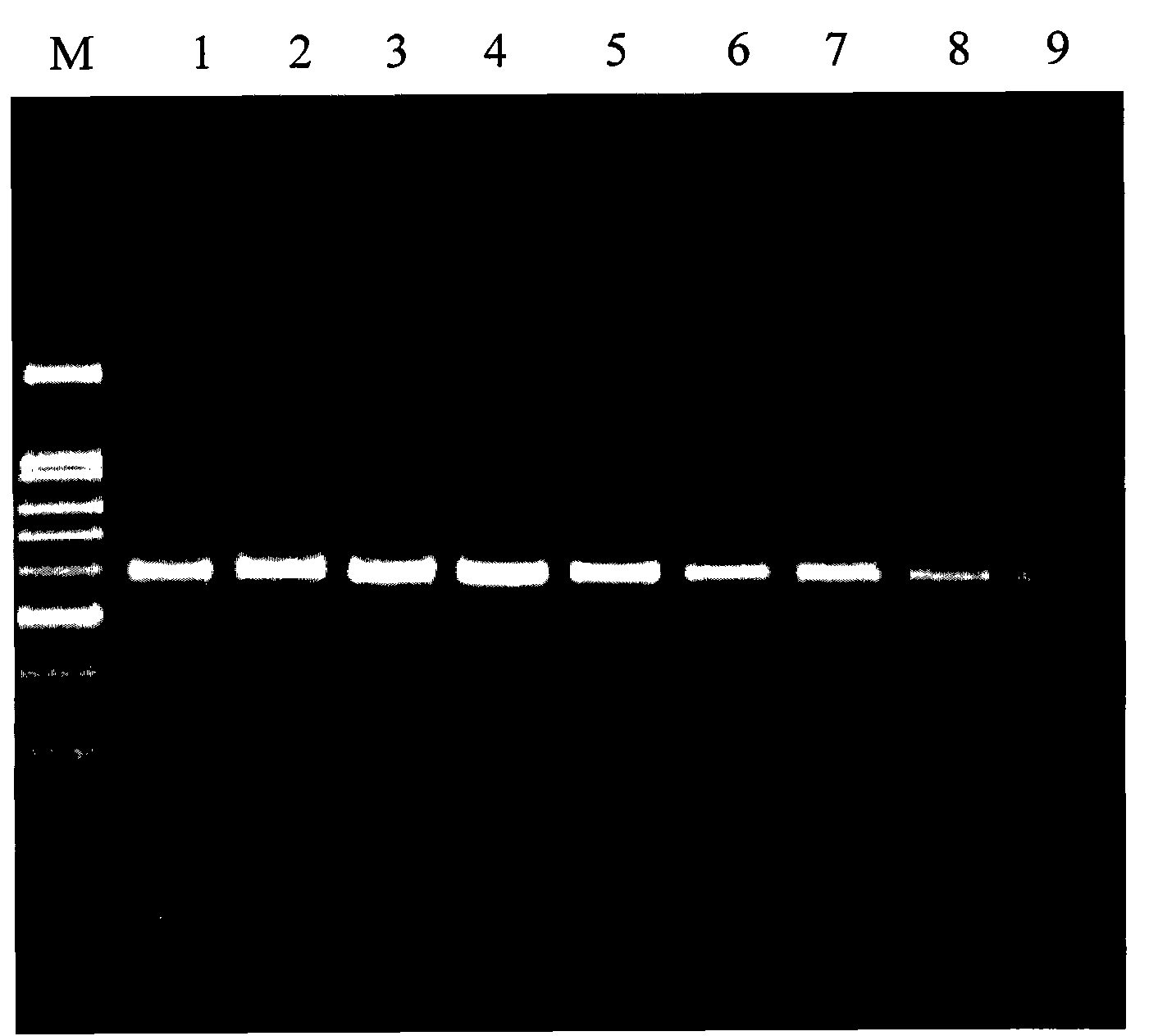
Figure 2 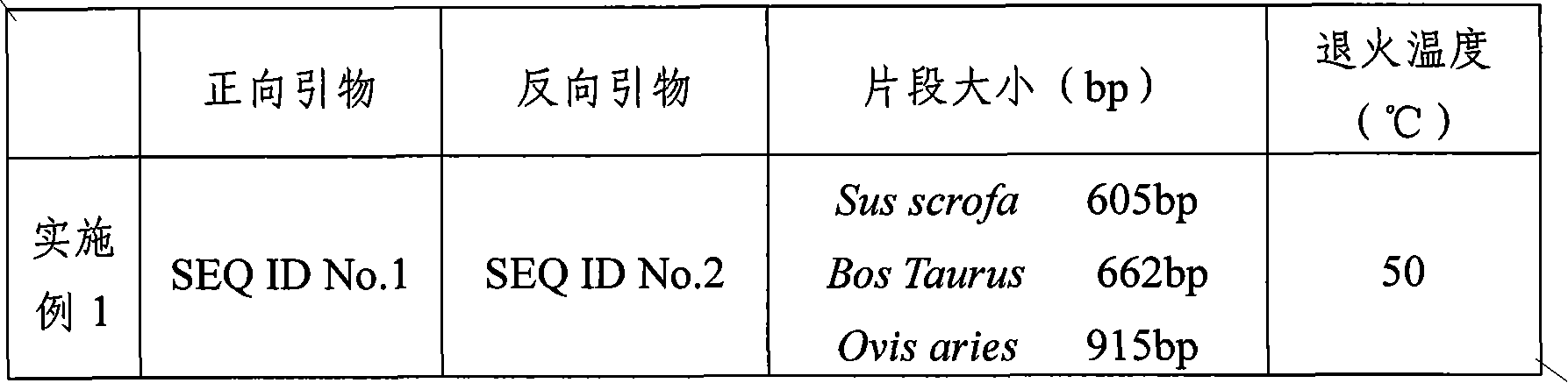
Figure 3
Abstract
Description
technical field
[0001] The invention relates to a method for identifying pigs, cattle, mutton and their products, in particular to a method for using DNA analysis to identify pigs, cattle, mutton and their products. Background technique
[0002] At present, there are mainly three methods for species identification of special animal components: enzyme-linked immunosorbent assay (ELISA) (enzyme-linked immunosorbent assay), microscope structure analysis method and DNA analysis method. Among them, the DNA analysis method is a relatively new identification method, which uses PCR amplification technology (polymerase chain reaction, polymerase chain reaction), this technology can make a small amount of target gene within a few hours Million-fold amplification, very sensitive, and easy to operate. Due to the above advantages of PCR technology, a large number of analytical methods based on this technology have been established in recent years for the identification of species compos...
Examples
Embodiment 1
[0033] 1) Extract sample DNA: take 0.1g sample, cut the meat sample with scissors, grind it in a mortar, transfer it to a 2mL centrifuge tube, add 1mL CTAB extract (CTAB 20g / L, NaCl 1.4mol / L, Tris 0.1mol / L, Na2EDTA0.02mol / L, PH=8.0) and 20μL proteinase K (20mg / mL), fully shake the centrifuge tube, 65 ℃ water bath for 1h, shake from time to time; Centrifuge at 12000g for 15min; transfer the supernatant to a new centrifuge tube, add an equal volume of phenol and chloroform / isoamyl alcohol mixed solvent (the volume ratio of chloroform to isoamyl alcohol is 24:1), shake the centrifuge tube fully, and Centrifuge at 12,000 g for 10 min; after the mixture is separated, take the supernatant and transfer it to a new centrifuge tube, add an equal volume of chloroform / isoamyl alcohol mixed solvent (the volume ratio of chloroform to isoamyl alcohol is 24:1), shake and centrifuge After the tube, centrifuge at 12000g for 10min; take the supernatant and transfer it to a new centrifuge tube, ...
Embodiment 2
[0037] Embodiment 2PCR amplification result
[0038] Taking pork, beef, goat meat and sheep meat as samples respectively, the above-mentioned samples are detected respectively with the method of embodiment 1, and the results are as follows: figure 1 shown.
[0039] The results showed that a single DNA band could be obtained after PCR amplification of the four samples, and the DNA amplification bands of pigs, cattle, and sheep had different sizes, which were consistent with the expected fragment sizes (as shown in Table 1).
[0040] Table 1 Oligonucleotide sequences used for species-specific mitochondrial fragment amplification
[0041]
Embodiment 3
[0042] Embodiment 3 sensitivity analysis
[0043] Different dilutions of DNA from raw pork samples were used as templates (concentrations were 128ng / μL, 12.9ng / μL, 1.0ng / μL, 0.5ng / μL, 128pg / μL, 64pg / μL, 42pg / μL, 32pg / μL, 25pg / μL), carry out PCR amplification according to the method of Example 1. The result is as figure 2 shown.
[0044] The results showed that when the 25 μL reaction system contained 25 pg of raw pork genomic DNA, after 35 cycles of amplification, EB staining could be imaged under ultraviolet light after electrophoresis, and obvious target bands could be seen.