
An asymmetrical involute worm gear pair
An involute, asymmetrical technology, applied in gear transmissions, belts/chains/gears, portable lifting devices, etc., to solve problems such as worm gears being easily broken
Patent Information
- Authority / Receiving Office
- CN · China
- Patent Type
- Patents(China)
- Current Assignee / Owner
- Publication Date
- 2015-12-30
Smart Images
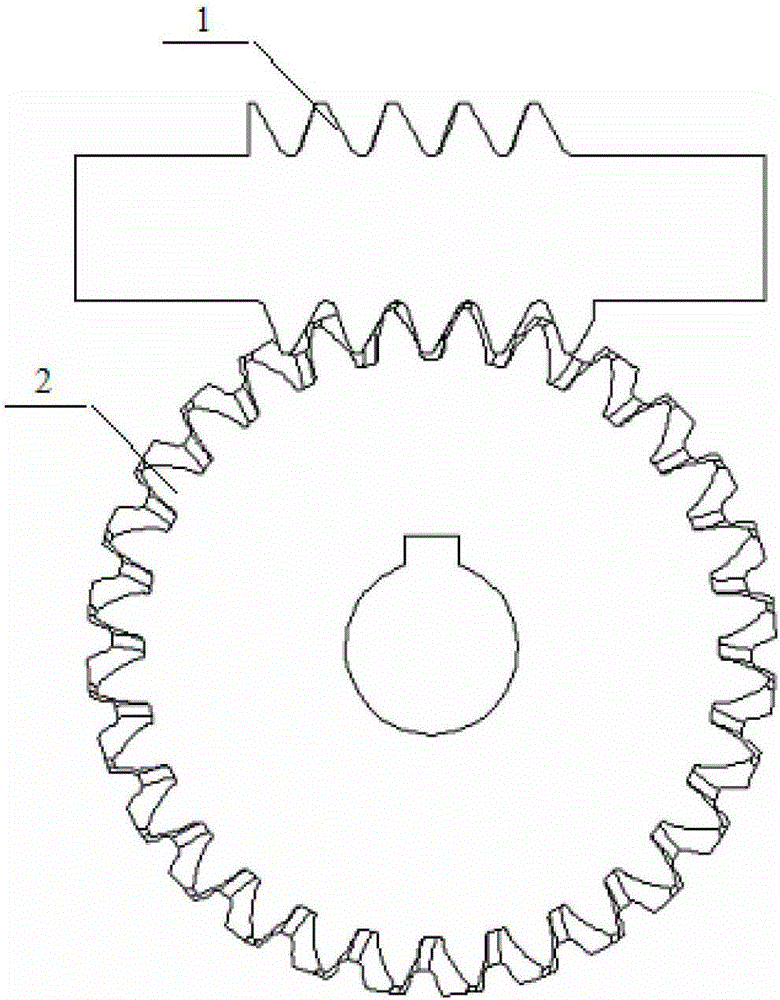
Figure 1 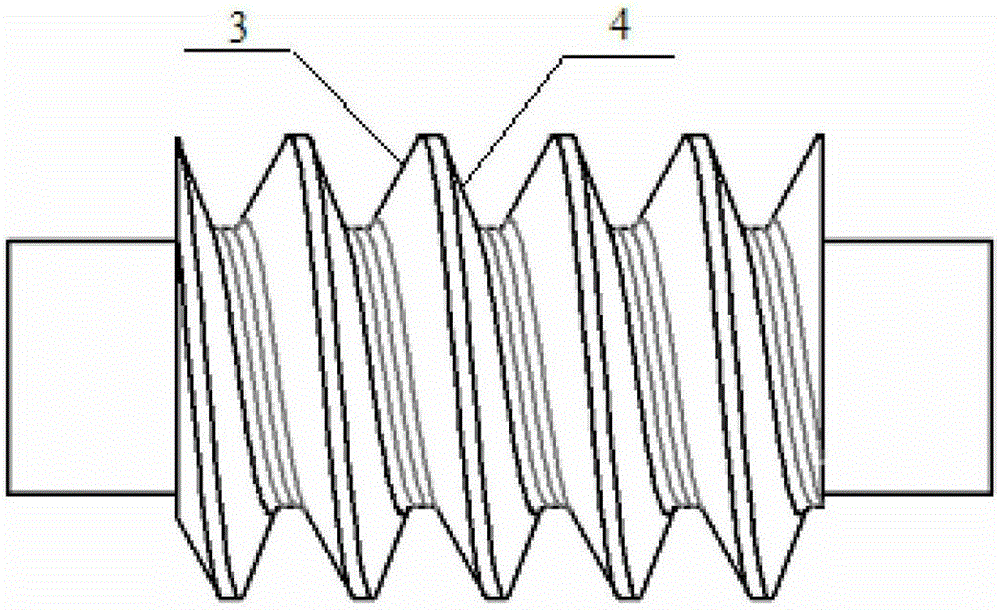
Figure 2 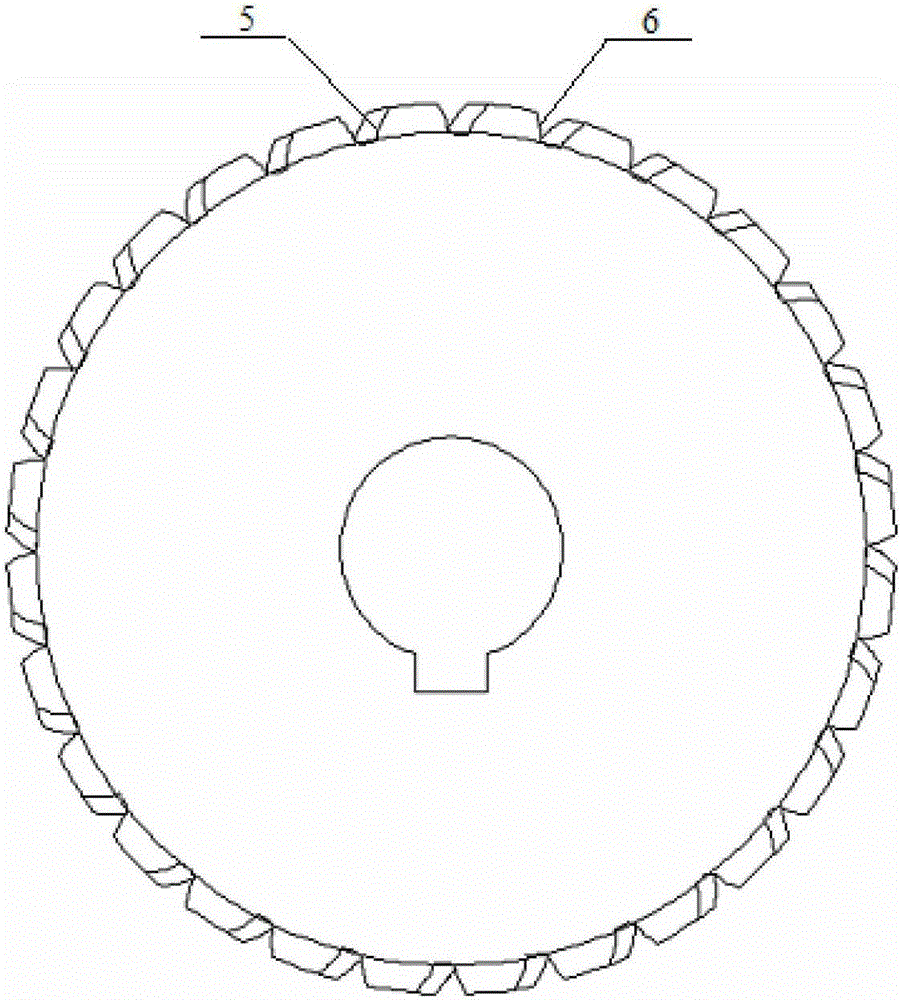
Figure 3
Abstract
Description
technical field
[0001] The invention relates to an asymmetric involute worm gear pair, which belongs to the technical field of worm gear mechanical transmission. Background technique
[0002] At present, worm drive is widely used because of its advantages of large transmission ratio, stable transmission, small vibration and low noise. The performance and quality of worm gear transmission will ultimately affect the quality of machine products. Therefore, in order to meet the needs of modern mass production, it is required to continuously optimize the transmission performance of worm gears. In recent years, there have been great developments in the meshing theory of worm and worm gears, the calculation of bearing capacity, and new worm drives. In the process of worm gear transmission, the shape of gear teeth will not only affect the kinematic characteristics of worm gear transmission, but also affect the dynamic performance of worm gear transmission. In order to adapt to the...
Examples
Embodiment Construction
[0014] In order to make the content of the present invention more clearly understood, the present invention will be further described in detail below based on specific embodiments and in conjunction with the accompanying drawings.
[0015] Such as Figure 1~4 As shown, an asymmetrical involute worm gear pair includes a worm 1 and a worm gear 2. The two sides of the teeth of the worm 1 respectively have a worm meshing side tooth profile 3 and a worm non-meshing side tooth profile 4. The gear teeth of the worm wheel 2 Both sides have the tooth profile 5 on the meshing side of the worm wheel and the tooth profile 6 on the non-engaging side of the worm wheel respectively, where the axial modulus of the worm 1 is m 1 , the end modulus of worm gear 2 is m 2 , the pressure angle of the tooth profile 3 on the meshing side of the worm is α 1 , the pressure angle of the tooth profile 4 on the non-meshing side of the worm is α 2 , the pressure angle of the tooth profile 5 on the meshi...