

Preparation method of 2-amino-3,5-dibromobenzaldehyde
A technology of dibromobenzaldehyde and o-nitrobenzaldehyde, which is applied in the preparation of organic compounds, chemical instruments and methods, organic chemistry, etc., can solve the problems of complex process and low yield, simplify the process and reduce the workload , to avoid the effect of condensation reaction
Patent Information
- Authority / Receiving Office
- CN · China
- Current Assignee / Owner
- Publication Date
- 2015-12-16
- Estimated Expiration
- Not applicable · inactive patent
Smart Images
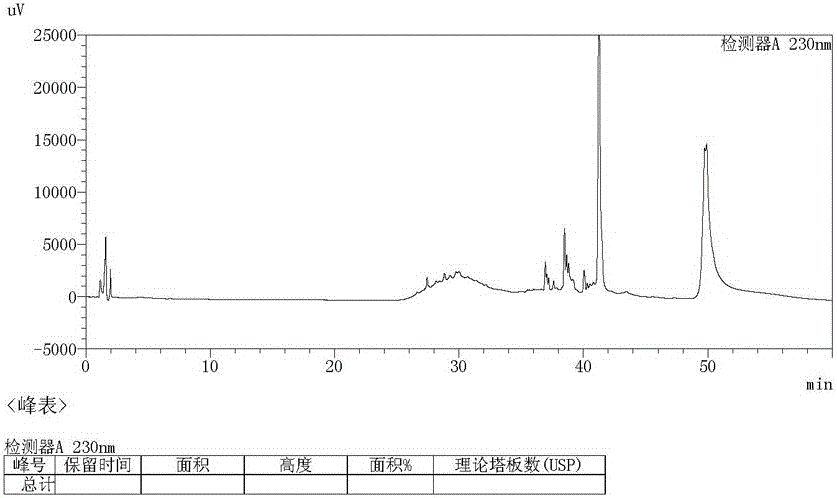
Figure 1 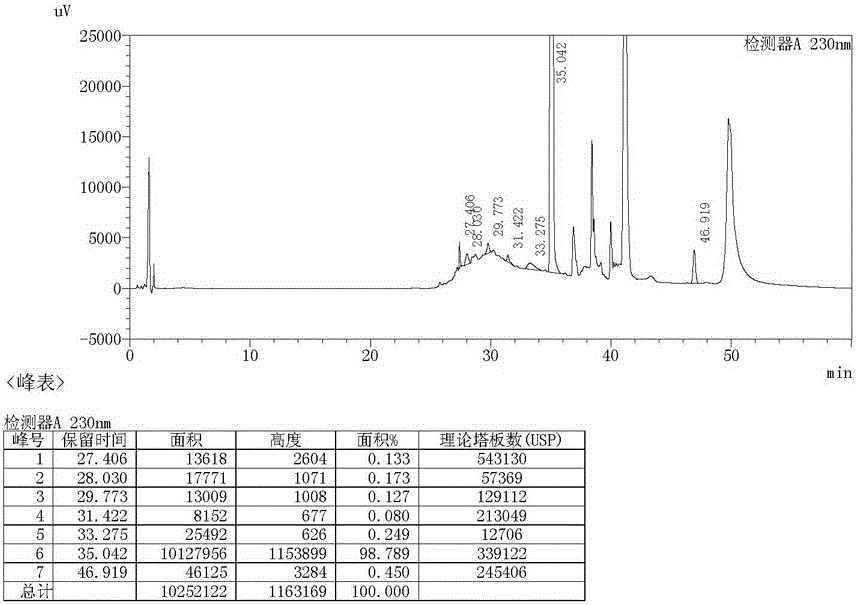
Figure 2 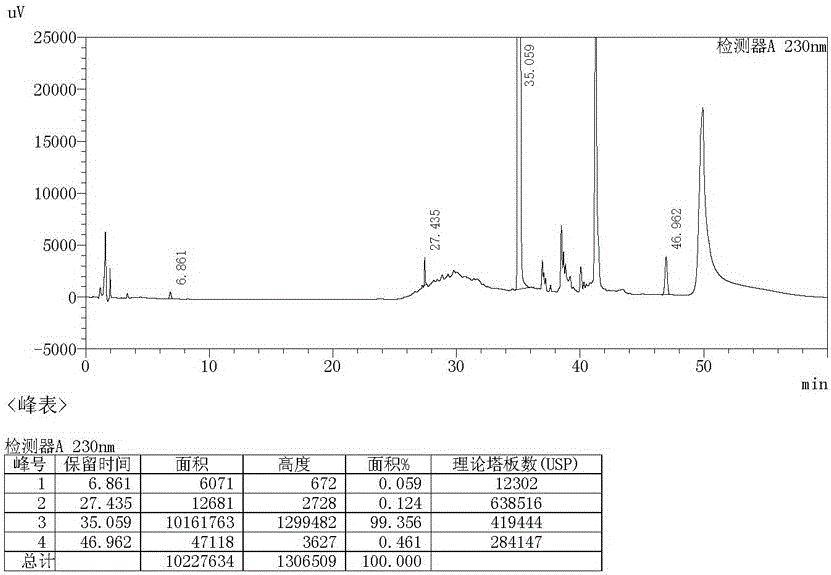
Figure 3
Abstract
Description
technical field
[0001] The invention belongs to the field of synthesis of pharmaceutical intermediates and relates to a preparation method of 2-amino-3,5-dibromobenzaldehyde. Background technique
[0002] 2-Amino-3,5-dibromobenzaldehyde is a common pharmaceutical intermediate widely used in the synthesis of expectorant drug Ambroxol hydrochloride. There are many synthetic routes for ambroxol hydrochloride, but the most widely used route is: use 2-amino-3,5-dibromobenzaldehyde as raw material, and condense with trans-p-aminocyclohexanol to form intermediate imines The product is converted into a salt through hydrogenation reduction and acidification to obtain ambroxol hydrochloride. As an important intermediate of ambroxol hydrochloride, 2-amino-3,5-dibromobenzaldehyde has a large demand.
[0003] In the existing process, o-nitrobenzaldehyde is commonly used to reduce o-nitrobenzaldehyde with iron powder to obtain anthranilbenzaldehyde. After extraction and other post-treat...
Examples
Embodiment 1
[0019] Add 1.5g (10mmol) of o-nitrobenzaldehyde, 34mL of absolute ethanol, and 17mL of distilled water into a 100mL three-neck flask, and slowly heat up to 50°C under stirring. After the o-nitrobenzaldehyde is completely dissolved, add 34mL of acetic acid, 3.9g (70mmol) reduced iron powder and 3~4 drops of concentrated HCl, continue heating to 105°C; after reflux for 40min, stop the reaction.
[0020] The three-neck flask was cooled in a cold trap at 0°C, and after cooling, 3.1 g (20 mmol) of bromine was added dropwise, and reacted at room temperature for 120 min after the reduction was completed. Stop the reaction, filter with suction, wash with 10ml of water, then extract with 3*20ml of dichloromethane, then wash the dichloromethane layer with 2*20ml of saturated sodium bicarbonate solution and 2*20ml of water; dry with anhydrous sodium sulfate after washing The organic layer was rotary evaporated to obtain 2.76 g of a yellow solid.
[0021] Recrystallize with 10ml of aceto...
Embodiment 2
[0023] Add 1.5g (10mmol) of o-nitrobenzaldehyde, 40mL of absolute ethanol, and 10mL of distilled water into a 100mL three-neck flask, stir at room temperature, and then add 31mL of acetic acid and 2.2g (40mmol) of acetic acid to reduce Iron powder and 3~4 drops of concentrated HCl, continue to heat at 90°C; after refluxing for 60min, stop the reaction.
[0024] The three-neck flask was cooled in a cold trap at 0°C, and after cooling, 6.2g (40mmol) of bromine was added dropwise, and reacted at room temperature for 150min after the completion of the lowering. Stop the reaction, filter with suction, wash with 10ml of water, extract with 3*20ml of dichloromethane, wash the organic layer with 2*20ml of saturated sodium bicarbonate solution and 2*20ml of water; dry the organic layer with anhydrous sodium sulfate after washing , rotary evaporation to obtain a yellow solid 2.76g.
[0025] Recrystallize with 10ml of acetone to obtain 2.59g of light yellow solid, yield 92.8%, purity 99...