

Compound and preparation method and application thereof
A compound, the technology of boron trifluoride ether, is applied in the field of preparation of the impurities of Liejing drugs, and achieves the effects of single structure, few by-products, and avoiding post-processing difficulties.
Patent Information
- Authority / Receiving Office
- CN · China
- Patent Type
- Applications(China)
- Current Assignee / Owner
- Publication Date
- 2017-01-04
- Estimated Expiration
- Not applicable · inactive patent
Smart Images
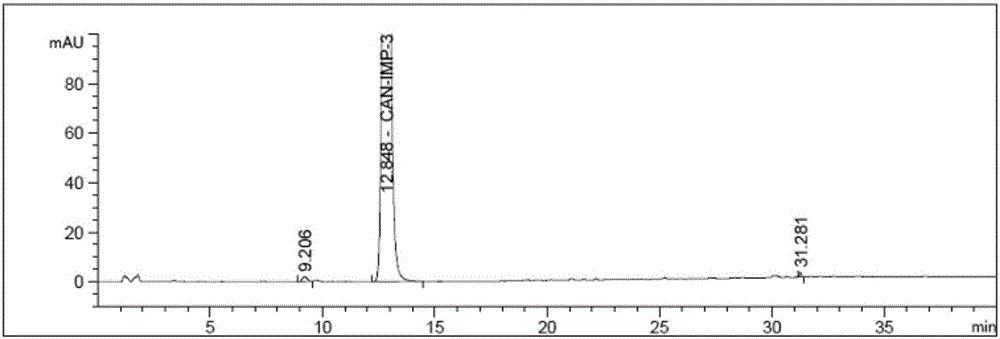
Figure 1 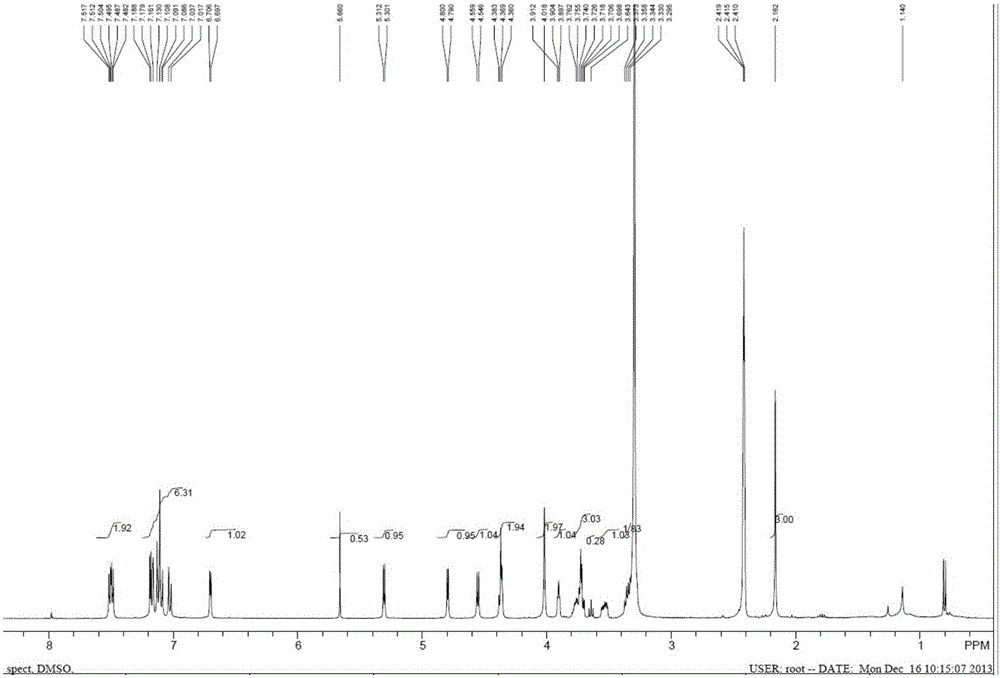
Figure 2 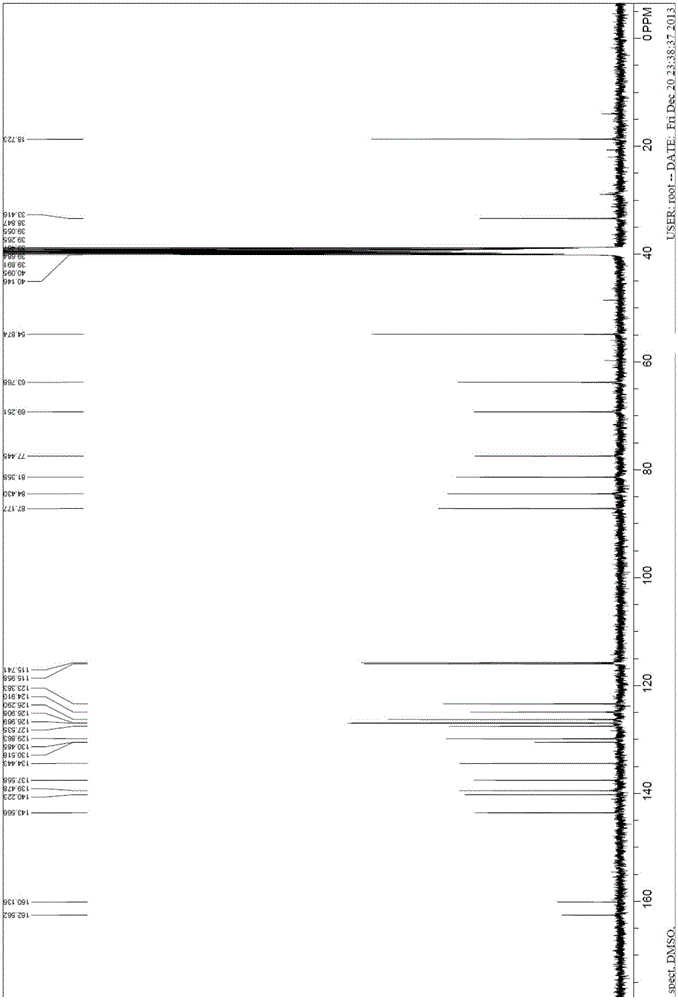
Figure 3
Abstract
Description
technical field
[0001] The present invention relates to the field of chemical synthesis, in particular, the present invention relates to a preparation method and application of a net drug impurity. Background technique
[0002] Canagliflozin, Dapagliflozin, and Empagliflozin are currently a class of drugs clinically used for diabetes treatment and belong to SGLT-2 inhibitors. SGLT-2 is a new target for diabetes treatment. It has a different mechanism of action from traditional diabetes treatment drugs. It can excrete excess glucose from the urine, thereby reducing glycosylated proteins and improving insulin sensitivity in the liver and peripheral tissues. Improve β-cell function, and at the same time further improve hepatic insulin resistance, thereby promoting the return of higher glycogen output to normal.
[0003] A major impurity of Canagliflozin, Dapagliflozin and Empagliflozin is a five-membered ring furanose impurity (compound shown in formula I).
[0004] [000...
Examples
Embodiment 1
[0056] Compound shown in embodiment 1 synthetic formula 2
[0057] The steps of the compound shown in the synthetic formula 2 are as follows:
[0058] 1. Add a few drops of concentrated sulfuric acid dropwise to a methanol solution in which the compound 3,5,6-tribenzyl-D-glucofuranose (50g, 110mmol) is dissolved, stir and heat to 50 to 55°C for 2 hours, and monitor the raw material by TLC The response is complete.
[0059] 2. Concentrate the solvent under reduced pressure to remove water, and dissolve the residue in 300ml ethyl acetate
[0060] 3. Add 100ml of water to the product in step 2, and adjust the pH value to close to 8 with solid sodium bicarbonate.
[0061] 4. The product in step 3 was separated, washed with water and brine respectively, dried over anhydrous sodium sulfate, and concentrated to obtain about 51 g (109.8 mmol) of a colorless oil, which could be directly used in the next reaction.
Embodiment 2
[0062] Compound shown in embodiment 2 synthetic formula 3
[0063] The steps of the compound shown in the synthetic formula 3 are as follows:
[0064] 1. Weigh 34 g (about 73 mmol) of the oil obtained in Example 1, and dissolve it in N,N-dimethylformamide (340 ml).
[0065] 2. Cool the solution obtained in step 1 to 0-5° C. with an ice-water bath, and add 60% sodium hydride (3.07 g, 77 mmol, 1.05 equivalents) in batches.
[0066] 3. Stir at 0-5°C for 30 minutes. A N,N-dimethylformamide solution containing benzyl bromide (12.5g, 74.5mmol) was slowly added dropwise, and the internal temperature was controlled at 0-5°C during the dropwise addition.
[0067] 4. React the solution obtained in step 3 at room temperature for 2 hours.
[0068] 5. The reaction solution obtained in step 4 was poured into water, extracted with ethyl acetate, washed with water, washed with saturated brine, dried over anhydrous sodium sulfate, and concentrated to obtain 35 g (63.1 mmol) of a light yello...
Embodiment 3
[0069] Compound shown in embodiment 3 synthetic formula 4
[0070] The steps of the compound shown in the synthetic formula 4 are as follows:
[0071] 1. Weigh 21 g (about 37.9 mmol) of the oil obtained in Example 2, dissolve it in dioxane, and add 2N hydrochloric acid aqueous solution under stirring.
[0072] 2. Stir the solution obtained in step 1, and raise the temperature to 70-80° C. to react for 16 hours, and monitor the reaction to the end by thin-layer chromatography.
[0073] 3. Pour the reaction solution into water, and adjust the pH value to close to 8 with solid sodium bicarbonate.
[0074] 4. Extract the solution obtained in step 3 with ethyl acetate, wash with water, wash with saturated brine, dry over anhydrous sodium sulfate, and concentrate to obtain a light yellow oil, which is the crude product of the compound shown in formula 4.
[0075] 5. The crude product obtained by the above treatment was purified by column chromatography to obtain 14 g of a colorles...