
Preparation of nitrobenzene derivative hydrogenation reaction catalyst, catalyst and application of catalyst
A technology of nitrobenzene derivatives and hydrogenation reaction, which is applied in the field of preparation of non-precious metal catalysts, can solve the problems of difficult application and low activity of iron-nitrogen-carbon three-way catalysts, achieve high-temperature treatment time is short, the synthesis method is simple, good chemoselectivity
Patent Information
- Authority / Receiving Office
- CN · China
- Current Assignee / Owner
- Publication Date
- 2017-06-20
- Estimated Expiration
- Not applicable · inactive patent
Smart Images
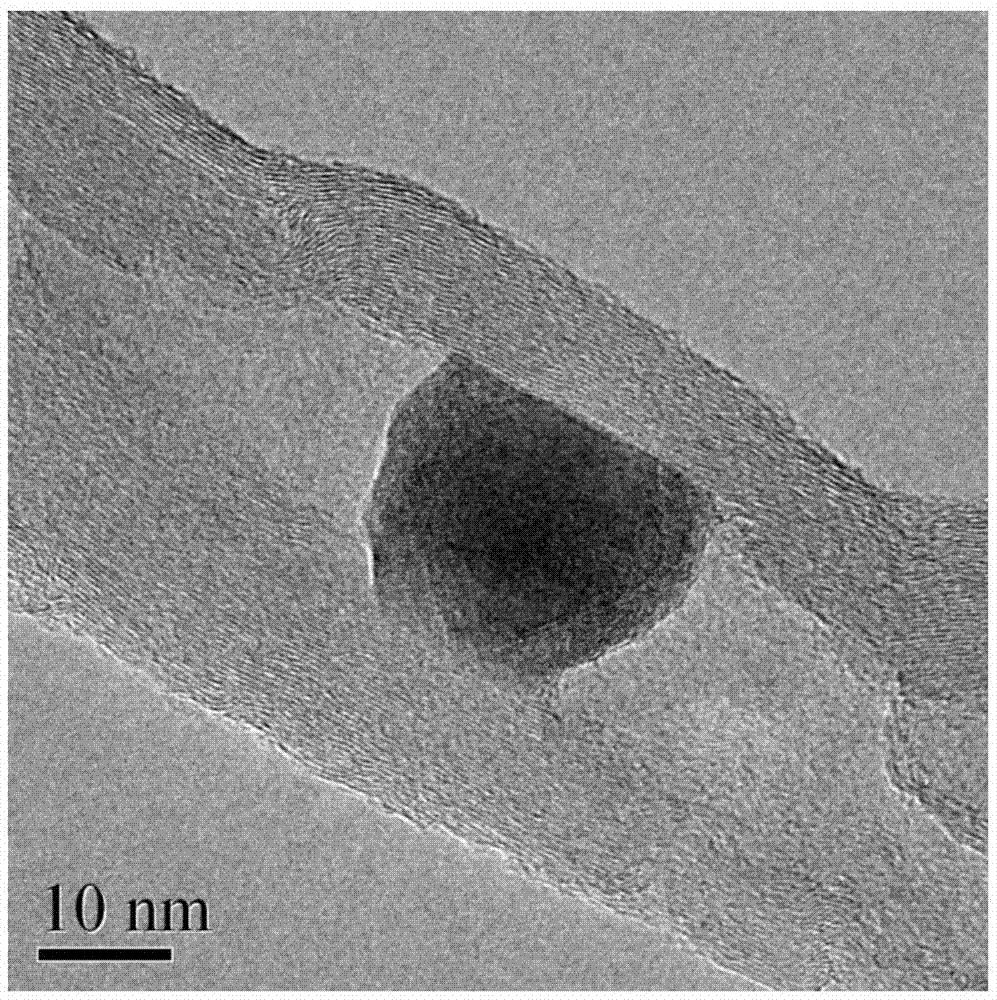
Figure 1 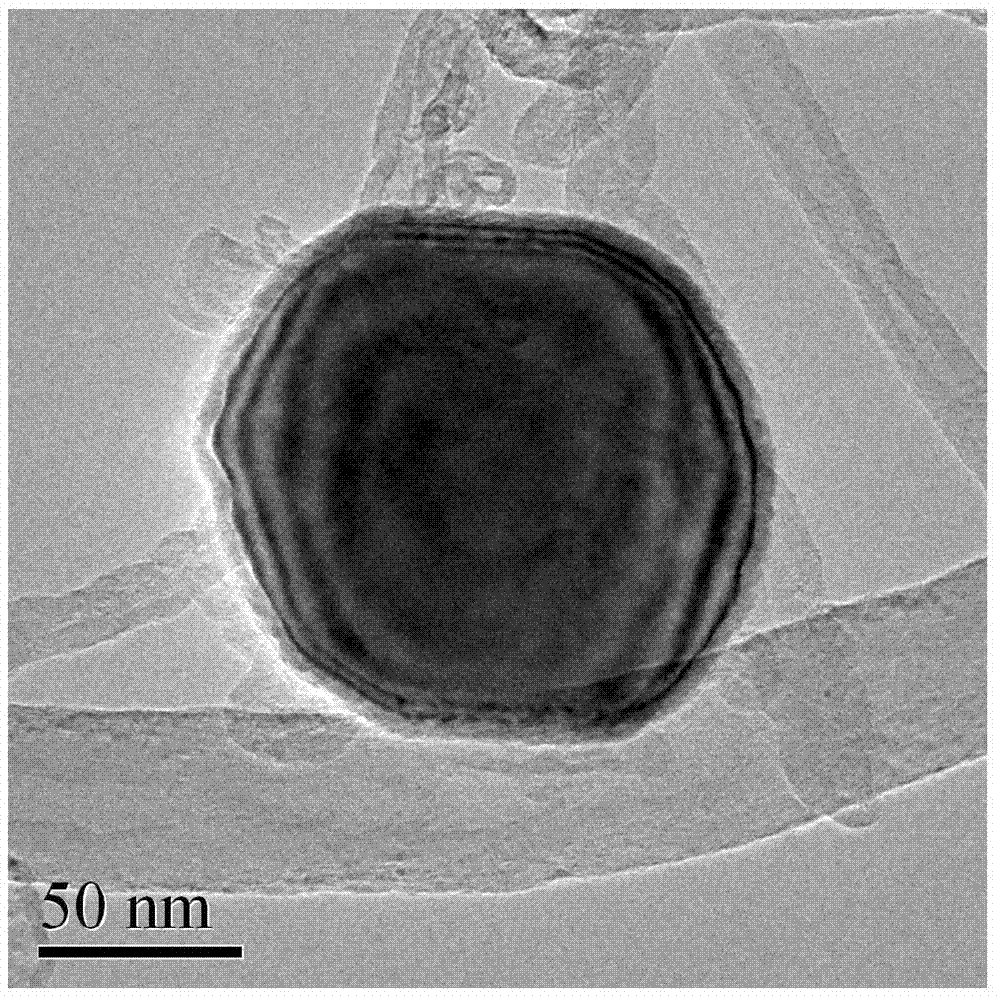
Figure 2 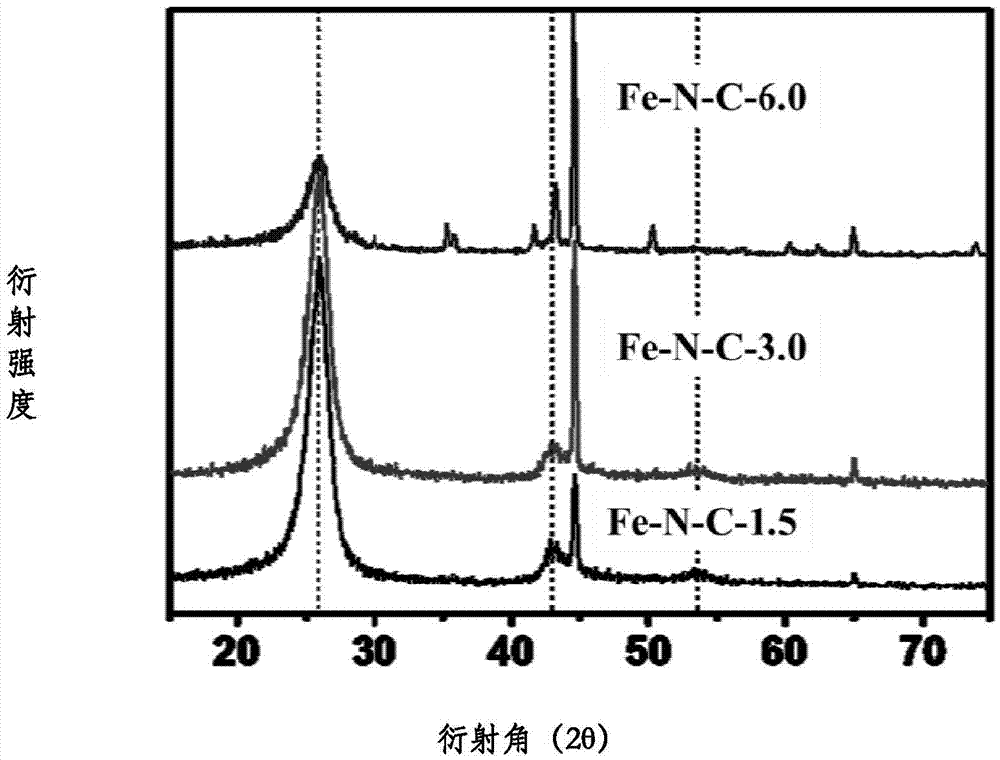
Figure 3
Abstract
Description
technical field
[0001] The invention relates to a method for preparing a catalyst for the hydrogenation reaction of nitrobenzene derivatives with carbon nanotubes as a carrier carrying iron-nitrogen-carbon active components, specifically a carbon nanotube as a carrier, containing nitrogen, carbon, The iron active component is a preparation method of a non-noble metal catalyst capable of highly chemoselectively reducing the nitro group on the benzene ring. Background technique
[0002] Since the discovery of carbon nanotube materials in the 1980s, it has attracted extensive attention from academic and industrial circles. This new type of carbon material can be regarded as a cylinder formed by several layers of finite graphite structure. Its unique one-dimensional structure, hollow shape and unique electronic conductivity make it suitable for functional materials, catalyst supports, analysis and detection, and electrochemistry. and other fields have been widely used. In rece...
Examples
Embodiment 1
[0019] A catalyst with a mass fraction of iron of 1.5% was prepared. Weigh 0.043 g of ferric chloride solid, add 0.1593 g of o-phenanthroline, and then add 50 ml of ethanol, stir to completely dissolve the iron salt and o-phenanthroline, and obtain a clear wine red solution. The solution was refluxed at 60°C for 12 hours to completely coordinate the iron salt and o-phenanthroline. Weighing 0.7973 g of the material was added to the above solution, and the ultrasonic wave was continued for 4 hours to completely disperse the carbon nanotubes, and then the solvent was removed by rotary evaporation to obtain a catalyst precursor. The precursor was pyrolyzed at 800 degrees Celsius for 120 minutes in a nitrogen atmosphere, and the black powder was obtained after the furnace temperature dropped to room temperature, which was the catalyst.
Embodiment 2
[0021] A catalyst with a mass fraction of iron of 3.0% was prepared. Preparation method Referring to Example 1, the solid quality of ferric chloride was changed to 0.0871 grams, and the quality of o-phenanthroline was changed to 0.3186 grams.
Embodiment 3
[0023] A catalyst with a mass fraction of iron of 6.0% was prepared. Preparation method Referring to Example 1, the solid quality of ferric chloride was changed to 0.1783 grams, and the quality of o-phenanthroline was changed to 0.637 grams.
[0024] Table 1 is the reaction result of different substrates
[0025]
[0026]
[0027] Reaction condition: 0.5mmol substrate, with respect to the embodiment 1 catalyst of substrate 4.5mol%Fe, 4 milliliters of solvents (2ml H 2 O+2ml THF), 130°C, 5Mpa H 2 , a 110℃, 5MpaH 2 .
[0028] The invention relates to a method for preparing a catalyst for hydrogenation of nitrobenzene derivatives by using carbon nanotubes as carriers to support iron-nitrogen-carbon active components. Specifically, the iron-nitrogen precursor is obtained by the coordination of o-phenanthroline and iron salt; part of the precursor is introduced into the interior of carbon nanotubes by ultrasound; finally, the iron-nitrogen precursor is converted into iro...