
Preparation method of surface imprinted particles capable of efficiently separating flavone molecules
A technology of surface imprinting and flavonoids, which is applied in the field of preparation of surface imprinted particles, can solve the problems of difficult separation of components with similar structures, low separation efficiency and recovery rate, and low purity of extracted drugs, achieving specific recognition selectivity and easy operation , low-cost effect
Patent Information
- Authority / Receiving Office
- CN · China
- Patent Type
- Applications(China)
- Current Assignee / Owner
- Publication Date
- 2018-12-28
Smart Images
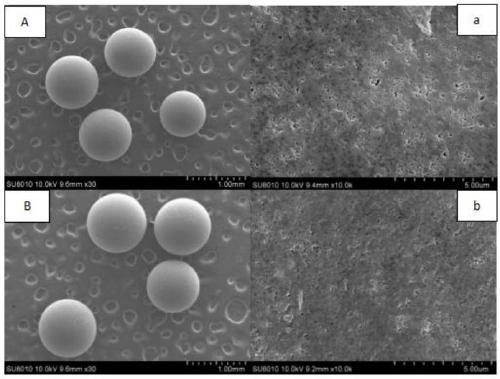
Figure 1 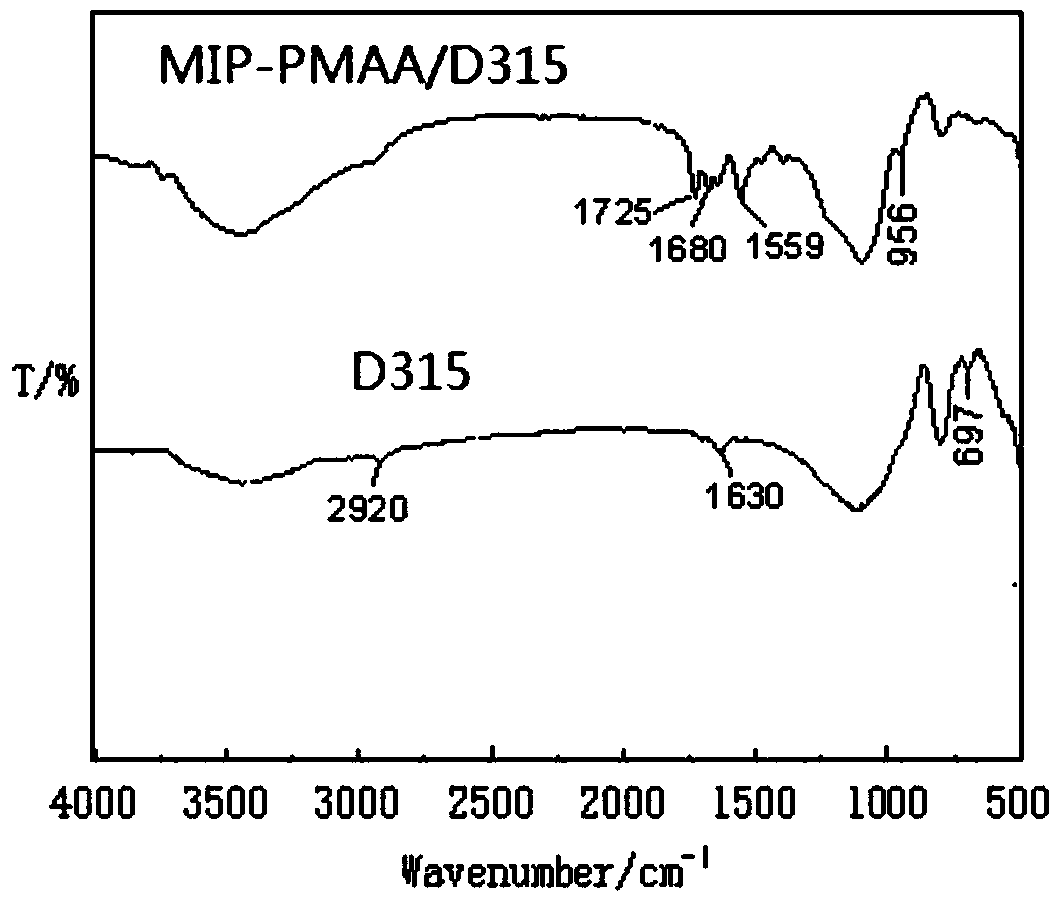
Figure 2 
Figure 3
Abstract
Description
technical field
[0001] The invention relates to a microparticle and a preparation method thereof, in particular to a preparation method of surface imprinted microparticles capable of efficiently separating flavonoid molecules. Background technique
[0002] With the continuous improvement of people's living standards, the development of active ingredients in natural medicines and plants is becoming more and more popular. However, natural plants not only have a relatively low content of active ingredients and are not easy to enrich, but also contain a wide variety of compounds in the system, the system is complex, macromolecules and small molecules, living and non-living substances coexist, especially the existence of molecules with similar structures, leading to separation Purification is difficult. In addition, the active ingredients of many natural products are sensitive to heat and easily hydrolyzed, making separation and purification difficult.
[0003] At present, the ...
Examples
Embodiment 1
[0022] step one:
[0023] Add 90mL of N,N-dimethylformamide, 7.160g of rutin template molecules and 10mL of methacrylic acid MAA into a four-necked flask equipped with a reflux condenser, turn on the magnetic stirrer and stir for 10min, then add 1g of D315 Macroporous resin and 1.842g N,N-methylenebisacrylamide MBA, sealed, kept stirring and blowing nitrogen for 5 minutes, then raised the temperature of the constant temperature water bath to 30°C, added 0.098g ammonium persulfate to the reaction system, and The graft polymerization and crosslinking reaction were carried out under the condition of a constant temperature water bath of 30° C. and continuous stirring for 12 hours.
[0024] The reason why we choose D315 macroporous resin is that during the crosslinking reaction of this macroporous resin, under the action of the amino-ammonium persulfate surface initiation system, the monomer methacrylic acid MAA can be inserted into the surface of the macroporous resin. .
[0025...
Embodiment 2
[0028] step one:
[0029] Add 50mL of N,N-dimethylformamide, 5g of rutin template molecules and 5mL of methacrylic acid MAA into a four-neck flask equipped with a reflux condenser, turn on the magnetic stirrer and stir for 5 minutes, then add 1g of D941 Macroporous resin and 1g N, N-methylenebisacrylamide MBA, sealed, kept stirring and blowing nitrogen for 5min, then raised the temperature of the constant temperature water bath to 50°C, added 0.05g of ammonium persulfate to the reaction system, and kept stirring in the constant temperature water bath The graft polymerization and crosslinking reaction were carried out under the condition of 50° C. and continuous stirring for 10 h.
[0030] The reason why we choose D941 macroporous resin is that during the crosslinking reaction of this macroporous resin, under the action of the amino-ammonium persulfate surface initiation system, the monomer methacrylic acid MAA can be inserted into the surface of the macroporous resin .
[00...
Embodiment 3
[0034] step one:
[0035] Add 100mL of N,N-dimethylformamide, 10g of rutin template molecules and 15mL of methacrylic acid MAA into a four-necked flask equipped with a reflux condenser, turn on the magnetic stirrer and stir for 8 minutes, then add 3g of D315 Porous resin and 3g N,N-methylenebisacrylamide MBA, sealed, kept stirring and blowing nitrogen for 5min, then raised the temperature of the constant temperature water bath to 40°C, added 0.2g of ammonium persulfate to the reaction system, and kept stirring in the constant temperature water bath for 40 The graft polymerization and cross-linking reaction were carried out under the condition of continuous stirring at ℃ for 15 hours.
[0036] The reason why we choose D315 macroporous resin is that during the crosslinking reaction of this macroporous resin, under the action of the amino-ammonium persulfate surface initiation system, the monomer methacrylic acid MAA can be inserted into the surface of the macroporous resin. . ...