
A kind of method of producing L-leucine by fermentation
A technology for producing leucine and bacteria, which is applied in the field of fermentative production of L-leucine, which can solve the problems of low L-leucine yield, complex extraction process, and low sugar-acid conversion rate, etc., to improve the sugar-acid conversion rate , Optimizing the medium, improving the effect of yield and yield
Patent Information
- Authority / Receiving Office
- CN · China
- Patent Type
- Patents(China)
- Current Assignee / Owner
- Publication Date
- 2019-09-03
Smart Images
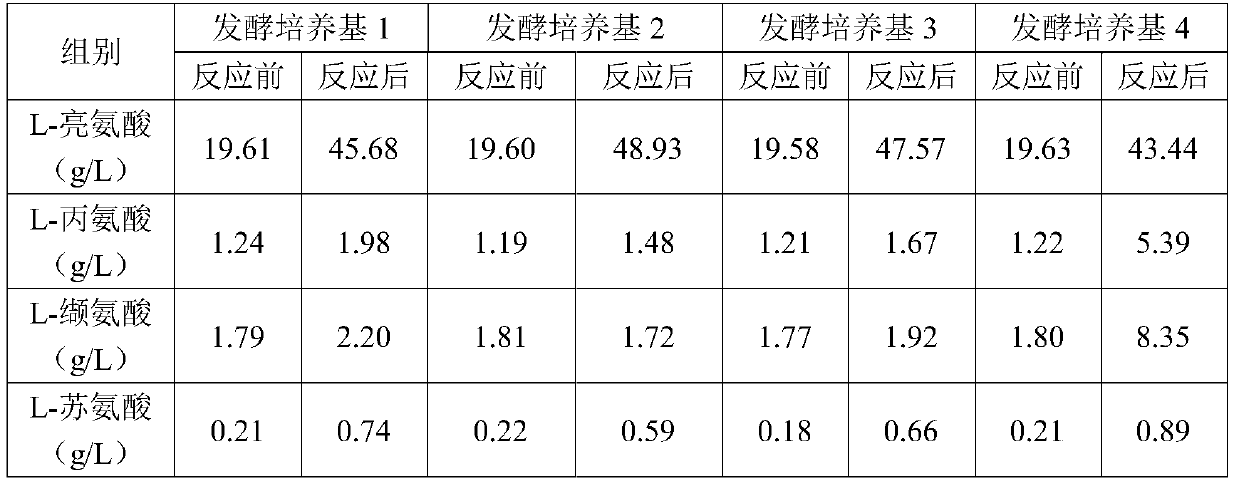
Figure 1 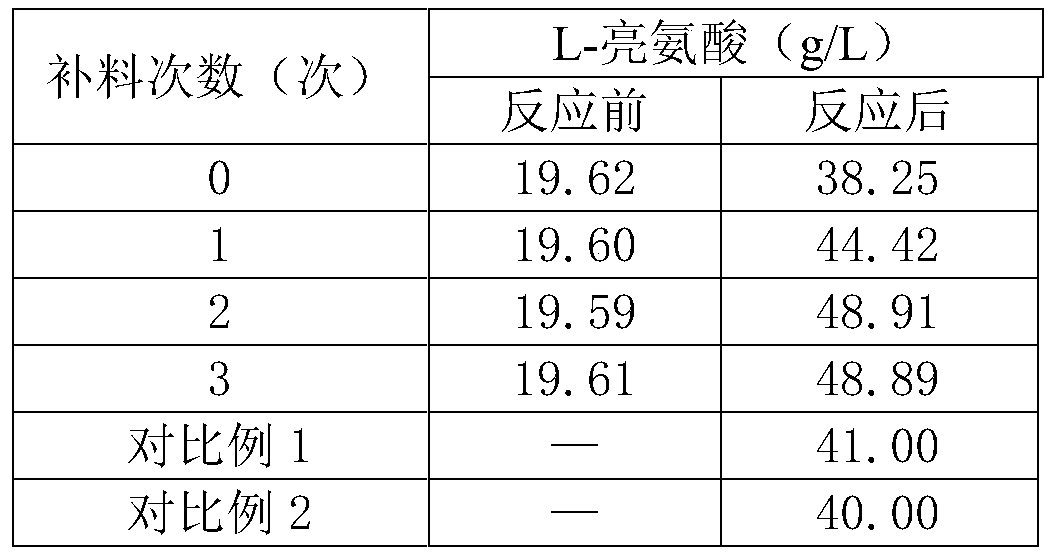
Figure 2 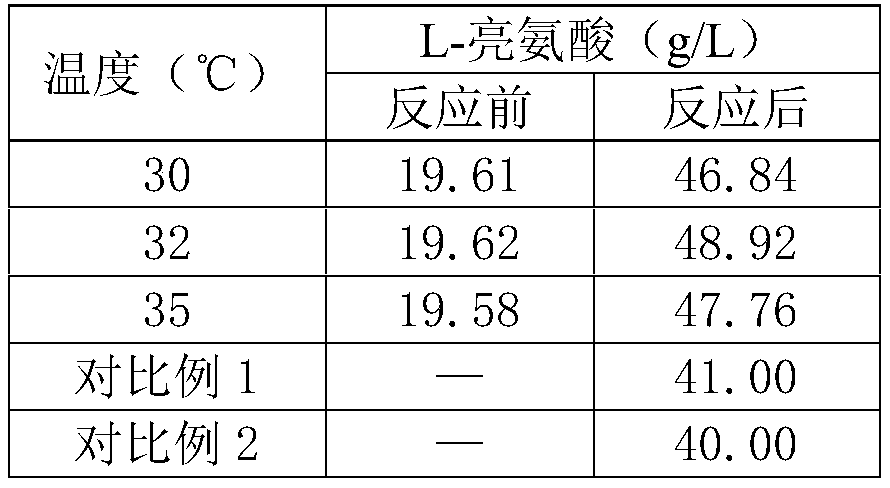
Figure 3
Abstract
Description
technical field
[0001] The invention relates to the technical field of amino acid production, in particular to a method for producing L-leucine by fermentation. Background technique
[0002] L-leucine (L-leucine), also known as leucine, is α-amino-γ-methylpentanoic acid, α-aminoisocaproic acid, and its molecular formula is C 6 h 13 o 2 N. Proust was first isolated from cheese in 1819, and later Braconnot was crystallized from the acid hydrolyzate of muscle and wool, and named leucine. Leucine, valine, and isoleucine belong to branched-chain amino acids, and are one of the eight essential amino acids for the human body. L-leucine has a variety of physiological functions and is widely used in medicine, food, cosmetics, agriculture, etc.
[0003] At present, the production methods of L-leucine mainly include protein hydrolysis extraction method, chemical synthesis method, enzymatic method and microbial fermentation method. The production of L-leucine by protein hydrolysis...
Examples
Embodiment 1
[0044] Embodiment 1: A kind of method of fermentative production L-leucine
[0045] The difference from the basic example is that the fermentation culture temperature in step (3) is 32°C, the ventilation rate for the first 12 hours is 90 L / h, the ventilation rate after 12 hours is 110 L / h, and the elution flow rate in step (4) is 0.5 BV / h. Feed 2 times during fermentation, the feed medium used: sodium malate 1.0g / L, inositol 1.5g / L, corn steep liquor powder 12g / L, ammonium sulfate 25g / L, KH 2 PO 4 ·3H 2 O2.0g / L, MgSO 4 ·7H 2 O 0.6g / L, MnSO 4 ·H 2 O 0.3g / L, vitamin B1 400μg / L, biotin 60μg / L, CaCO 3 20g / L, defoamer 1.0%, pH=7.0-7.2.
[0046] The following four mediums were used for fermentation culture:
[0047] Fermentation medium 1: sodium malate 2.0g / L, anhydrous glucose 140g / L, corn steep liquor powder 35g / L, ammonium sulfate 20g / L, KH 2 PO 4 ·3H 2 O 1.0g / L, MgSO 4 ·7H 2 O 0.4g / L, MnSO 4 ·H 2 O 0.1g / L, vitamin B1 300μg / L, biotin 50μg / L, CaCO 3 30g / L, 0.5% d...
Embodiment 2
[0055] Embodiment 2: A kind of method of fermentative production L-leucine
[0056] The difference from the basic example is that the fermentation culture temperature in step (3) is 32°C, the ventilation rate for the first 12 hours is 90 L / h, the ventilation rate after 12 hours is 110 L / h, and the elution flow rate in step (4) is 0.5 BV / h, the fermentation medium used includes: sodium malate 3.0g / L, anhydrous glucose 150g / L, corn steep liquor powder 35g / L, ammonium sulfate 20g / L, KH 2 PO 4 ·3H 2 O 1.0g / L, MgSO 4 ·7H 2 O 0.4g / L, MnSO 4 ·H 2 O 0.1g / L, vitamin B1 300μg / L, biotin 50μg / L, CaCO 3 30g / L, 0.5% defoamer, pH=7.0-7.2. Feed 2 times during the fermentation period, respectively use the following feed medium for feeding:
[0057] Feed medium 1: sodium malate 1.0g / L, inositol 1.0g / L, corn steep liquor powder 12g / L, ammonium sulfate 25g / L, KH 2 PO 4 ·3H 2 O 2.0g / L, MgSO 4 ·7H 2 O 0.6g / L, MnSO4·H2O 0.3g / L, vitamin B1 400μg / L, biotin 60μg / L, CaCO3 20g / L, defoamer 1...
Embodiment 3
[0064] Embodiment 3: A kind of method of fermentative production L-leucine
[0065] The difference from the basic example is that the fermentation culture temperature in step (3) is 32°C, the ventilation rate for the first 12 hours is 90 L / h, the ventilation rate after 12 hours is 110 L / h, and the elution flow rate in step (4) is 0.5 BV / h, the fermentation medium used includes: sodium malate 3.0g / L, anhydrous glucose 150g / L, corn steep liquor powder 35g / L, ammonium sulfate 20g / L, KH 2 PO 4 ·3H 2 O 1.0g / L, MgSO 4 ·7H 2 O 0.4g / L, MnSO 4 ·H 2 O 0.1g / L, vitamin B1 300μg / L, biotin 50μg / L, CaCO 3 30g / L, 0.5% defoamer, pH=7.0-7.2. The feed medium used: sodium malate 1.0g / L, inositol 1.5g / L, corn steep liquor dry powder 12g / L, ammonium sulfate 25g / L, KH 2 PO 4 ·3H 2 O 2.0g / L, MgSO 4 ·7H 2 O 0.6g / L, MnSO 4 ·H 2 O 0.3g / L, vitamin B1 400μg / L, biotin 60μg / L, CaCO 3 20g / L, defoamer 1.0%, pH=7.0-7.2. The times of adding feed medium were 0 time, 1 time (1 time at 12h), 2 ti...