
Up-conversion fluorescent probe rhodamine derivatives and their applications
A technique of fluorescent probes and derivatives, which is applied in the field of up-conversion fluorescence enhancement reagents to achieve the effects of deepening penetration depth, simple preparation and purification methods, and eliminating background fluorescence
Patent Information
- Authority / Receiving Office
- CN · China
- Patent Type
- Patents(China)
- Current Assignee / Owner
- Publication Date
- 2020-11-06
Smart Images
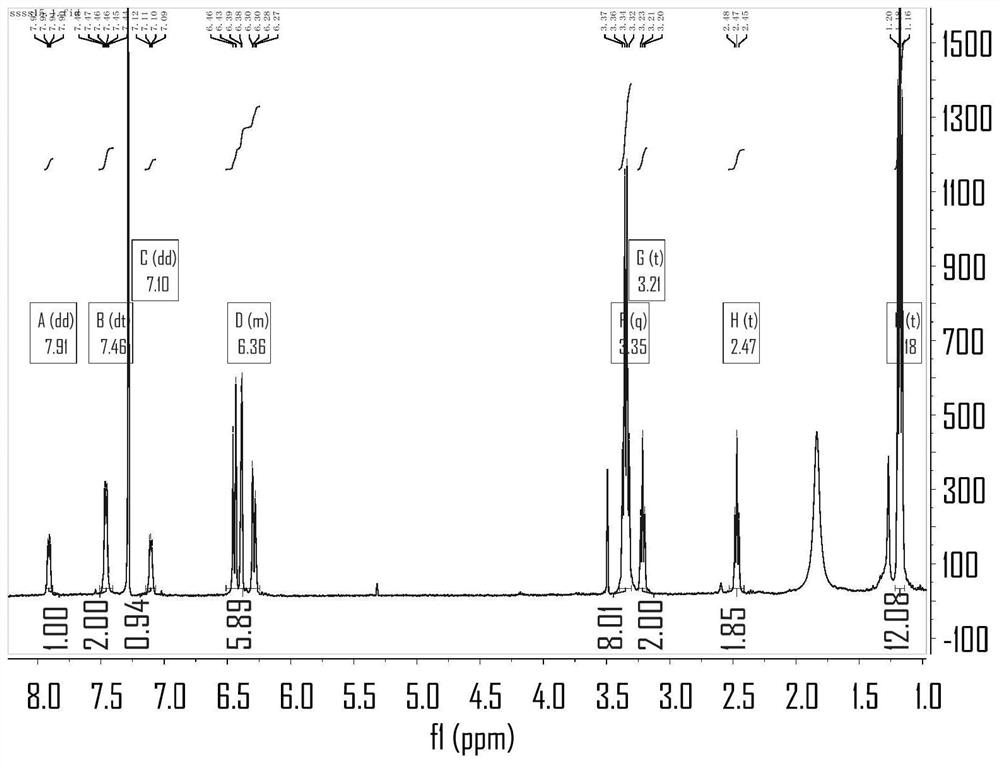
Figure 1 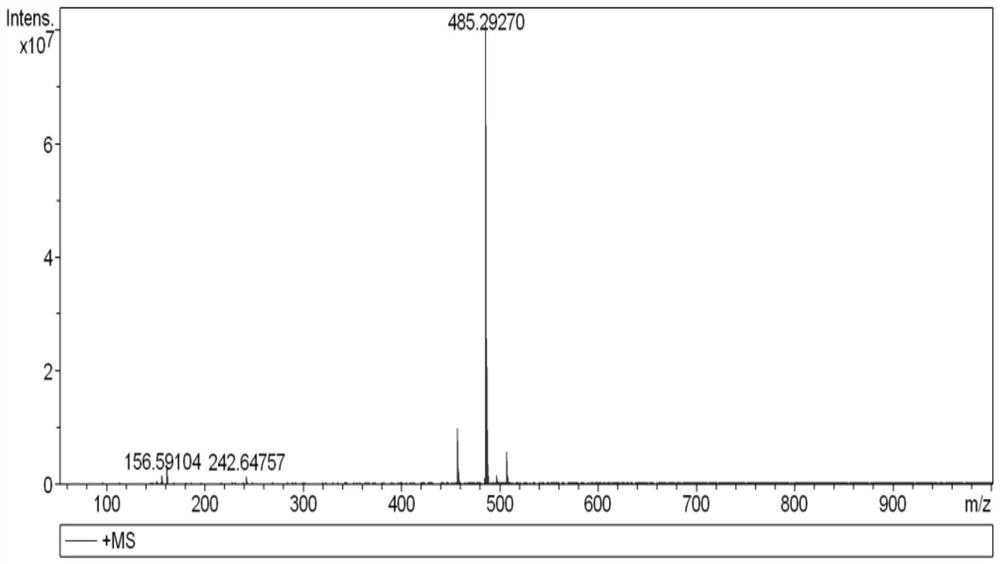
Figure 2 
Figure 3
Abstract
Description
technical field
[0001] The invention belongs to the field of up-conversion fluorescence enhancement reagents and the technical field of heavy metal ion up-conversion fluorescence probes, and in particular relates to a rhodamine derivative probe with up-conversion fluorescence enhancement response and a preparation method thereof, and the detection of water environment by the probe. Or the application of mercury ions in living organisms. Background technique
[0002] Mercury ions are extremely harmful to living organisms and the natural environment, and its rapid and highly sensitive detection is of great significance. At present, there have been many reports on the determination of mercury ions, mainly including: spectrophotometry, fluorescence analysis, electrochemical methods and atomic absorption spectrometry. Among them, fluorescence analysis has attracted extensive attention due to its advantages of high sensitivity, specific selectivity, short response time and low co...
Examples
Embodiment 1
[0038] Add Rhodamine B (2 g, 4.2 mmol), ethylenediamine (1 mL, 21 mmol) and 50 mL of absolute ethanol to a 250 mL three-necked flask, and ultrasonically dissolve them; heat under reflux at 80 °C, and spot plate tracking during the reaction process. The developing solvent is methanol:dichloromethane=10:1, the reaction is carried out for 24h, the reaction is stopped, and cooled to room temperature; the ethanol is distilled off under reduced pressure to obtain a brown solid mixture, and the product is purified by column chromatography, and the developing solvent is methanol / dichloromethane Methane (10 / 1, v / v). 1.5 g of rhodamine B-ethylenediamine as a brown intermediate product (yield: 70%) was obtained. 1 H NMR (400 MHz, CDCl 3 ) δ 7.91 (dd, J = 5.6, 3.1Hz, 1H), 7.46 (dt, J = 7.2, 3.7 Hz, 2H), 7.10 (dd, J = 5.6, 3.0 Hz, 1H), 6.51-6.24 (m, 6H), 3.35 (q, J = 7.2 Hz, 8H), 3.21 (t, J = 6.5 Hz, 2H), 2.47(t, J = 6.5 Hz, 2H), 1.18 (t, J = 7.0 Hz, 12H) (see appendix figure...
Embodiment 2
[0041] The probe molecule RhB-NA was added to ethanol to prepare RhB-NA ethanol stock solution with a concentration of 1 mM.
[0042] Add 3 mL of ethanol / buffer solution (buffer solution is Na 2 HPO 4 / NaH 2 PO 4 Aqueous solution, pH=7, 1 / 2, v / v), and then add 30 μL RhB-NA ethanol stock solution (concentration: 1 mM) to the above quartz cuvette, and ultrasonically dissolve it, that is, 10 μM of RhB-NA is prepared. Probe RhB-NA solution.
[0043] Similarly, add 3 mL of ethanol / buffer solution (Na 2 HPO 4 / NaH 2 PO 4 Aqueous solution, pH=7, 1 / 2, v / v), then 300 μL RhB-NA ethanol stock solution (concentration: 1 mM) was added to the above quartz cuvette, and sonicated to dissolve it, that is, 100 μM of RhB-NA was prepared. Probe RhB-NA solution.