
Antibacterial composite short fiber and preparation method thereof
A technology of short fiber and production method, which is applied in the field of antibacterial composite short fiber and its preparation, can solve the problems of poor moisture absorption and air permeability, unstable sterilization effect, short bacteriostatic time, etc., and achieves a small amount of re-infiltration and inhibits bacterial growth. , the appearance of less hair effect
Patent Information
- Authority / Receiving Office
- CN · China
- Current Assignee / Owner
- Publication Date
- 2019-12-13
- Estimated Expiration
- Not applicable · inactive patent
Smart Images
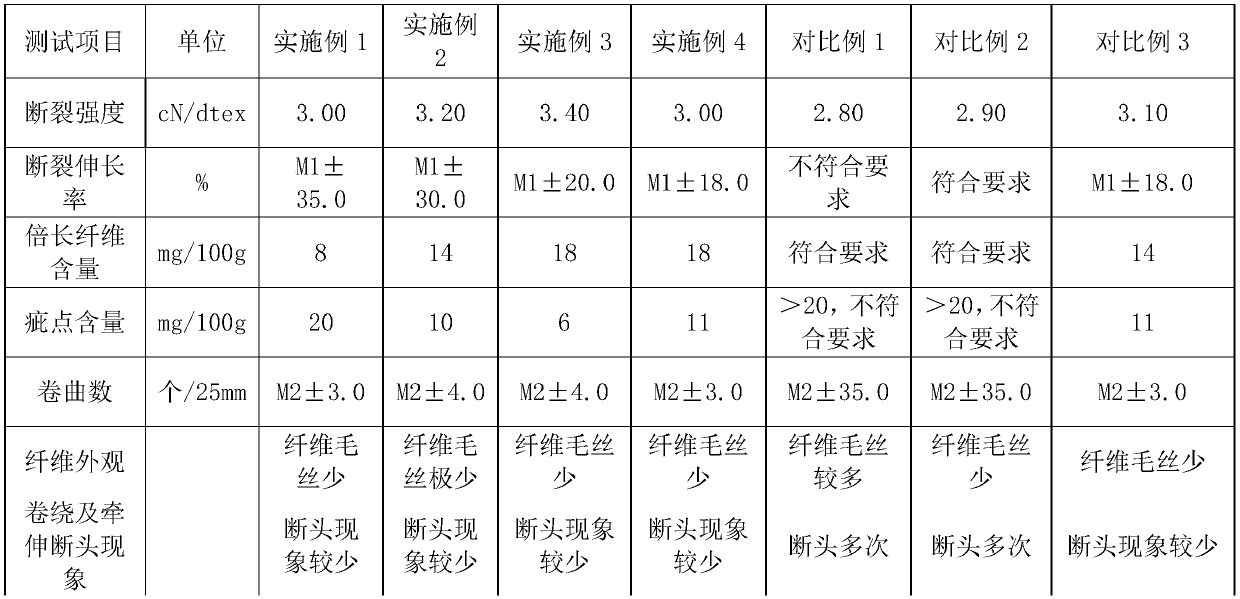
Figure 1 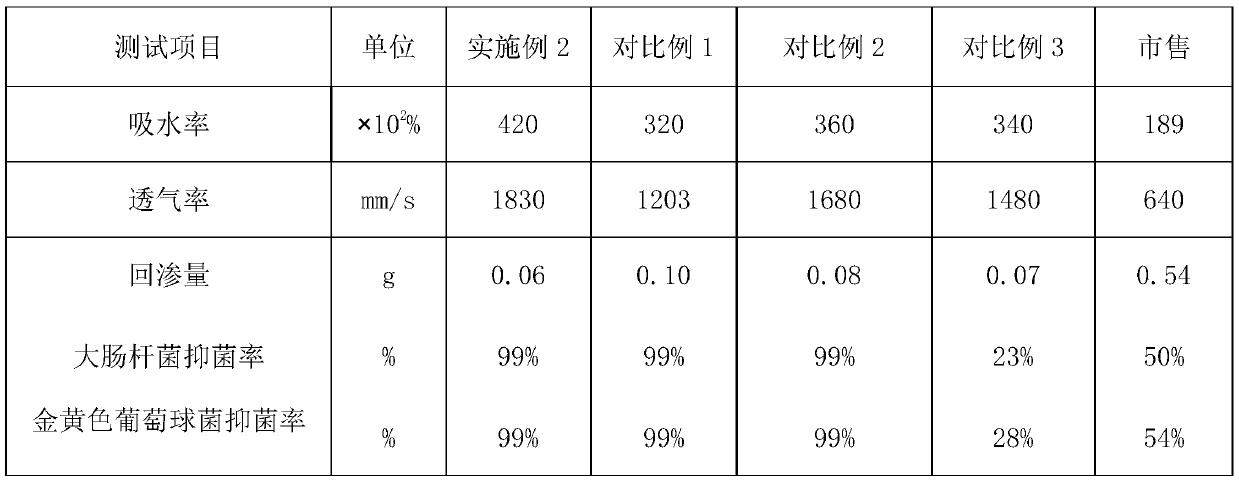
Figure 2
Abstract
Description
technical field
[0001] The invention relates to the technical field of composite fibers, in particular to an antibacterial composite short fiber and a preparation method thereof. Background technique
[0002] Composite fiber (composite fiber) is a new type of chemical fiber, which is different from the blending of special-shaped fibers or the blending of dissimilar filaments, and it is also different from the complete mixing of individual components before entering the spinneret assembly. The composite fiber is two or more polymer melts with different properties prepared through different components. The above two or more polymer melt mixtures have different viscosities, which are respectively introduced into the spinning assembly. The appropriate parts of the filament assembly are mixed, and then sprayed out into a fiber through the same spinneret hole.
[0003] Due to its advantages of light weight, degradability, and low cost, composite fibers are widely used in baby dia...
Examples
Embodiment 1
[0030] A preparation method of antibacterial composite staple fiber, comprising the following steps:
[0031] a, the nano-silver of 1 part by weight and the polyethylene particle of 8 parts are mixed uniformly, melted in electric heating pot, then obtain antibacterial polyethylene particle by granulator;
[0032] b. Weigh the following components by weight: 40 parts of polypropylene, 5 parts of ethylene-propylene copolymer, 4 parts of propylene block copolymer, 8 parts of starch-acrylic superabsorbent resin, 2 parts of titanium dioxide, and 4 parts of zinc oxide. ~8 parts, put starch-acrylic superabsorbent resin, titanium dioxide, and zinc oxide into a high-speed pulverizer, then mix them with polypropylene and ethylene-propylene copolymer, and send them into a screw extruder to melt into a polypropylene mixture;
[0033] c. Weigh the following components by weight: 20 parts of linear low density polyethylene, 20 parts of high density polyethylene, 20 parts of antibacterial po...
Embodiment 2
[0038] A preparation method of antibacterial composite staple fiber, comprising the following steps:
[0039] a, the nano-silver of 1 part by weight is mixed with 9 parts of polyethylene particles, melted in an electric heating pot, and then the antibacterial polyethylene particles are obtained by a granulator;
[0040] b. Weigh the following components by weight: 42 parts of polypropylene, 6 parts of ethylene-propylene copolymer, 4 parts of propylene block copolymer, 8 parts of starch-acrylic superabsorbent resin, 2 parts of titanium dioxide, 5 parts of zinc oxide Put starch-acrylic superabsorbent resin, titanium dioxide, and zinc oxide into a high-speed pulverizer, mix them with polypropylene and ethylene-propylene copolymer, and send them to a screw extruder to melt into a polypropylene mixture;
[0041] c. Weigh the following components by weight: 24 parts of linear low density polyethylene, 24 parts of high density polyethylene, 22 parts of antibacterial polyethylene part...
Embodiment 3
[0046] A preparation method of antibacterial composite staple fiber, comprising the following steps:
[0047] a, the nano-silver of 1 part by weight is mixed with 10 parts of polyethylene particles, melted in an electric heating pot, and then the antibacterial polyethylene particles are obtained by a granulator;
[0048]b. Weigh the following components by weight: 46 parts of polypropylene, 7 parts of ethylene-propylene copolymer, 5 parts of propylene block copolymer, 9 parts of starch-acrylic superabsorbent resin, 3 parts of titanium dioxide, and 7 parts of zinc oxide Put starch-acrylic superabsorbent resin, titanium dioxide, and zinc oxide into a high-speed pulverizer, mix them with polypropylene and ethylene-propylene copolymer, and send them to a screw extruder to melt into a polypropylene mixture;
[0049] c. Weigh the following components by weight: 28 parts of linear low density polyethylene, 28 parts of high density polyethylene, 25 parts of antibacterial polyethylene ...