

Preparing method and device for aluminum-magnesium-aluminum composite plate
A technology of aluminum cladding and sheet metal, which is used in metal extrusion control equipment, manufacturing tools, metal rolling, etc., can solve the problems of poor corrosion resistance, hinder the application of magnesium alloys, etc., to improve the plastic deformation ability and reduce the composite interface. Defects, good bonding effect
Patent Information
- Authority / Receiving Office
- CN · China
- Current Assignee / Owner
- Publication Date
- 2020-02-28
Smart Images
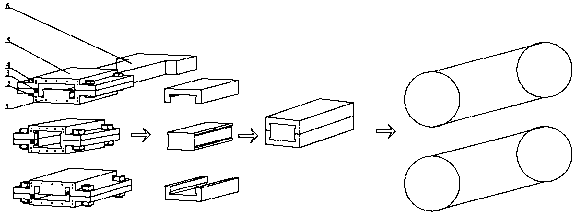
Figure 1 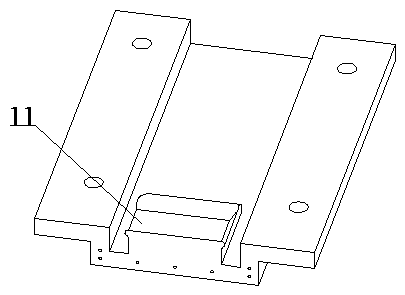
Figure 2 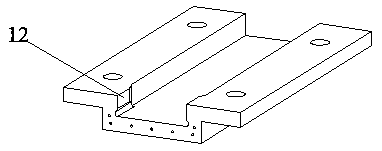
Figure 3
Abstract
Description
technical field
[0001] The invention belongs to the technical field of processing metal composite materials, and in particular relates to a method and a device for preparing aluminum-magnesium-aluminum composite plates. Background technique
[0002] Magnesium alloy is the lightest structural metal, which has the advantages of high strength, high rigidity, damping, machinability, thermal conductivity, high absorption of vibration and impact, strong electromagnetic shielding ability, abundant resources, and easy recycling. The poor corrosion resistance hinders the wide application of magnesium alloys to a certain extent. Aluminum alloy has the characteristics of low density, high specific strength, good thermal conductivity, easy forming, and 100% recycling. Since the surface of aluminum alloy is easy to form a dense and stable oxide film, which can prevent further oxidation of the internal metal, it has good corrosion resistance. Both aluminum and magnesium belong to light ...
Examples
Embodiment 1
[0028] One piece of AZ31 magnesium alloy with an initial thickness of 10 mm and two pieces of 7050 aluminum alloy billet with an initial thickness of 8 mm were combined by extrusion-rolling to prepare a 3 mm thick aluminum-clad magnesium composite plate.
[0029] (1) Homogenize the 7050 aluminum alloy at 470°C / 24h, and homogenize the AZ31 magnesium alloy at 415°C / 15h;
[0030] (2) Start the heating device 2, raise the temperature of the concave billet extrusion die to 420°C, and use the concave billet extrusion die with a height of 5 mm of the "T" forming block 11 to extrude to prepare two concave 7050 aluminum alloy billets of composite billets ;
[0031] (3) Start the heating device 2, raise the temperature of the convex extrusion die to 400°C, and use the convex extrusion die with a height of 10 mm in the "I" cavity 12 to extrude to prepare a composite billet of an outwardly convex AZ31 magnesium alloy billet ;
[0032] (4) Stack two pieces of 7050 aluminum alloy to form ...
Embodiment 2
[0035] One piece of AZ31 magnesium alloy with an initial thickness of 8 mm and two pieces of 2519 aluminum alloy billets with an initial thickness of 8 mm were combined by extrusion-rolling to prepare a 3 mm thick aluminum-clad magnesium composite plate.
[0036] (1) Homogenize the 2519 aluminum alloy at 530°C / 12h, and homogenize the AZ31 magnesium alloy at 415°C / 15h;
[0037] (2) Start the heating device 2, raise the temperature of the concave billet extrusion die to 420°C, and use the concave billet extrusion die with a height of 4 mm of the "T" forming block 11 to extrude to prepare two concave 2519 aluminum alloy billets of composite billets ;
[0038] (3) Start the heating device 2, raise the temperature of the convex extrusion die to 400°C, and use the convex extrusion die with a height of 8 mm in the "I" cavity 12 to extrude to prepare a composite billet of an outwardly convex AZ31 magnesium alloy billet ;
[0039] (4) Stack two pieces of 2519 aluminum alloy to form a...