
Improved linear variable differential transformer for high-accuracy posotion survey
A technology of displacement and transducer, which is applied in continuously variable inductors/transformers, measuring devices, electrical devices, etc., and can solve problems such as small sensitivity
Patent Information
- Authority / Receiving Office
- CN · China
- Current Assignee / Owner
- Publication Date
- 2004-03-17
- Estimated Expiration
- Not applicable · inactive patent
Smart Images
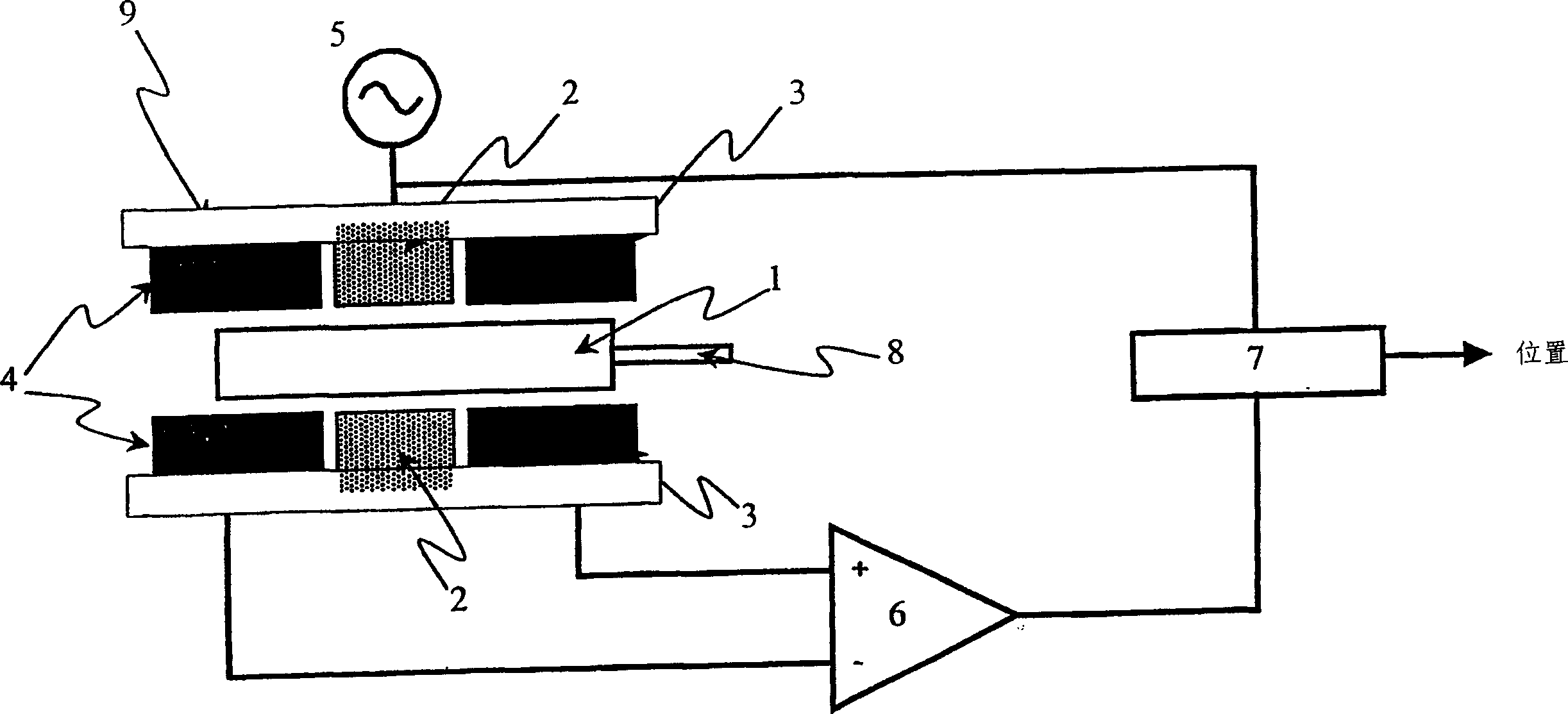
Figure 1 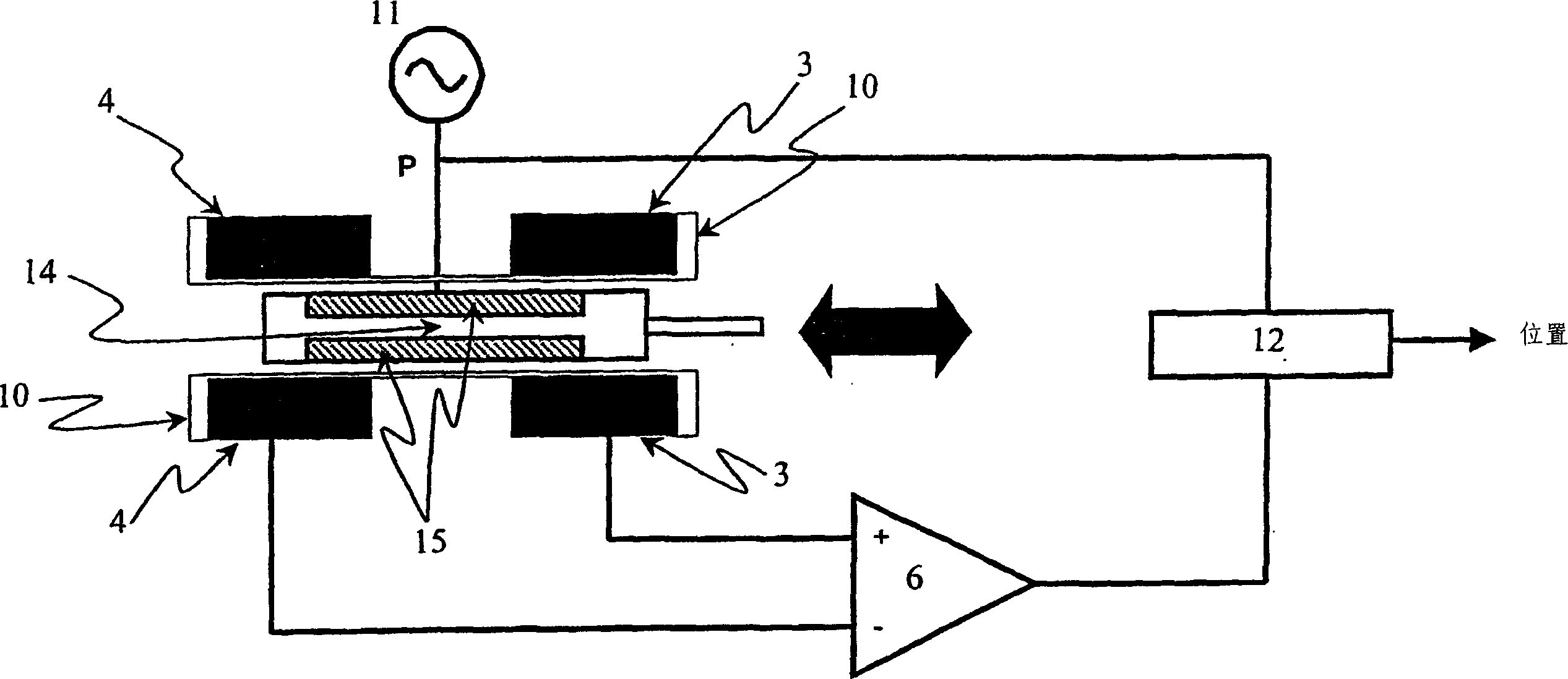
Figure 2 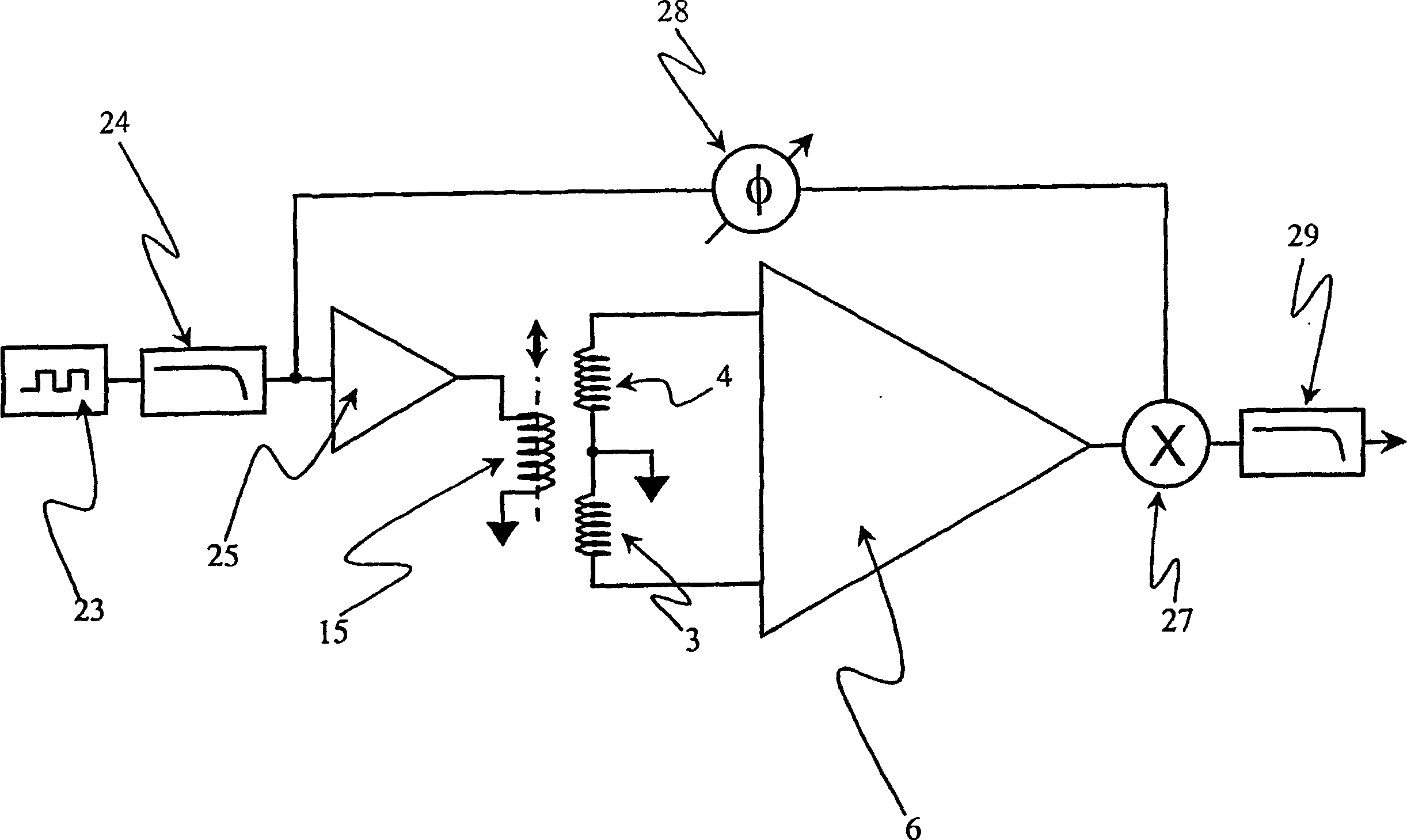
Figure 3
Abstract
Description
technical field
[0001] The present invention relates to a number of devices that convert extremely small mechanical displacements (down to the sub-nanometer scale) into differential voltages (and vice versa). Background technique
[0002] In the early part of the last century, one type of position sensor utilized to convert mechanical displacement to differential voltage (and vice versa) was the Linear Variable Differential Transformer (LVDT). exist figure 1 A conventional commercial LVDT (part number 50-00-005XA, Seotech Inc., North Hills, PA, USA) with a moving, ferromagnetic core 1 differentially coupling flux from a primary coil 2 to two secondary coils is described in stage coils 3 and 4. Current is driven by an oscillator 5 through the primary coil. As the core position changes relative to the secondary coil, the magnetic flux coupling to the two secondary coils changes. These voltages are amplified by a differential amplifier 6 and signal conditioning electronics ...
Examples
Embodiment Construction
[0036] figure 2 Demonstrating our improved LVDT position sensor. This LVDT comprises a non-ferromagnetic coil form 14 around which a moving primary coil 15 and two stationary secondary coils 3 and 4 are wound around the non-ferromagnetic coil form 10 . The primary coil shape 14 is mechanically connected by the shaft 8 to an associated body (not shown). The shaft 8 is capable of transmitting displacements of related objects on the order of a few micrometers or less. The coil shape can be made of any non-ferromagnetic material including, but not limited to, plastics, ceramics and composites without ferromagnetic components, or paramagnetic materials. On the other hand, a coil shape may be formed from a non-ferromagnetic adhesive and a coil or multiple windings. As described more fully below, excitation electronics 11 generates current to drive the primary coil. When the position of the primary coil 15 changes relative to the secondary coils 3 and 4, and therefore the attach...