
Conductive paste for external electrode and method for manufacturing electronic component including the conductive paste for external electrode
Patent Information
- Authority / Receiving Office
- US · United States
- Current Assignee / Owner
- Publication Date
- 2020-01-07
Smart Images
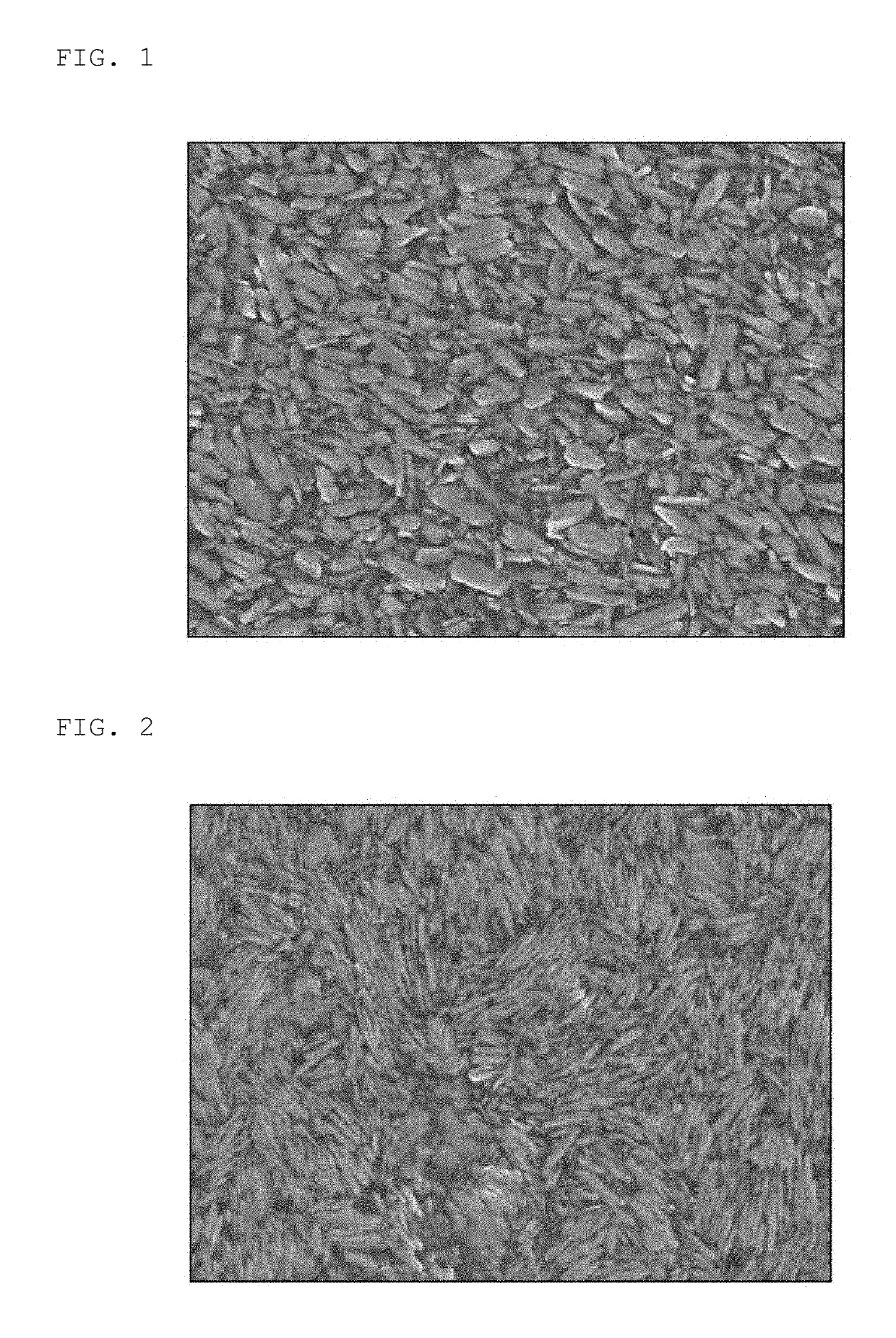
Figure 1 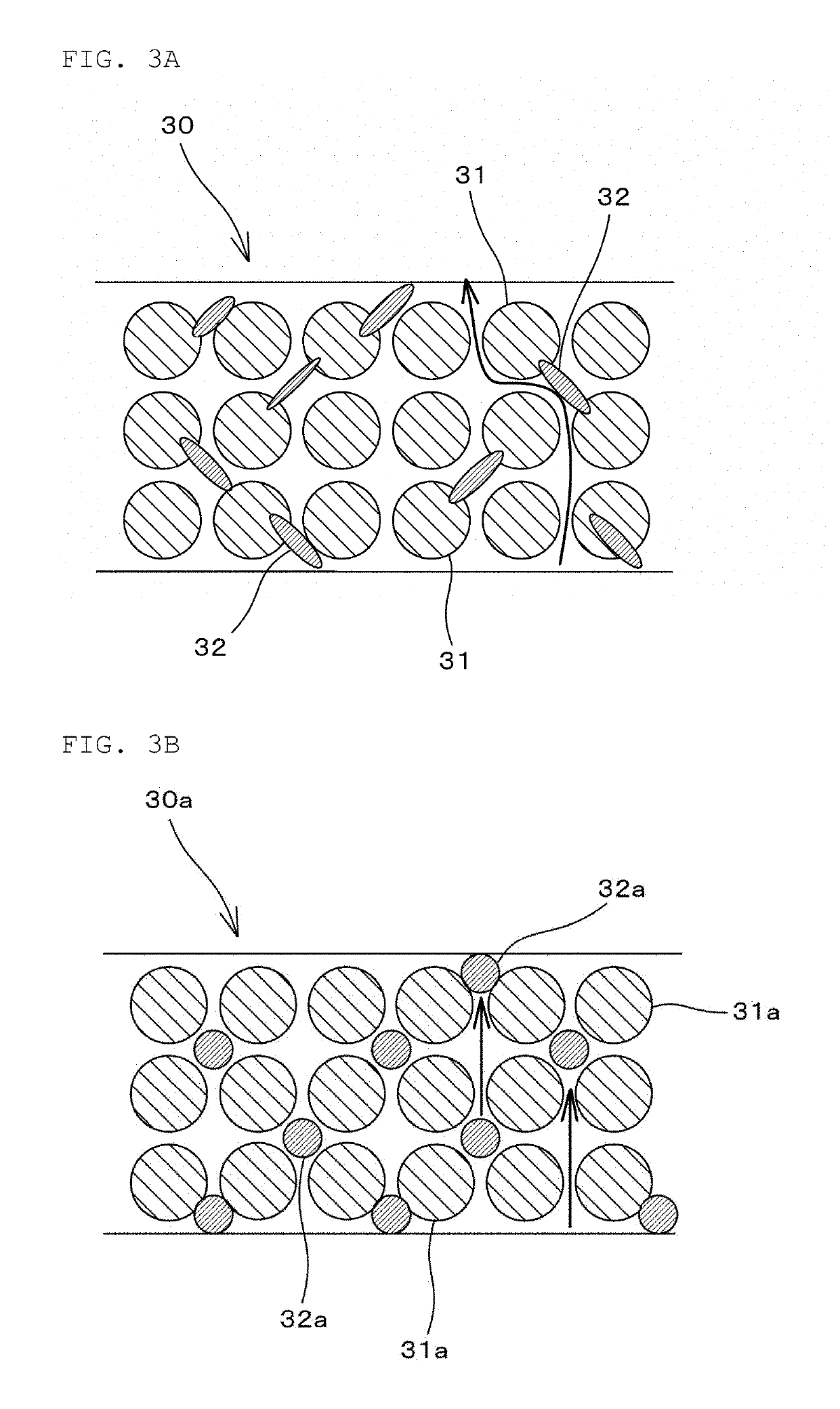
Figure 2
Abstract
Description
CROSS REFERENCE TO RELATED APPLICATIONS
[0001] The present application claims priority to Japanese Patent Application No. 2017-081486, filed Apr. 17, 2017, the entire contents of which are incorporated herein by reference.BACKGROUND OF THE INVENTIONField of the Invention
[0002] The present invention relates to a conductive paste for an external electrode and a method for manufacturing an electronic component including the conductive paste for an external electrode.Description of the Related Art
[0003] In recent years, electronic components such as multilayer ceramic capacitors have been miniaturized, and thicknesses of external electrodes have also been reduced. In order to improve humidity resistance reliability of electronic components, a further improvement in denseness of external electrodes is required.
[0004] In order to densify external electrodes, it is effective to improve a filling factor of a conductive metal powder in a conductive paste containing a fine conductive metal powder....
Examples
examples
[0031]In order to prepare a conductive paste for an external electrode, the conductive metal powder of the above (a), the glass frit of the above (b), the binder resin of the above (c), and terpineol as a solvent were provided.
[0032]As the conductive metal powder of the above (a), a Cu powder having a substantially spherical shape and an average particle diameter D50 of 1.0 μm was provided.
[0033]As the glass frit of the above (b), a plurality of types of glass frits obtained by adding Ba, Ti, Al, Zn and Sr to B—Si-based glass and in which at least one of the average particle diameter D50 and the average flatness was different were provided. Specifically, glass frits having an average particle diameter D50 of 0.5 μm and a respective average flatness of 1, 1.5, 5 and 9, glass frits having an average particle diameter D50 of 0.8 μm and a respective average flatness of 1, 1.3, 1.5, 3.1, 5.5 and 8, and glass frits having an average particle diameter D50 of 1.2 μm and a respective average...