
Method of Removing Protein-Bound Deleterious Substances During Extracorporeal Renal Replacement Treatment
Patent Information
- Authority / Receiving Office
- US · United States
- Current Assignee / Owner
- Publication Date
- 2010-04-22
Smart Images
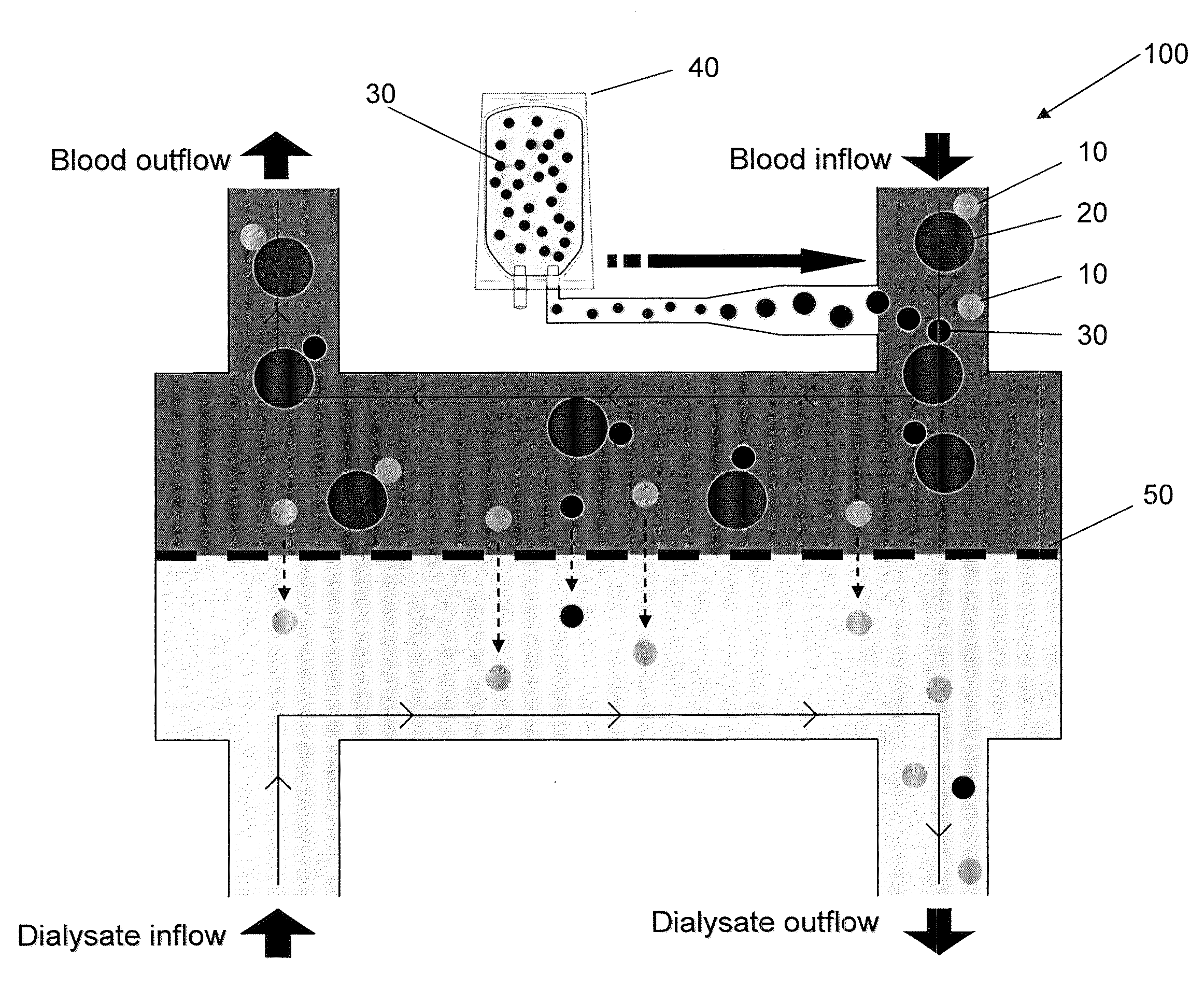
Figure 1 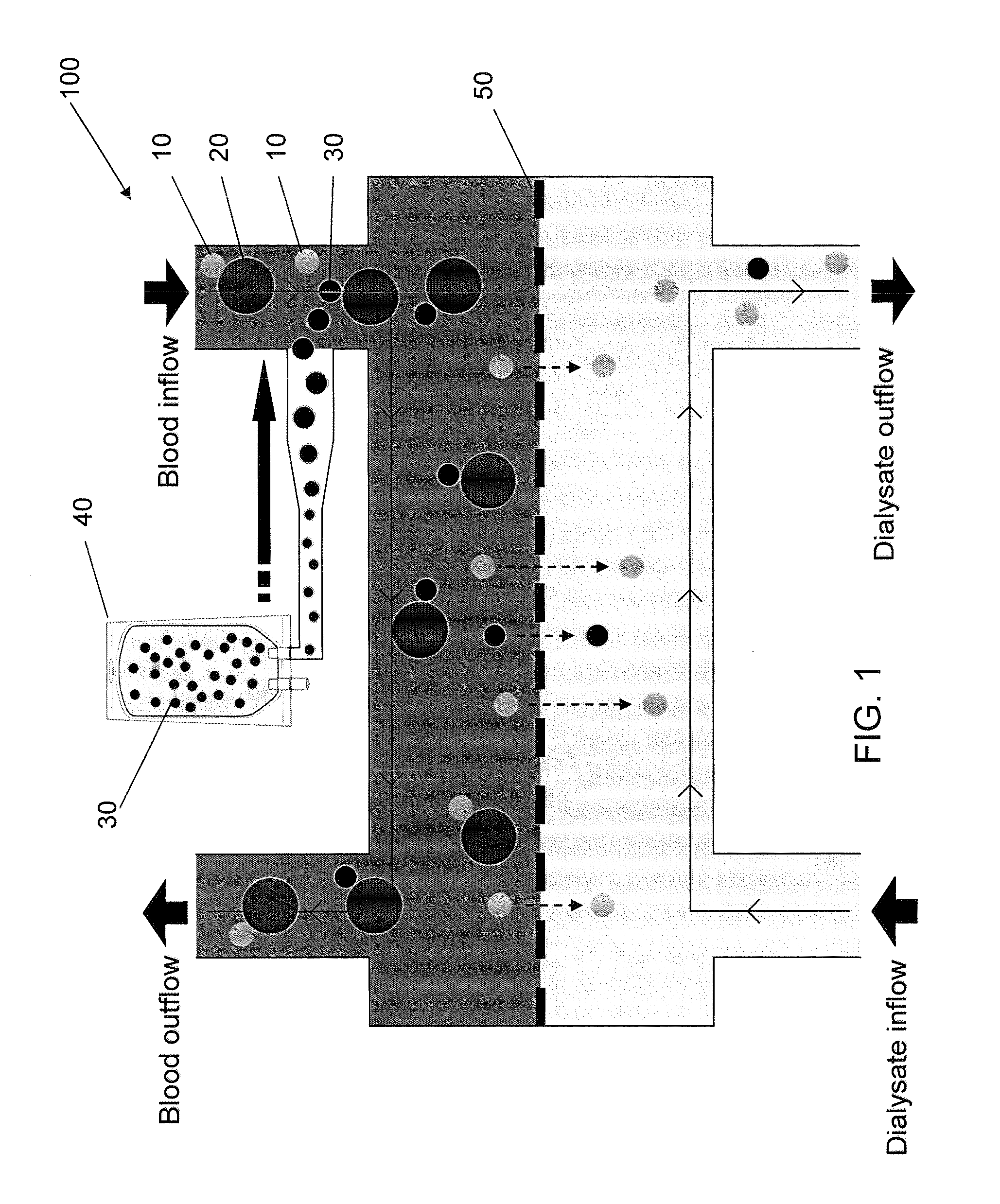
Figure 2 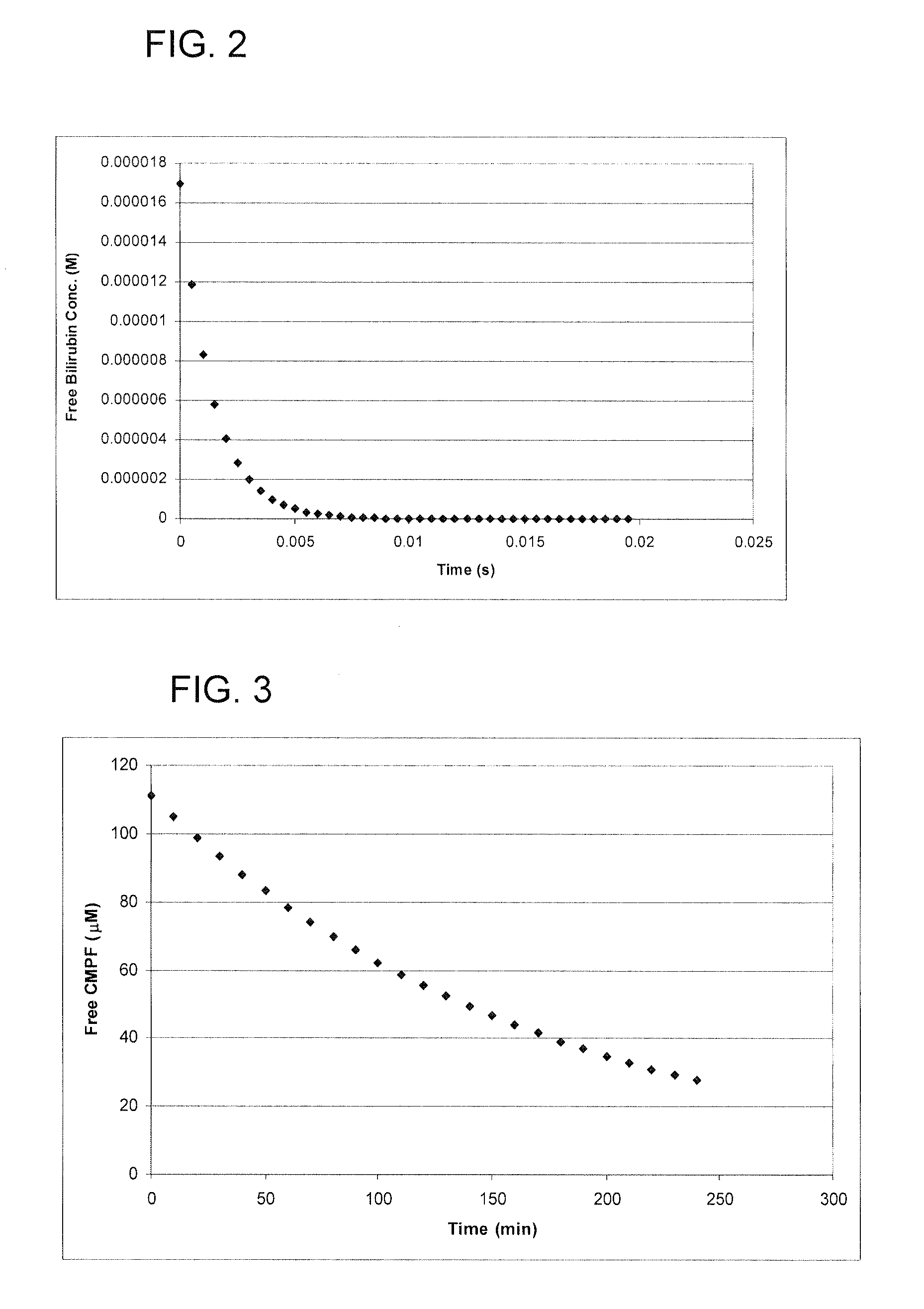
Figure 3
Abstract
Description
RELATED APPLICATION
[0001] This application claims the benefit of U.S. Provisional Application No. 61 / 196,254, filed on Oct. 16, 2008.
[0002] The entire teachings of the above application are incorporated herein by reference.BACKGROUND OF THE INVENTION
[0003] For patients with acute or chronic kidney disease, some uremic toxins can be removed by extracorporeal renal replacement treatments, for example, hemodialysis. In contrast to unbound uremic toxins, protein-bound uremic toxins are difficult to remove by dialysis, because only the free (unbound) fraction of uremic toxins generally passes through the membrane of a dialyzer.
[0004] Consequently, there is a need for a new method of removing protein-bound uremic toxins during hemodialysis and other renal replacement treatments.SUMMARY OF THE INVENTION
[0005] The present invention is directed to a method of removing a deleterious substance bound to a protein in blood of a patient comprising a) introducing a displacer substance into the blood un...
Examples
example 1
Uremic Toxin Displacement Model Calculations
[0025]In order to model the concept of using a displacer molecule to improve removal of albumin-bound toxins by dialysis, some basic equilibrium and kinetic constants must be known or estimated. Another necessary input is the plasma concentration of all components. For the current model calculations, bilirubin was used as the displacer molecule and 3-carboxy-4-methyl-5-propyl-2-furanpropanoic acid (CMPF) was the albumin-bound toxin; however, these calculations can be generalized to any displacer and any bound toxin if appropriate equilibrium constant information is provided. This model only considers these three molecules mentioned (albumin, bilirubin, and CMPF). Of course, there are expected to be a number of other species that bind to albumin in the plasma.
[0026]In general a binding reaction can be written as:
A+B⇔k1k-1AB(1)
where A and B represent free or unbound species and AB is the bound complex. The rate of the forward or binding reac...
example 2
Competitive Displacement of Indoxyl Sulfate by Bilirubin in Model Uremic Plasma
[0031]Two samples of uremic plasma (blood urea nitrogen (BUN) of about 55 mg / dL, albumin concentration of 3.82 g / dL) including indoxyl sulfate were incubated for 12 hours at 37° C. One sample also included 2 mMolar bilirubin ditauride (Bil-DT). The bilirubin containing sample showed a free indoxyl sulfate concentration of 0.93 μg / ml, while the control uremic plasma containing no Bil-DT, showed a free indoxyl sulfate concentration of 0.65 μg / ml. These results are indicative of competitive displacement of indoxyl sulfate by bilirubin.