
Heat dissipation sheet
a technology of heat dissipation sheet and carbon fiber, which is applied in the direction of solid-state devices, basic electric elements, chemistry apparatus and processes, etc., can solve the problems of insufficient thermal conductivity in a thickness direction, insufficient flexibility, and insufficient flexibility, etc., to achieve excellent thermal conductivity, excellent thermal conductivity, and high thermal conductivity
Patent Information
- Authority / Receiving Office
- US · United States
- Patent Type
- Patents(United States)
- Current Assignee / Owner
- Publication Date
- 2021-08-31
Smart Images
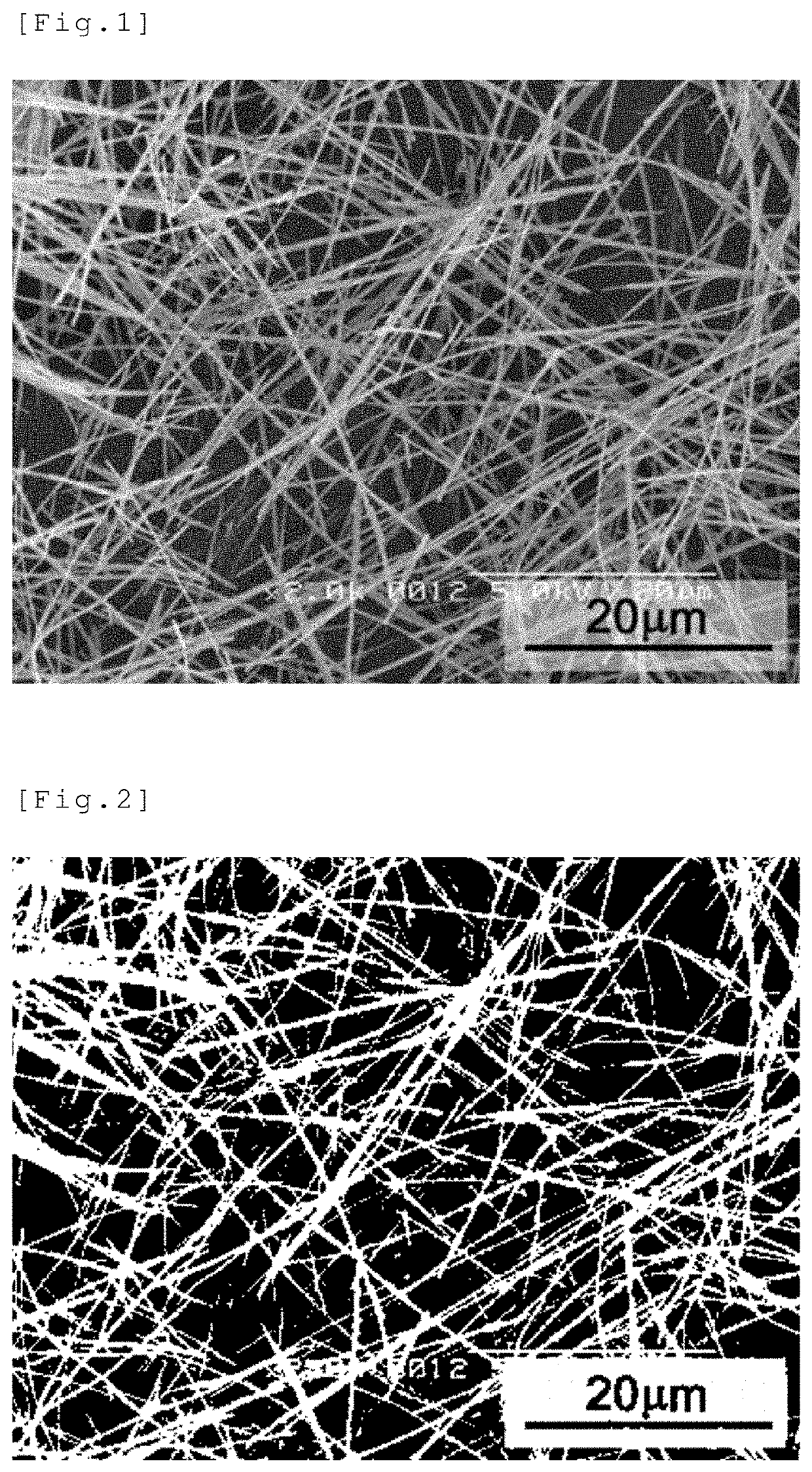
Figure 1 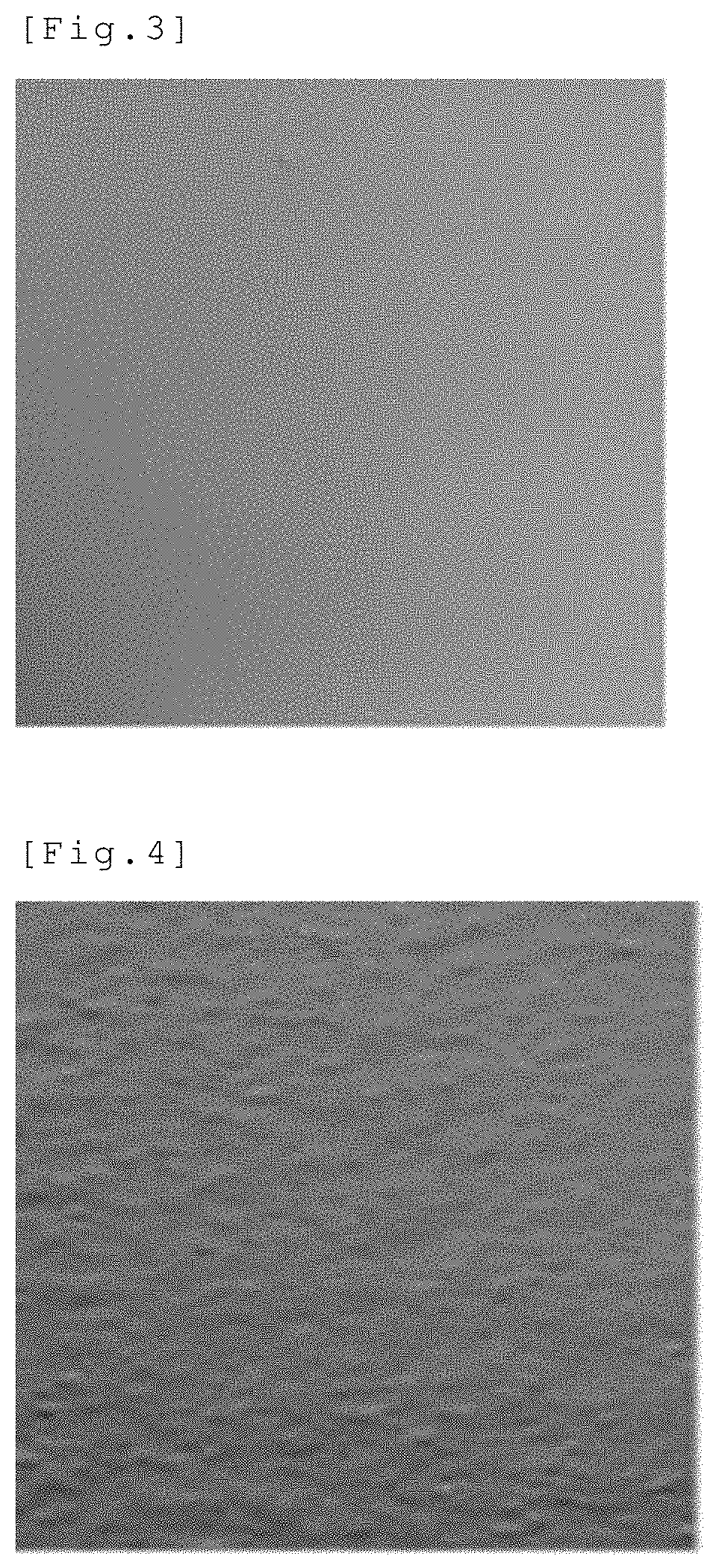
Figure 2
Abstract
Description
CROSS REFERENCE TO RELATED APPLICATIONS
[0001] This application is a National Stage of International Application No. PCT / JP2017 / 035119 filed Sep. 28, 2017, claiming priority based on Japanese Patent Application No. 2016-189720 filed Sep. 28, 2016 and Japanese Patent Application No. 2016-225832 filed Nov. 21, 2016.TECHNICAL FIELD
[0002] The present invention relates to a heat dissipation sheet. More specifically, the present invention relates to a heat dissipation sheet containing fibrous carbon and having excellent thermal conductivity.BACKGROUND ART
[0003] Carbon nanomaterials, especially, fibrous carbon with an average fiber diameter of 1 μm or less, have excellent properties such as high crystallinity, high electroconductivity, high strength, a high elastic modulus and light weight, and are therefore used as nanofillers of high-performance composite materials. The application thereof is not limited to reinforcing nanofillers intended for improvement of mechanical strength, and by makin...
Examples
manufacturing example 1
Manufacturing of Fibrous Carbon
[0177]90 parts by mass of high-density polyethylene (manufactured by Prime Polymer Co., Ltd., HI-ZEX 5000 SR, melt viscosity: 14 Pa·s at 350° C. and 600 s−1, MFR=0.37 g / 10 min) as a thermoplastic resin and 10 parts by mass of Mesophase Pitch AR-MPH (manufactured by Mitsubishi Gas Chemical Company, Inc.) as a mesophase pitch were melt-kneaded in a co-rotating twin-screw extruder (“TEM-26SS” manufactured by TOSHIBA MACHINE CO., LTD., at a barrel temperature of 310° C. under a nitrogen gas stream) to prepare a mesophase pitch composition. The dispersion diameter of the mesophase pitch in the thermoplastic resin was 0.05 to 2 μm. Also, this mesophase pitch composition was held at 300° C. for 10 minutes, but aggregation of the mesophase pitch was not observed and the dispersion diameter was 0.05 to 2 μm.
[0178]Then, this mesophase pitch composition was molded into a 60 μm-thick planar body using a rectangular nozzle with a slit width of 0.2 mm, a slit length...
example 1
[0183]Using N-methyl-2-pyrrolidone as a solvent, polyvinylidene fluoride (manufactured by Kureha Corporation) was dissolved in this solvent so that the concentration of the binder was 10% by mass. Then, the fibrous carbon (Manufacturing Example 1) was added to this solution and kneaded to obtain a slurry. The blending amount of the fibrous carbon was set to 50% by mass with respect to the total amount of the polymer and the fibrous carbon. This slurry was poured onto a polytetrafluoroethylene (PTFE) film and molded to a thickness of 0.3 mm by a doctor blade method at a casting speed of 0.5 cm / min. After heat treatment at 80° C. for 1 hour, heat treatment was further performed at 150° C. for 2 hours to obtain a heat dissipation sheet with a length of 200 cm, a width of 150 cm, and a thickness of 0.1 mm. This heat dissipation sheet had a smooth and supple surface. Values of the thermal conductivity in the in-plane direction (MD direction) and thickness direction of the heat dissipatio...
example 2
[0184]The same procedure as in Example 1 was carried out except that the blending amount of the fibrous carbon was 25% by mass to obtain a heat dissipation sheet. Values of the thermal conductivity in the in-plane direction (MD direction) and thickness direction of the heat dissipation sheet are shown in Table 1.