
Overcoating composition for photoresist and method for forming photoresist pattern using the same
a composition and composition technology, applied in the field of overcoating composition and photoresist pattern formation method, can solve the problems of etching pattern transformation and breakage, light diffracted according to increase of energy, etc., and achieve the effect of reducing the linewidth of photoresist pattern
Patent Information
- Authority / Receiving Office
- US · United States
- Patent Type
- Applications(United States)
- Current Assignee / Owner
- Publication Date
- 2004-07-22
- Estimated Expiration
- Not applicable · inactive patent
Smart Images
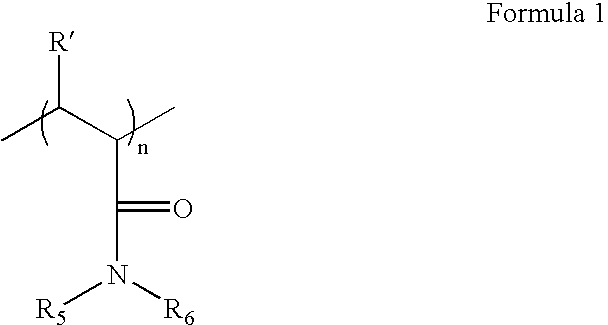
Figure 1 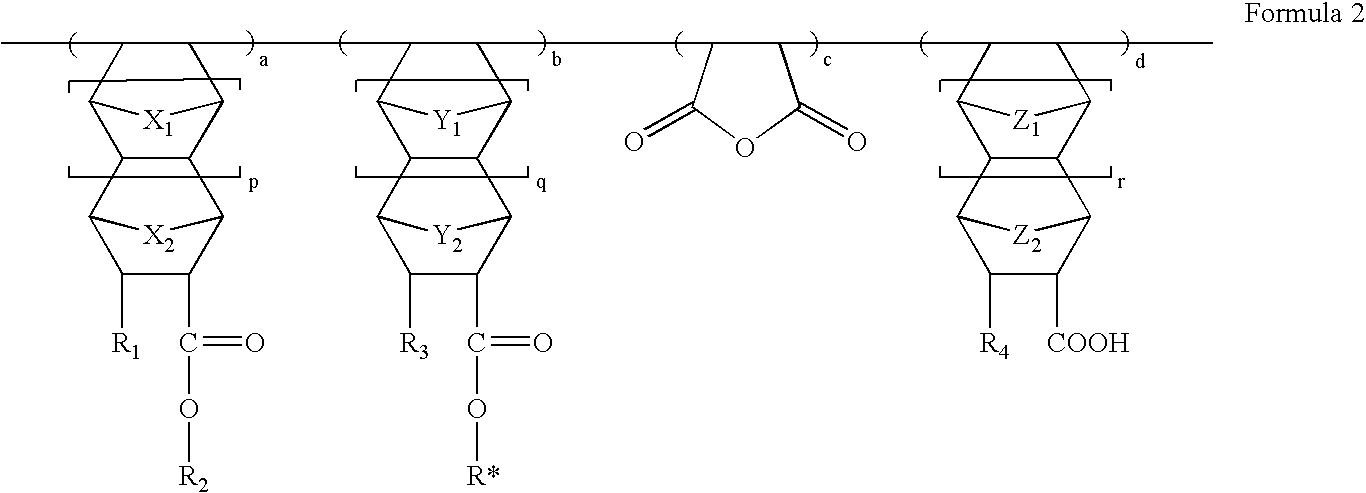
Figure 2 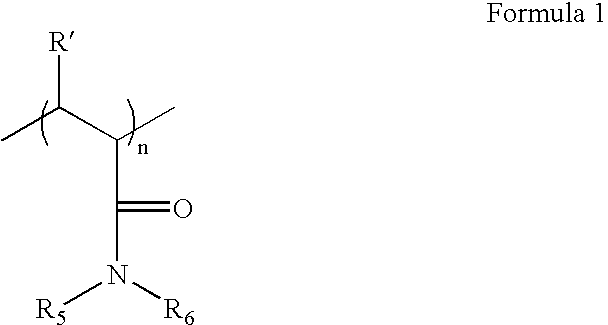
Figure 3
Abstract
Description
[0001] 1. Technical Field
[0002] Overcoating compositions for photoresist and methods for reducing linewidth of the photoresist patterns are disclosed. More specifically, an overcoating composition containing acids is coated on a whole surface of a photoresist pattern formed by a common lithography process to diffuse the acids into the photoresist pattern. The regions of photoresist pattern where the acids are diffused are developed with an alkali solution to be removed. As a result, the linewidth of positive photoresist patterns can be reduced, and the linewidth of negative photoresist patterns can be prevented from slimming in a subsequent linewidth measurement process using SEM.
[0003] 2. Description of the Related Art
[0004] Conventionally, exposure energy has been increased to reduce linewidth of photoresist patterns.
[0005] However, although the above method is very effective to reduce the linewidth of photoresist patterns, the amount of light diffracted according to increase of t...
Examples
example 2
Preparation of Overcoating Composition (2)
[0080] To distilled water (300 g) were added polyvinylpyrrolidone (molecular weight 10,000) (30 g)(Aldrich Co.) and p-toluenesulfonic acid (0.5 g). Then, the resulting mixture was filtered with a 0.2 .mu.m filter, thereby obtaining a disclosed overcoating composition.
[0081] II. Formation of Positive Photoresist Pattern
example 3
[0082] An ArF antireflective coating (hereinafter, referred to as "BARC") film (DHRC-A20)(Dongjin SemiChem Co. Ltd.) was coated at a thickness of 330 .ANG. on a wafer. A positive ArF photoresist (DHA-H150)(Dongjin SemiChem Co. Ltd.) was coated at a thickness of 2400 .ANG. thereon. The resulting structure was exposed using an ArF exposer (ASML Co. Ltd.) to light, and developed, thereby obtaining the positive photoresist pattern of FIG. 4a (linewidth .about.112 nm).
[0083] The overcoating composition obtained from the step 2 of Example 1 was coated at a thickness of 3000 .ANG. on the pattern of FIG. 4a. The resulting structure was baked at 150.degree. C. for 30 seconds. After the baking process, the resulting structure was developed with TMAH solution of 2.38 wt %, thereby obtaining the pattern of FIG. 4b (linewidth .about.86 nm).
[0084] The linewidth of the pattern of FIG. 4b was shown to be reduced to 26 nm when compared to that of FIG. 4a. Accordingly, the resolving power of patterns...
example 4
[0085] An ArF BARC film (DHRC-A20) was coated at a thickness of 330 .ANG. on a wafer. A positive ArF photoresist (DHA-H150) was coated at a thickness of 2400 .ANG. thereon. The resulting structure was exposed using an ArF exposer to light, and developed, thereby obtaining the positive photoresist pattern of FIG. 5a (linewidth .about.111 nm).
[0086] The overcoating composition obtained from Example 2 was coated at a thickness of 3000 .ANG. from the top surface of the pattern of FIG. 5a. The resulting structure was baked at 150.degree. C. for 30 seconds. After the baking process, the resulting structure was developed with TMAH solution of 2.38 wt %, thereby obtaining the pattern of FIG. 5b (linewidth .about.88 nm).
[0087] The linewidth of the pattern of FIG. 5b was shown to be reduced to 23 nm when compared to that of FIG. 5a. Accordingly, the resolving power of patterns may be increased by the disclosed method.