
End mill
a technology of end mills and end mills, which is applied in the direction of metal-working equipment, workpieces, milling equipment, etc., can solve the problems of beck end mills with several deficiencies and limitations, catastrophic tool failure, and rejected work pieces
Patent Information
- Authority / Receiving Office
- US · United States
- Patent Type
- Applications(United States)
- Current Assignee / Owner
- Publication Date
- 2006-03-30
- Estimated Expiration
- Not applicable · inactive patent
Smart Images
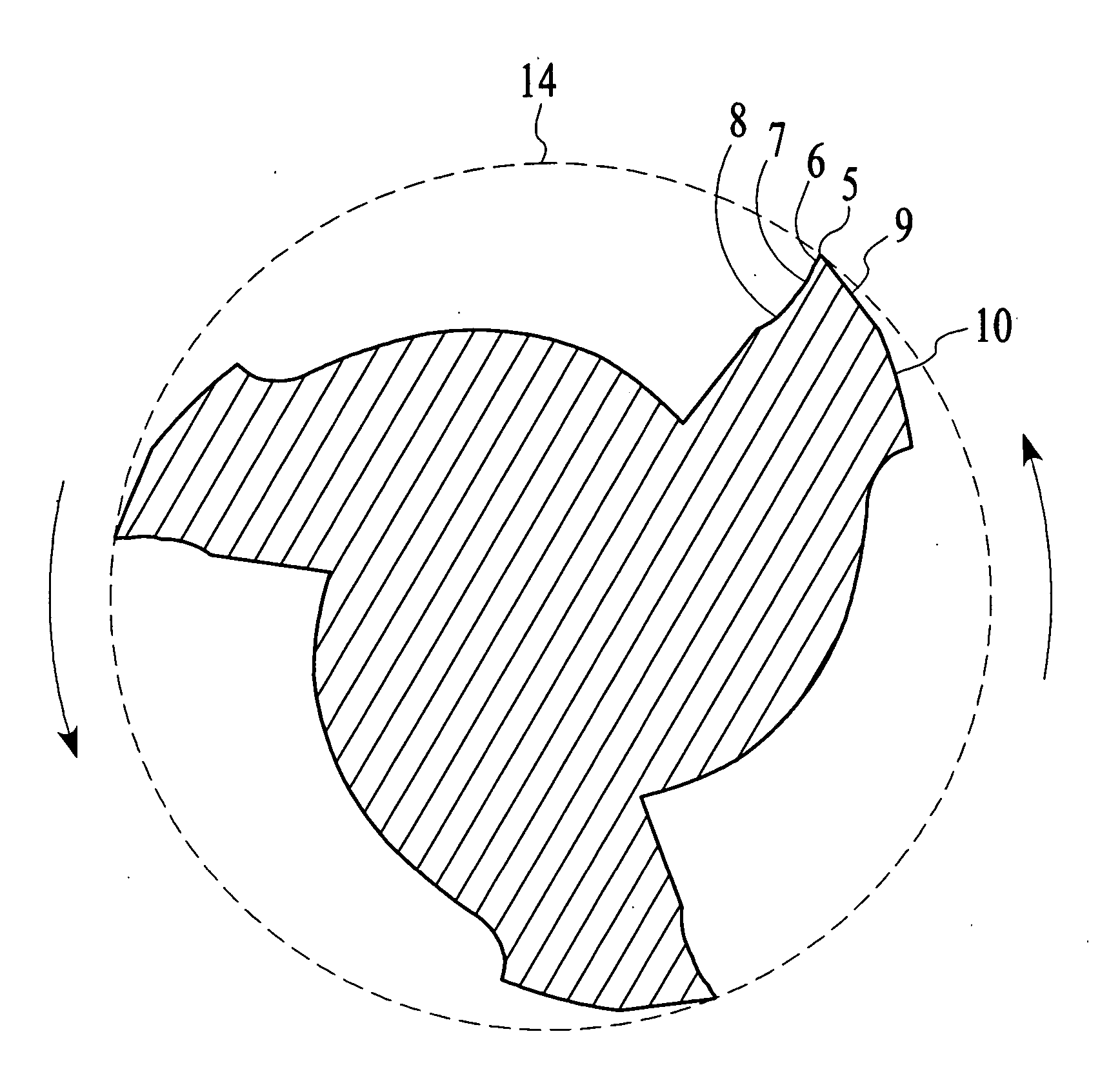
Figure 1 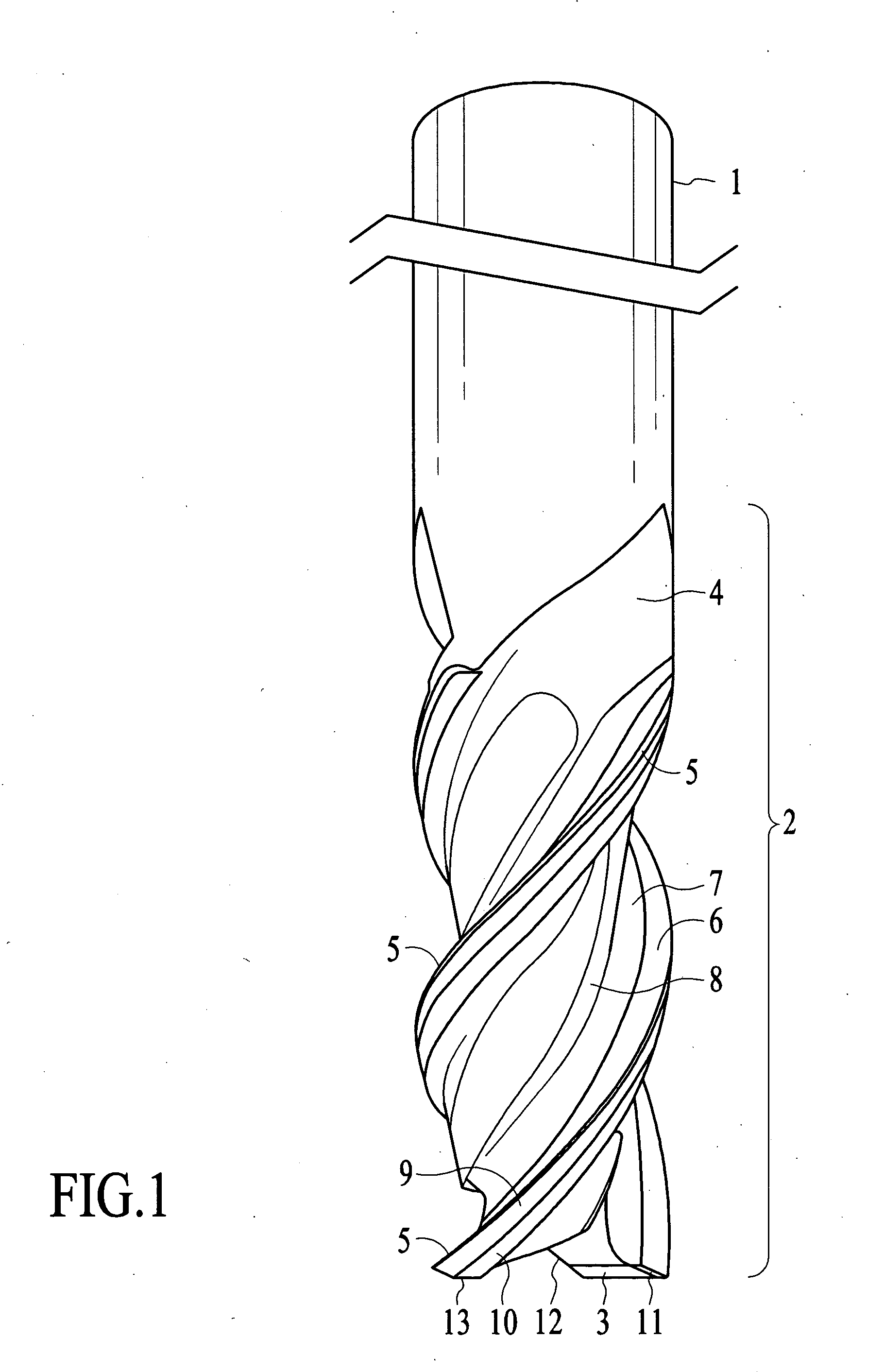
Figure 2 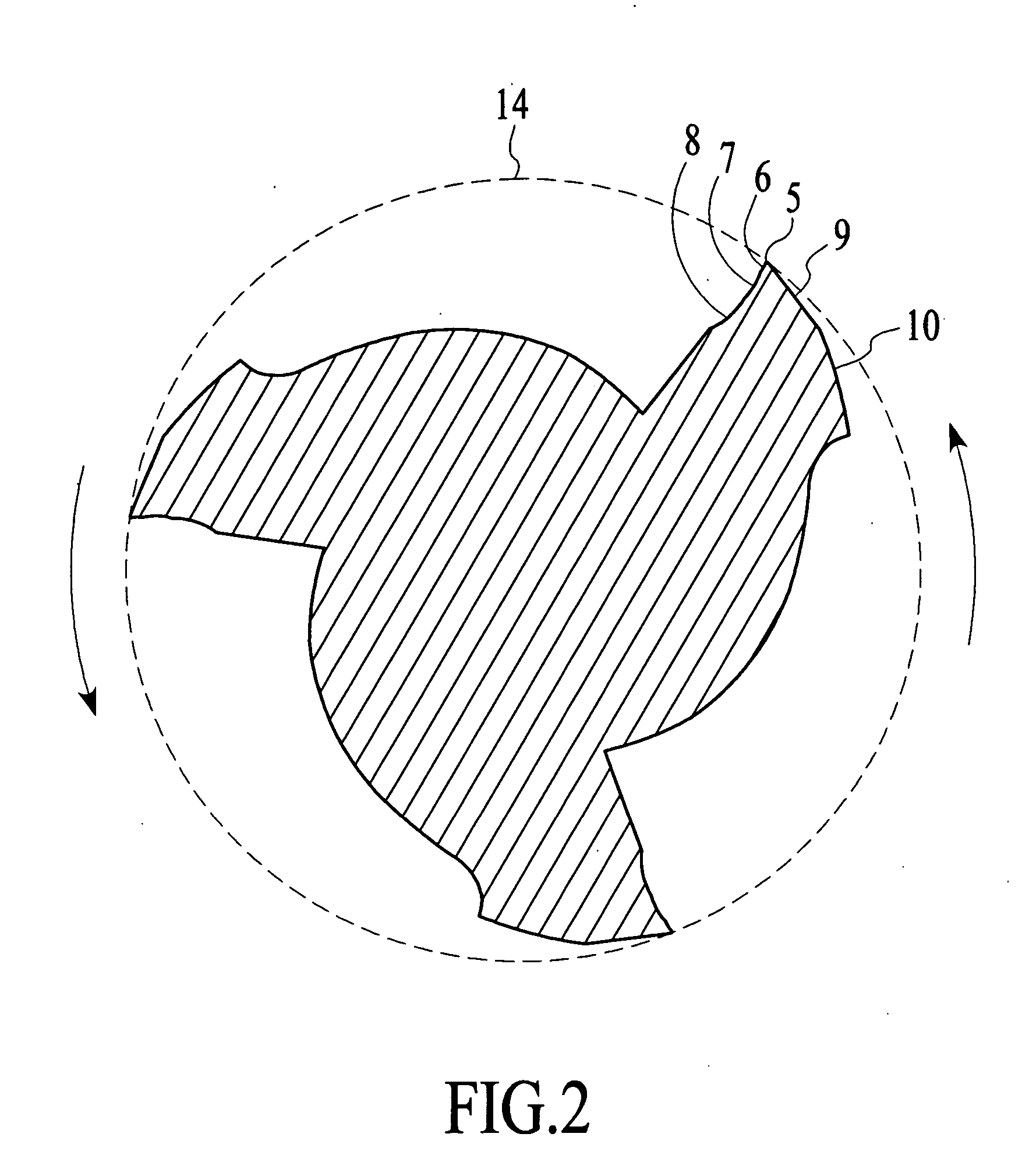
Figure 3
Abstract
Description
FIELD OF THE INVENTION
[0001] The present invention relates to the field of rotating end mills with multiple cutting surfaces. BACKGROUND OF THE INVENTION
[0002] For decades, end mills have been used with rotating milling cutters to cut, shape and finish a wide variety of ferrous and non-ferrous metals and alloys. These end mills are typically made of hardened steel.
[0003] U.S. Pat. No. 3,003,224 to Ribich discloses an end mill with two operating surfaces on the cutting face wall, as well as a primary and secondary tooth surface. According to Ribich, the secondary tooth surface on the cutting face of the end mill achieved a cleaner cut and a marked decrease of chip adherence to the cutting face surfaces.
[0004] U.S. Pat. No. 5,049,009 to Beck discloses an improved rotary cutting end mill which includes an arcuate shaped circular land on the first relief wall which contacts the cutting edge, as well as a slightly angled cutting end. According to Beck, this improved end mill achieved...
Examples
Embodiment Construction
[0028] An improved helical, fluted single-end end mill is preferably made from ultra-fine micro grain tungsten carbide material with a cobalt content that varies from the top of the end mill to the bottom of the end mill. The end mill has a cylindrical shank 1, at least two helically fluted cutting teeth making up the helical cutting section of said end mill 2 said cutting teeth contain a tertiary tooth face 8, a secondary tooth face 7 and a primary tooth face 6.
[0029] Said cutting teeth also include a variable margin 5. In the prior art, the margin is the unrelieved part of the periphery of the land adjacent to the cutting edge. The margin width is the distance between the cutting edge and the primary relief see, 9, measured at a right angle to the cutting edge. Margin widths in the prior art are uniform from the terminal end of the cutting teeth on the margins entire length as it spirals upward toward the shank section of the end mill 15.
[0030] In the present invention, a variab...