
Lateral laser fiber for high average power and peak pulse energy
a laser fiber and pulse energy technology, applied in the field of endosurgery laser applications, to achieve the effect of improving the energy density of target tissue, improving the energy density of aiming laser at target, and enhancing orientation
Patent Information
- Authority / Receiving Office
- US · United States
- Patent Type
- Applications(United States)
- Current Assignee / Owner
- Publication Date
- 2006-12-14
Smart Images
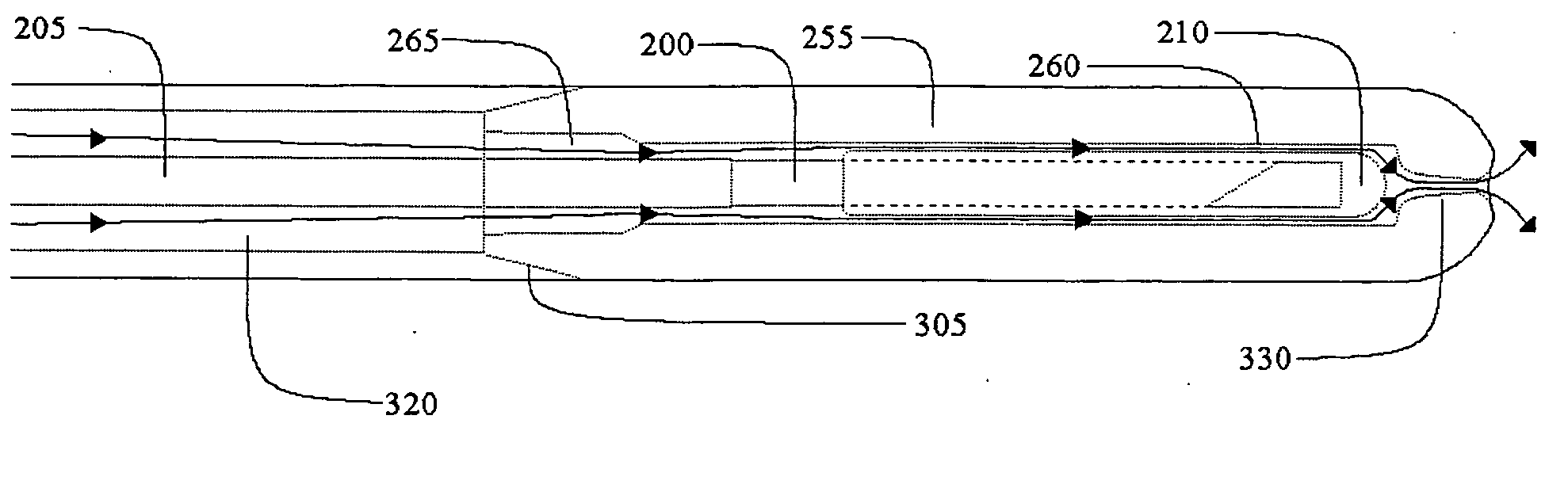
Figure 1 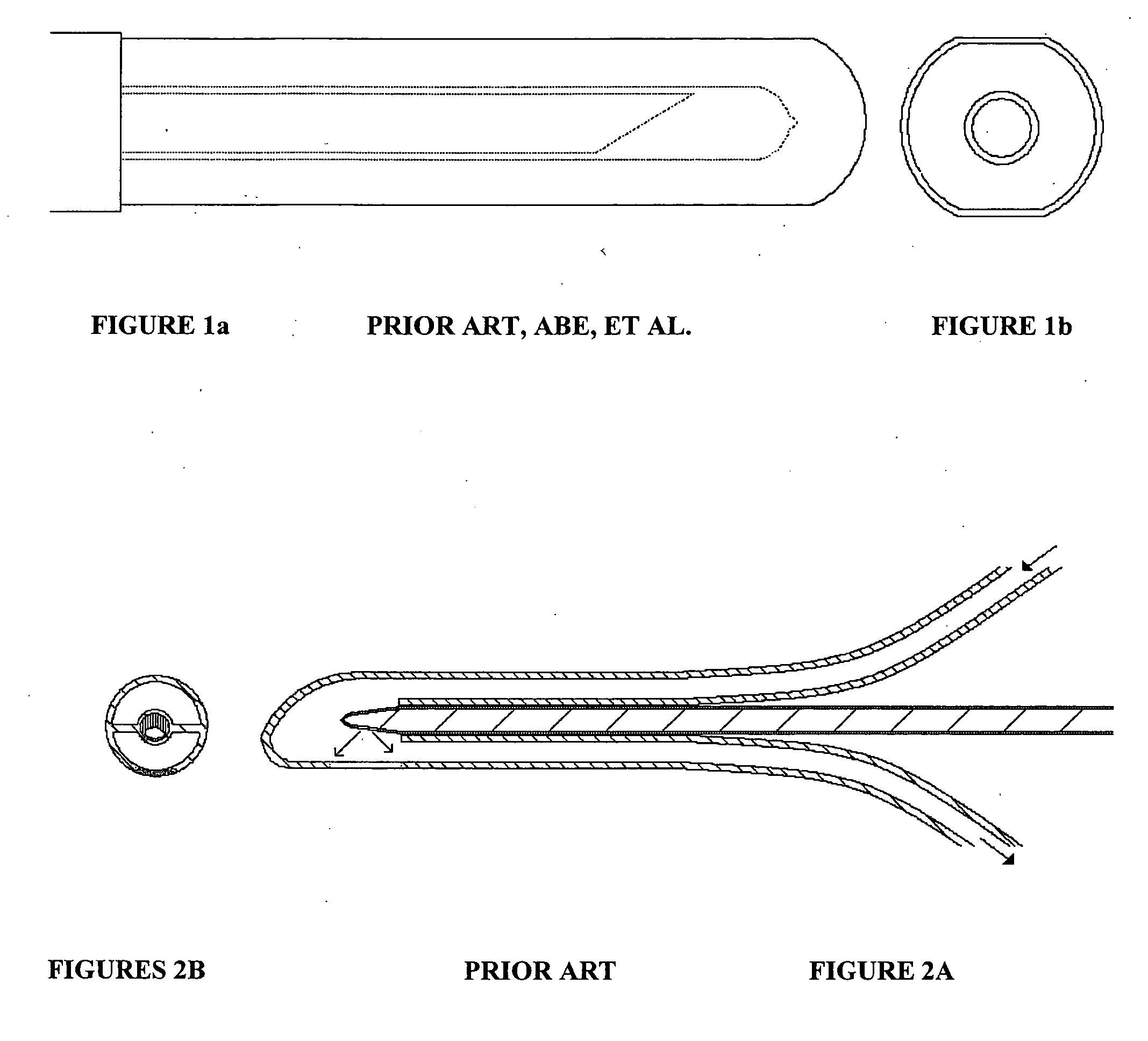
Figure 2 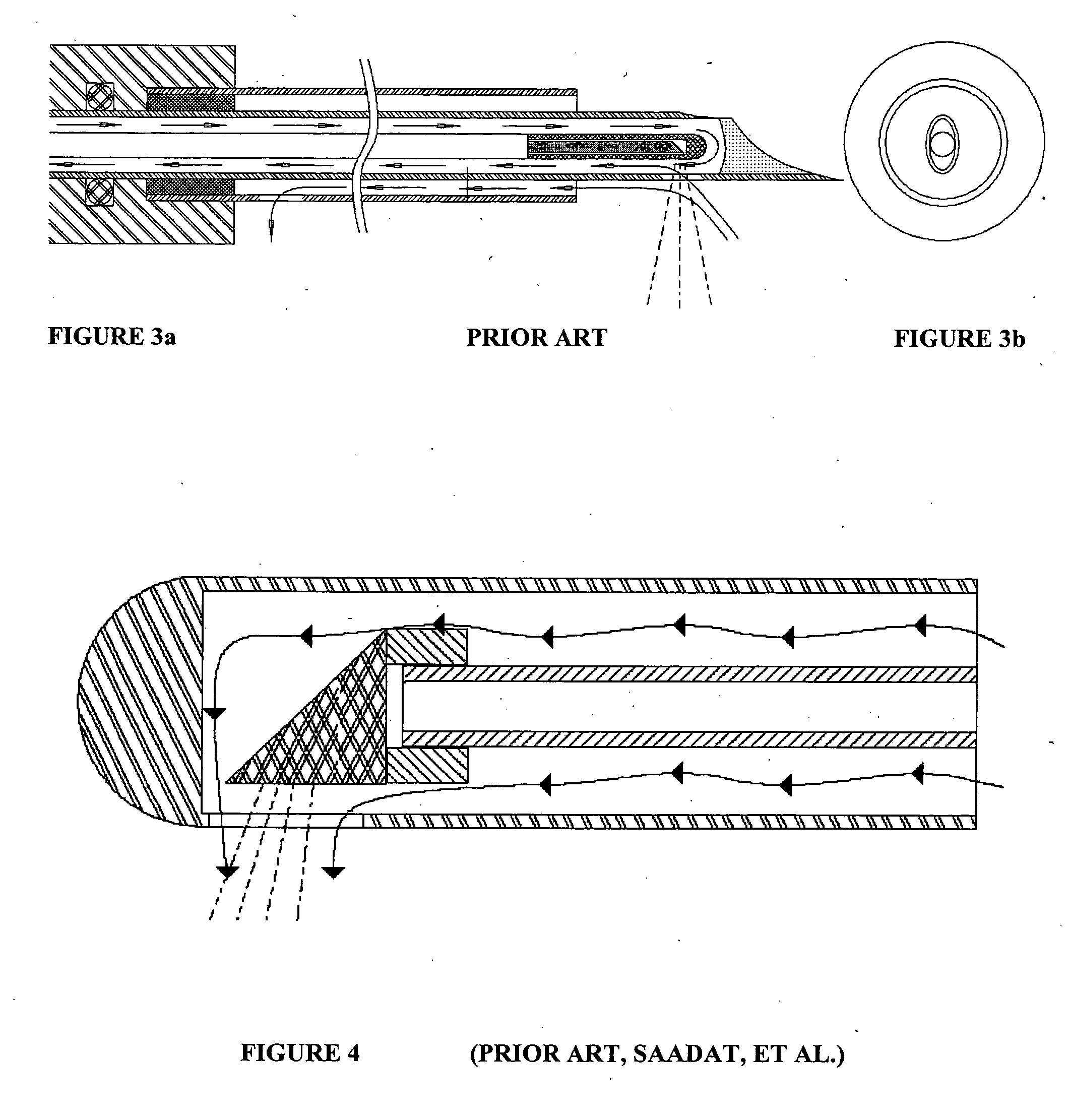
Figure 3
Abstract
Description
FIELD OF THE INVENTION
[0001] The present invention relates generally to applications of lasers to endosurgery and specifically to delivery of high energy density or high average power to tissues located about body lumen, such as the prostate gland about the urethra. BACKGROUND OF THE INVENTION AND DESCRIPTION OF THE PRIOR ART
[0002] Treatment of benign prostatic hypertrophy (BPH) with laser energy has a somewhat checkered past, but in recent years advances in the understanding of laser-tissue interactions and laser design have enabled realization of much of the promise of the initial concept. The longstanding “gold standard” for surgical treatment of benign enlarged prostate glands is a technique called TURP: Transurethral Resection of the Prostate. In TURP procedures, an electric current is passed through working tips of various shapes, heating them to permit tissue to be selectively carved or charred away. While TURP is widely used with good clinical results, significant bleeding...
Examples
Embodiment Construction
[0087] The present invention provides an improved optical fiber tip for laterally directing a laser beam. The present invention comprises a waveguide, such as an optical fiber, having a specialized output tip. Electromagnetic radiation is coupled into the waveguide and propagates in a propagation direction along the waveguide to the output tip (also known as working tip and distal tip, the energy source end of the waveguide being proximal), also referred to by surgeons as the “crystal” (a misnomer). The output tip includes a tissue contacting surface, preferably a substantially homogeneous transmission medium, with respect to refractive index, and a reflecting surface. The reflecting surface is disposed at an angle off normal to the propagation axis so that electromagnetic radiation is internally reflected in a lateral direction relative to the propagation direction, preferably through the substantially homogeneous transmitting medium toward a particular area on the tissue contactin...