

Glycoside prodrug of 5- aminosalicylic acid
a technology of glycoside and aminosalicylic acid, which is applied in the field of glycoside prodrug of 5aminosalicylic acid, can solve the problems of side effects, drug hypersensitivity, nausea and headache, and the therapeutic effect of ulcerative colitis has not been investigated at all, and achieves the effect of safe and efficient delivery and long-term administration
Patent Information
- Authority / Receiving Office
- US · United States
- Patent Type
- Applications(United States)
- Current Assignee / Owner
- Publication Date
- 2007-07-26
- Estimated Expiration
- Not applicable · inactive patent
Smart Images
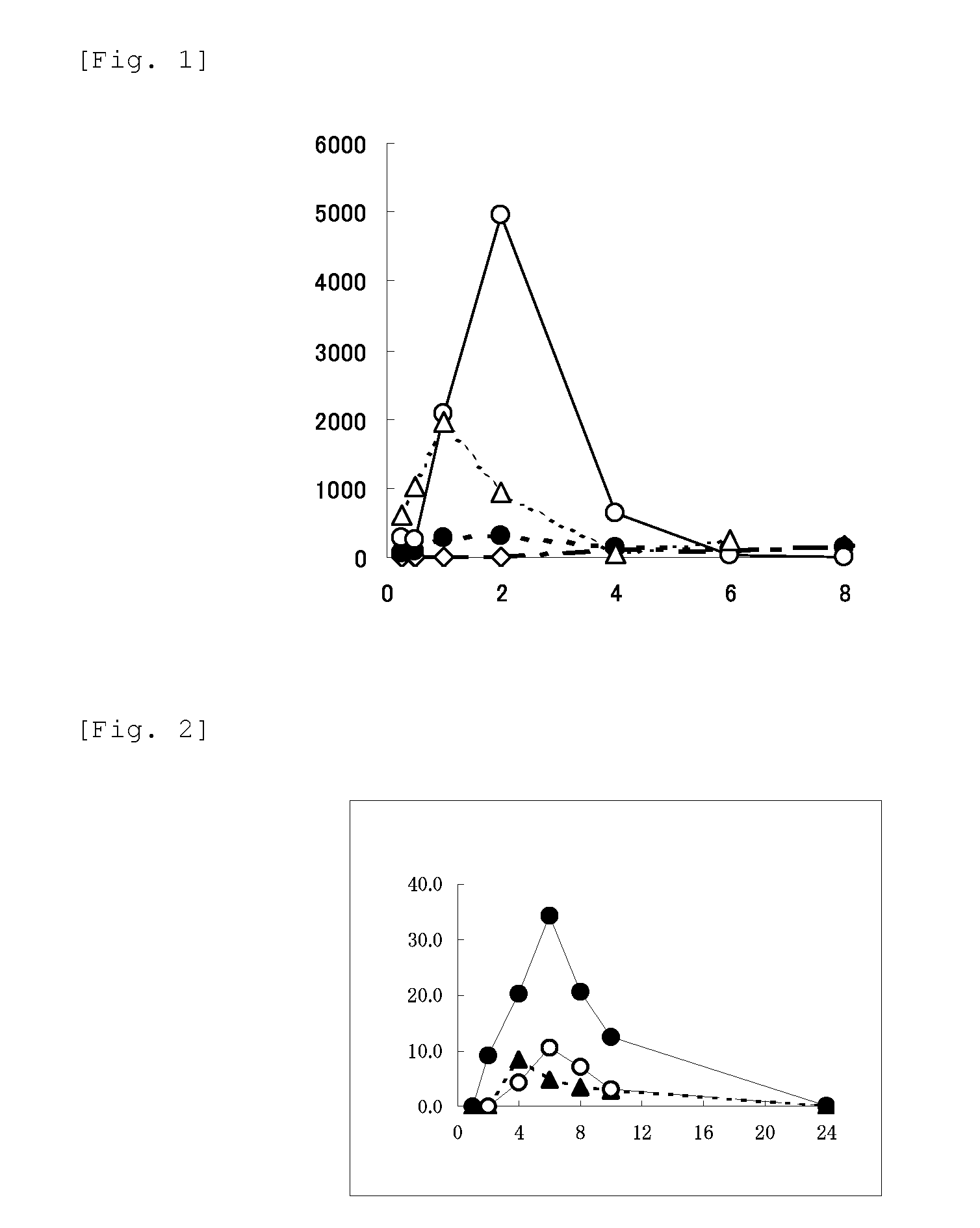
Figure 1 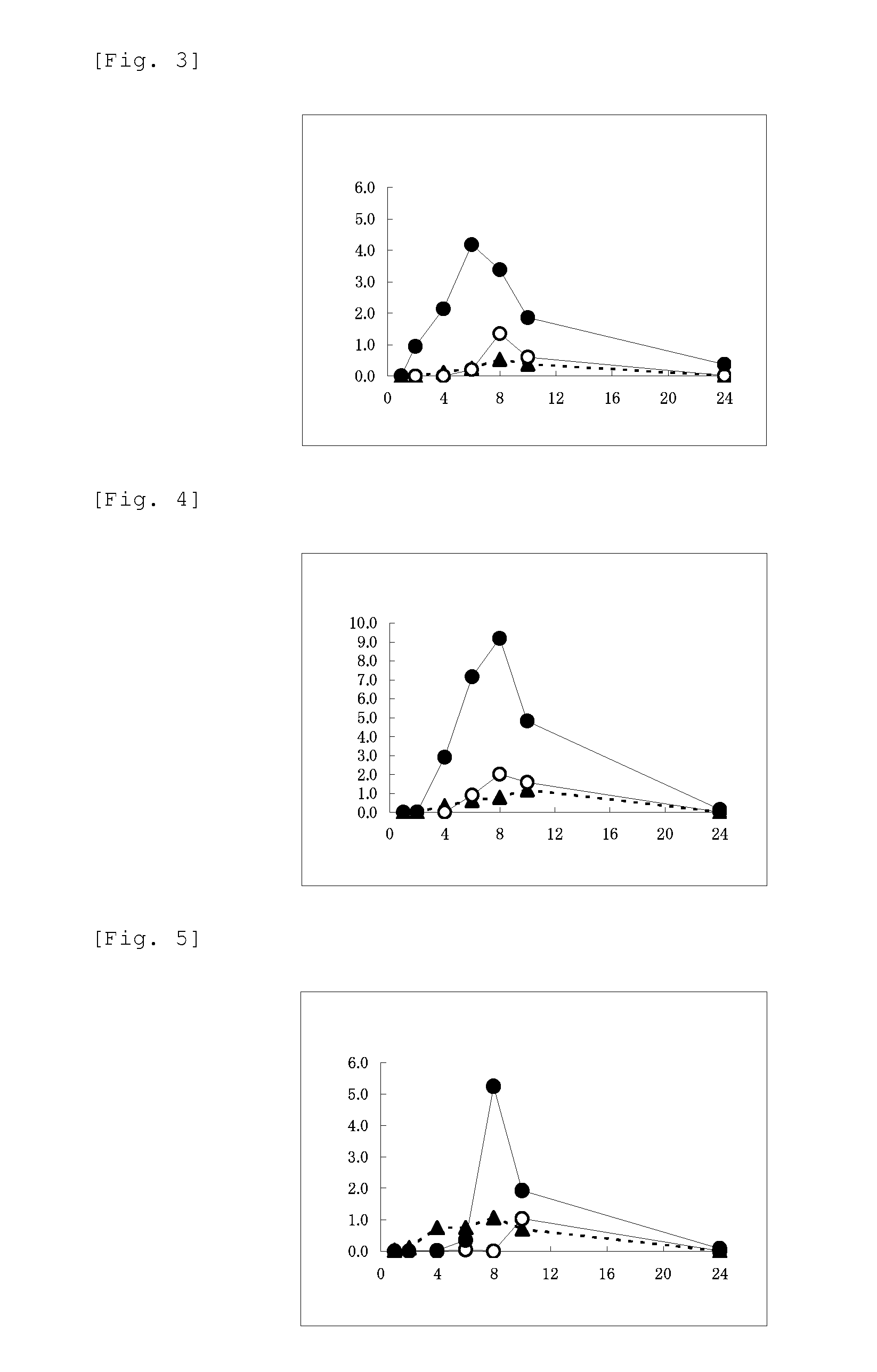
Figure 2 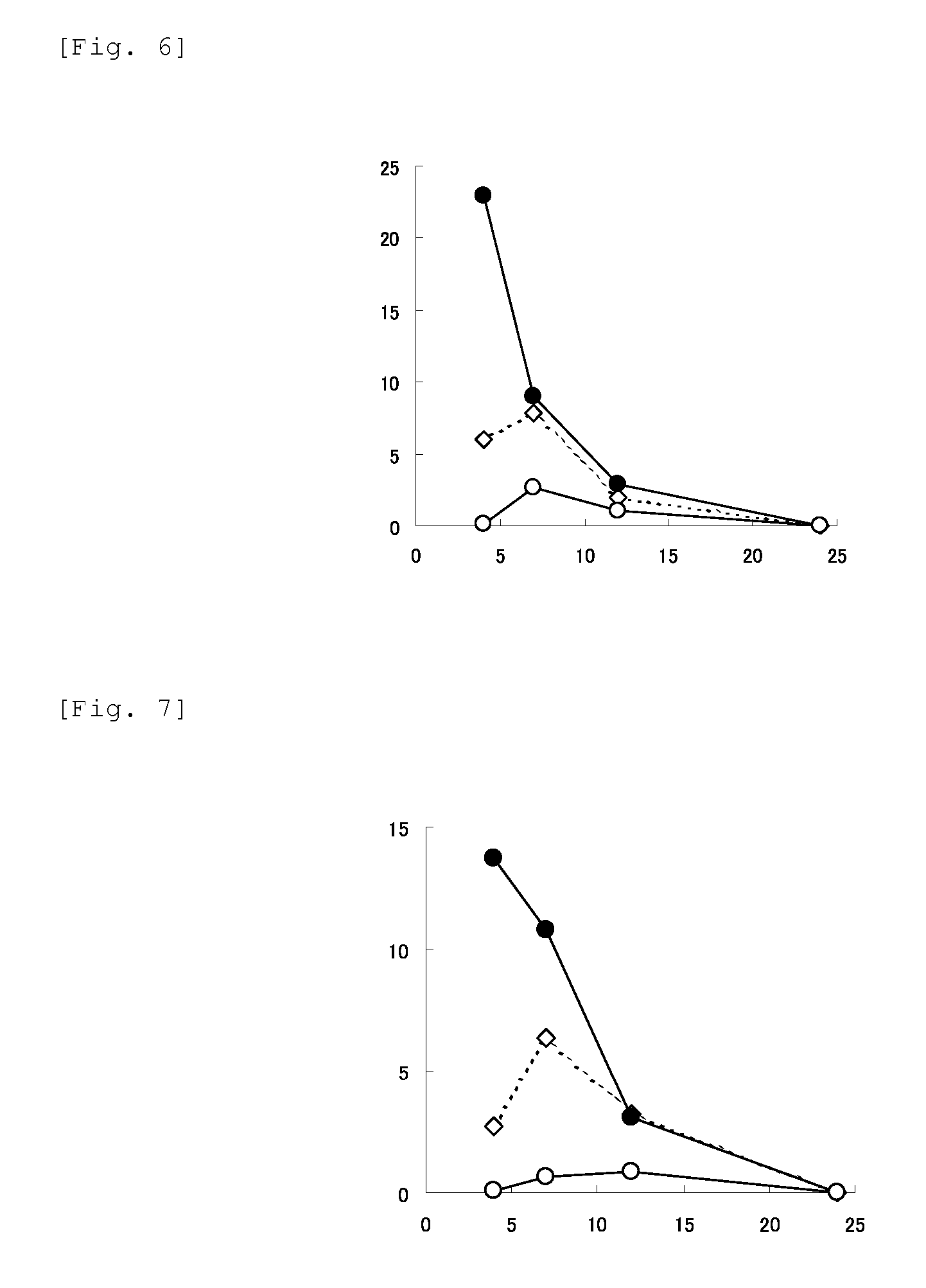
Figure 3
Abstract
Description
TECHNICAL FIELD
[0001] The present invention relates to 5-amino-2-(β-D-galactopyranosyloxy)benzoic acid (hereinafter referred to as “compound [1]”) represented by the following general formula [1] or 5-amino-2-(α-D-galactopyranosyloxy)benzoic acid (hereinafter referred to as “compound [2]”) represented by the following general formula [2] or a pharmaceutically acceptable salt thereof.
[0002] Moreover, the present invention relates to a pharmaceutical composition comprising as an active ingredient the compound [1] or the compound [2] or a pharmaceutically acceptable salt thereof.
[0003] Further, the present invention relates to a therapeutic agent for ulcerative colitis comprising as an active ingredient the compound [1], the compound [2] or 5-amino-2-(β-D-glucopyranosyloxy)benzoic acid (hereinafter referred to as “compound [3]”) represented by the following general formula [3] or a pharmaceutically acceptable salt thereof. BACKGROUND ART
[0004] 5-Aminosalicylic acid (hereinafter r...
Examples
example 1
5-Amino-2-(β-D-galactopyranosyloxy)benzoic acid
Step 1: Methyl 5-nitrosalicylate
[0065] To a solution of 30 g of 5-nitrosalicylic acid in 500 ml of anhydrous methanol, concentrated sulfuric acid was added dropwise, and the mixture was heated to reflux for 2 days. The reaction solution was concentrated under reduced pressure and diluted with 500 ml of ethyl acetate, and 500 ml of water was added thereto. Then, a saturated sodium bicarbonate solution was slowly added thereto under cooling with ice to make the solution alkaline (pH=9). The deposited yellow precipitate was filtered, and the aqueous layer of the filtrate was subjected to an extraction with ethyl acetate. The combined organic layer was washed with water and saturated brine and dried over anhydrous magnesium sulfate and then filtered. Then, the solvent was concentrated, whereby 31.26 g of methyl 5-nitrosalicylate was obtained.
Step 2-1: 2′,3′,4′,6′-Tetra-O-acetyl-α-D-galactopyranosyl Bromide
[0066] A solution of 65 g of ...
example 2
5-Amino-2-(α-D-galactopyranosyloxy)benzoic acid
Step 1: Methyl 2-fluoro-5-nitrobenzoate
[0078] A solution containing 12.0 g of 2-fluoro-5-nitrobenzoic acid, 60 ml of anhydrous tetrahydrofuran and 60 μl of dimethylformamide was cooled with ice, and 9.05 g of oxalyl chloride was added dropwise thereto. After completion of the dropwise addition, the mixture was stirred at room temperature for 5 hours. To the reaction solution, 30 ml of anhydrous tetrahydrofuran and 30 ml of a methanol solution were added dropwise, and the mixture was stirred overnight at room temperature. The reaction solution was concentrated under reduced pressure and diluted with 240 ml of ethyl acetate. Then, the diluted solution was washed with 5% aqueous sodium bicarbonate solution and saturated brine and dried over anhydrous magnesium sulfate and then filtered. Then, the solvent was concentrated, and to the concentrated residue, 24 ml of isopropyl ether was added to dissolve the residue. Then, the solution was ...
reference example 1
5-Amino-2-(β-D-glucopyranosyloxy)benzoic acid
Step 1: Methyl 5-nitrosalicylate
[0090] Synthesis was carried out by using the same method as in the step 1 of Example 1.
Step 2: Methyl 5-nitro-2-(2′,3′,4′,6′-tetra-O-acetyl-β-D-glucopyranosyloxy)benzoate
[0091] To a solution of 6.0 g of methyl 5-nitrosalicylate obtained in the step 1 and 18.8 g of 2′,3′,4′,6′-tetra-O-acetyl-α-D-glucopyranosyl bromide in 60 ml of quinoline, 10.5 g of silver oxide was added, and the mixture was stirred vigorously at room temperature for 1 hour. The reaction mixture was diluted with 300 ml of ethyl acetate, and then, celite filtration was carried out. After the ethyl acetate layer was washed twice with 2 ml of 2 N hydrochloric acid, the aqueous layer was subjected to an extraction twice with 300 ml of ethyl acetate. The combined organic layer was washed with a saturated sodium bicarbonate solution, water and saturated brine, and dried over sodium sulfate, and then filtered. Then, the solvent was concent...