
Methods of Treating, Reducing, or Preventing Autoimmune Conditions
Patent Information
- Authority / Receiving Office
- US · United States
- Current Assignee / Owner
- Publication Date
- 2008-01-24
- Estimated Expiration
- Not applicable · inactive patent
Smart Images
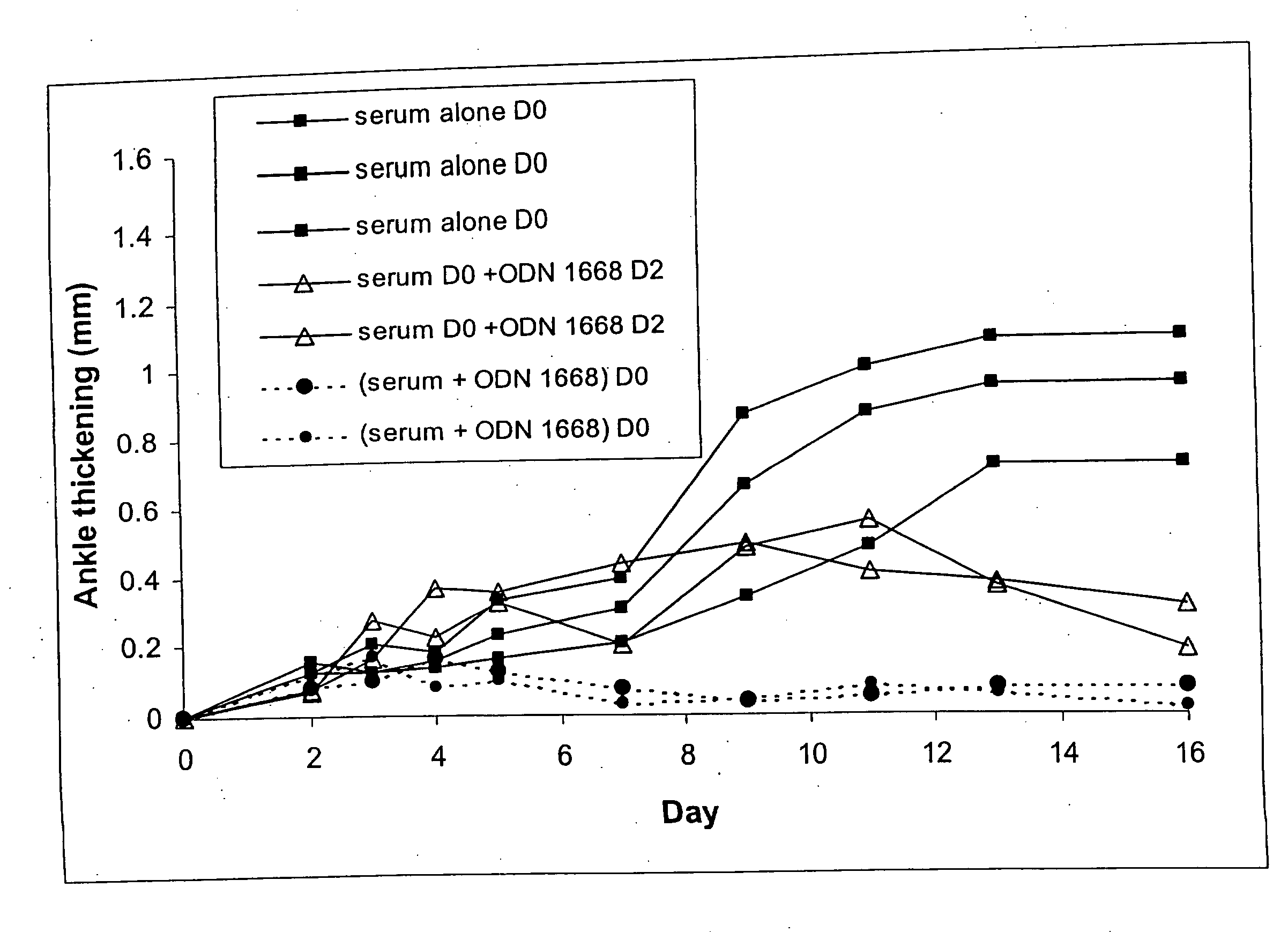
Figure 1 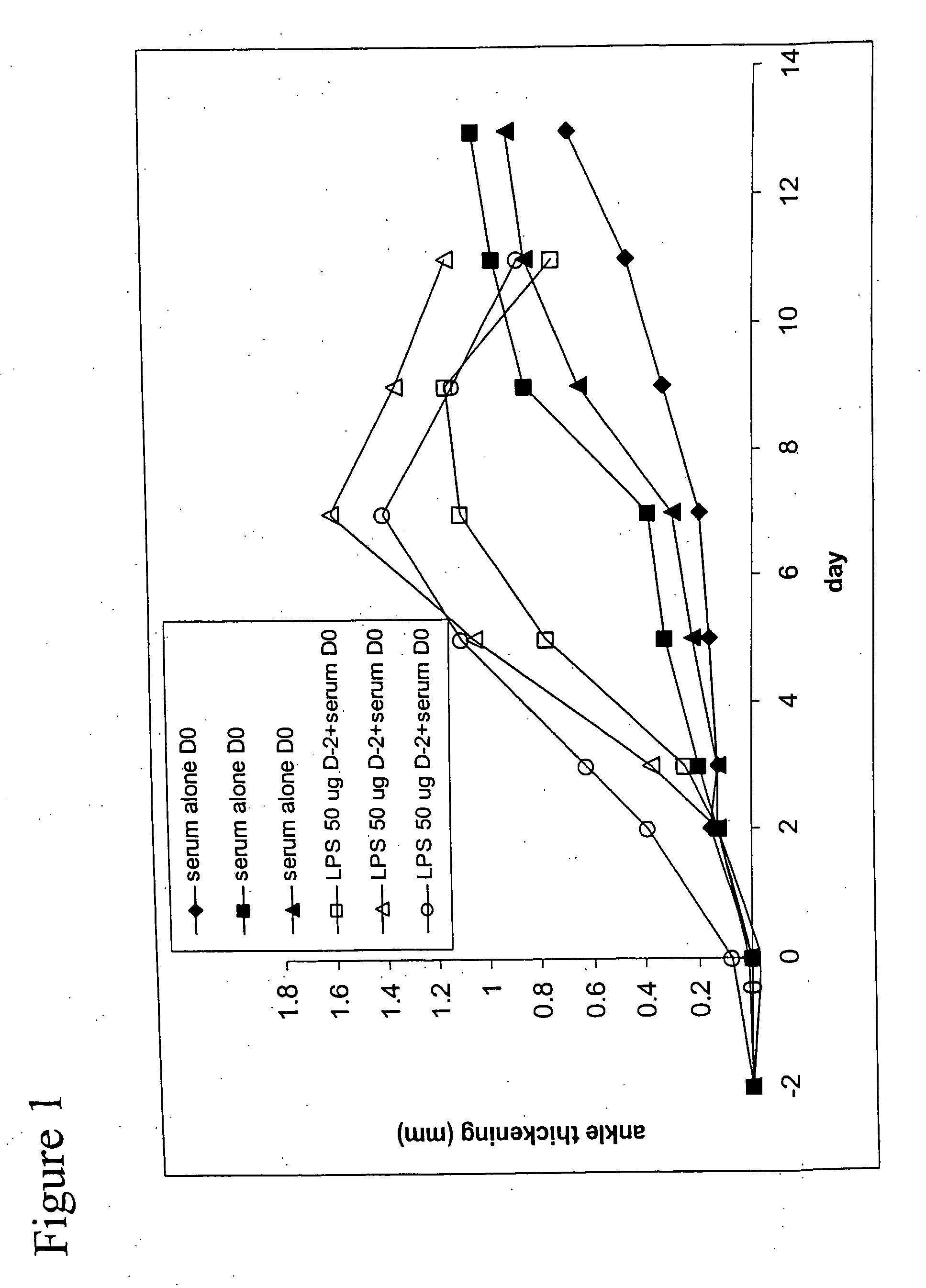
Figure 2 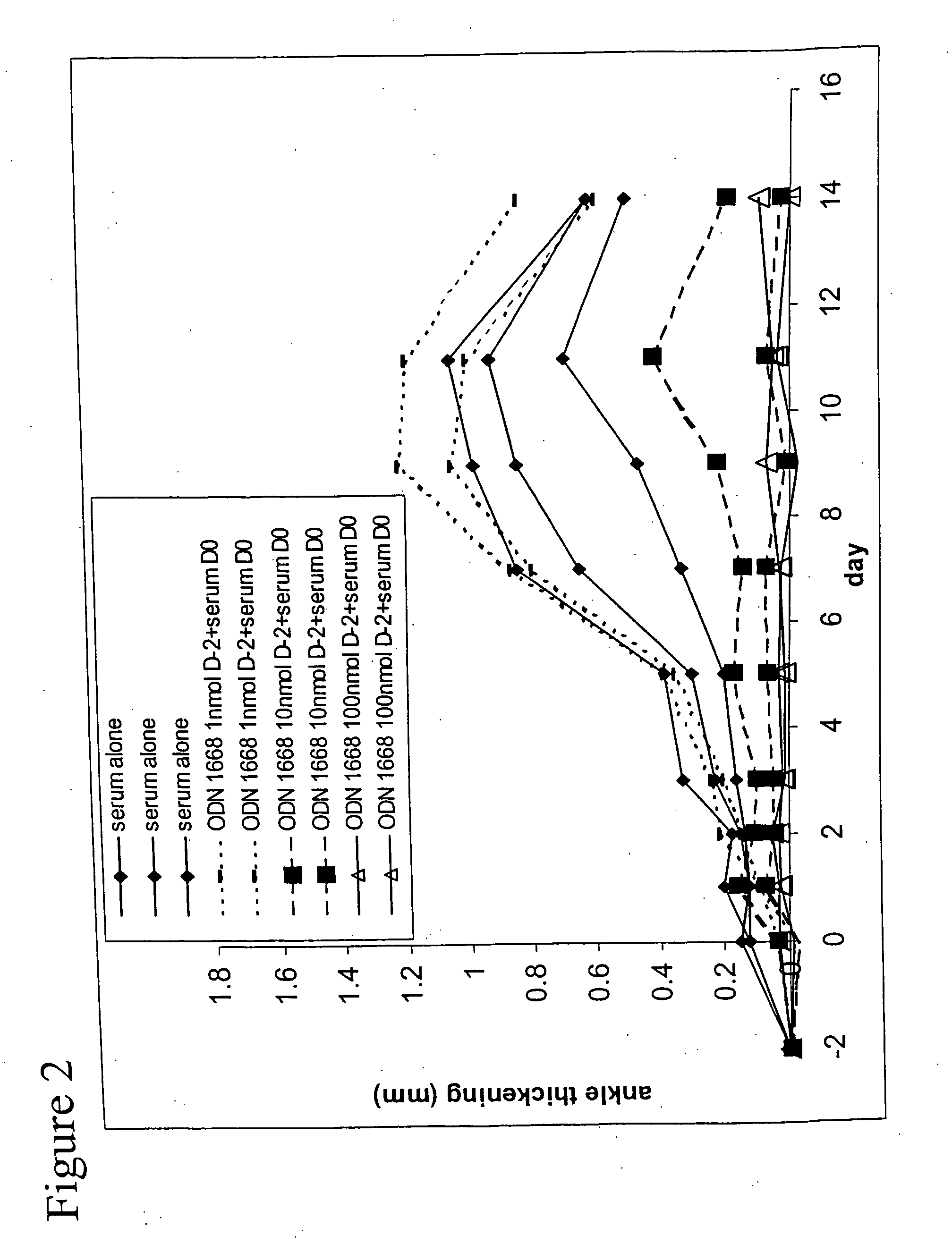
Figure 3
Abstract
Description
BACKGROUND OF THE INVENTION
[0001] In general, the present invention features methods of treating, reducing, or preventing autoimmune conditions, such as rheumatoid arthritis. Also disclosed are screening methods for identifying candidate compounds useful to treat, reduce, or prevent autoimmune conditions.
[0002] The immune system protects the body from potentially harmful agents such as microorganisms, cancer cells, and toxins. The body's ability to recognize foreign or ‘non-self’ entities or antigens results in the production of antibodies and in the sensitization of immune cells, ultimately culminating in the destruction of foreign agents.
[0003] Immune system disorders or autoimmune conditions arise when the immune system no longer differentiates self and non-self antigens and aberrantly mounts an immune response against self-antigens, thereby resulting in the destruction of host cells, tissues, or organs. Rheumatoid arthritis (RA) is one such disease, characterized by the slow erosi...
Examples
Embodiment Construction
[0033]The innate immune response is the first line of host defense against pathogens. Innate immune cells, such as dendritic cells, are first activated and subsequently trigger the generation of optimal adaptive immune responses. Although these cells lack the highly specific antigen receptors of B cells and T cells, they rely on a set of pattern recognition receptors (PRRs), which detect certain molecular structures present in pathogens. The innate immune system therefore detects pathogens by recognizing conserved motifs present in pathogen-associated components termed “pathogen-associated molecular patterns” (PAMPs) and in turn, activates the appropriate defense pathway.
[0034]Toll-like receptors (TLRs) are one class of PRRs that recognize PAMPs. To date, ten TLRs have been discovered (TLR1-10), each of which recognizes different ligands: TLR-4 recognizes lipopolysaccharide (LPS), TLR-2 recognizes peptidoglycan (PGN), TLR-3 recognizes double-stranded RNA (dsRNA), and TLR-9 recognize...