
A Method of Producing an Economical and Ecologically Sound Natural Immunobiotic Extract for Use as a Health Management Instrument and a Replacement for Growth Promotion Antibiotics in Livestock and Companion Animals.
a natural immunobiotic and extract technology, applied in the field of poly(1, 3)dglucopyranosyl(1, 6)dglucopyranose (beta(1, 3/1, 6)dglu), can solve the problems of salmonella /i> being at risk of becoming infected with bacteria, difficult to eradicate, and high cost of production
Patent Information
- Authority / Receiving Office
- US · United States
- Patent Type
- Applications(United States)
- Current Assignee / Owner
- Publication Date
- 2005-01-27
- Estimated Expiration
- Not applicable · inactive patent
Smart Images
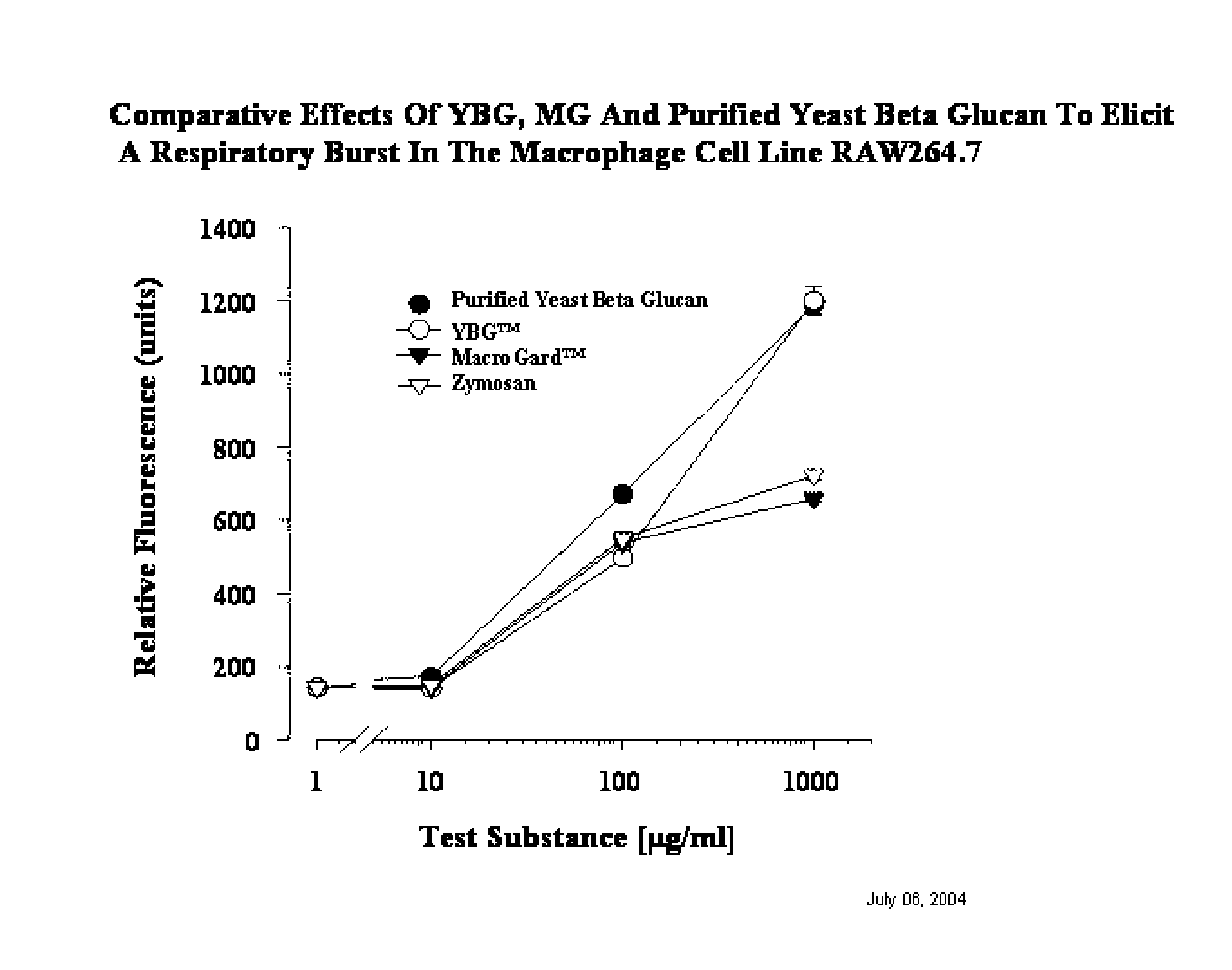
Figure 1 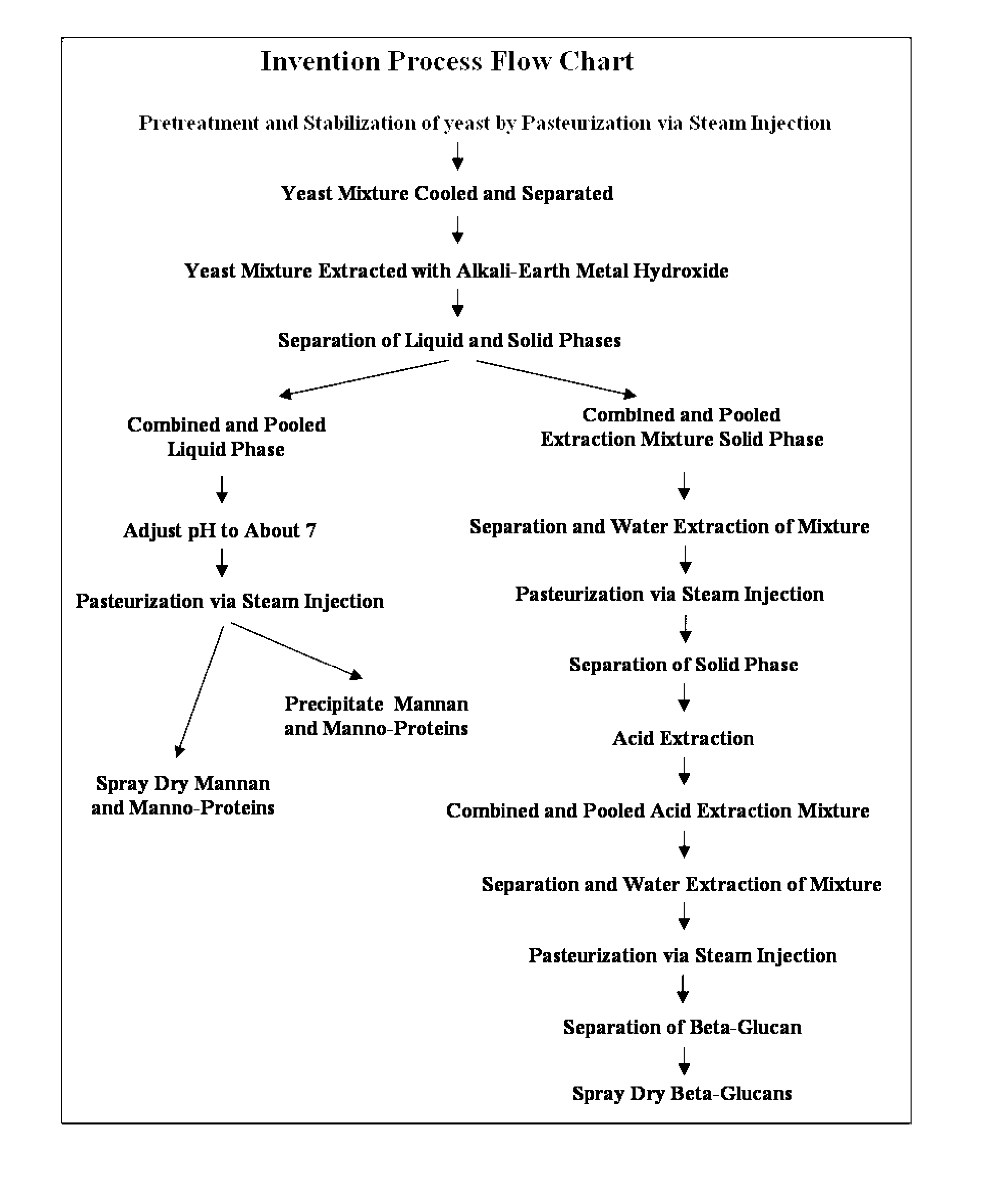
Figure 2
Abstract
Description
FIELD OF INVENTION
[0001] The present invention relates to a process and use of poly-(1,3)-β-D-glucopyranosyl-(1,6)-β-D-glucopyranose (Beta-(1,3 / 1,6)-D-glucan), mannan and manno-protein complexes purified from yeast, fungi or bacterial cell walls which are capable of activating the innate immune system of animals and with other secondary health benefits such as an increase in the number of piglets born per sow and subsequent survivability. The invention also relates to the use of compositions comprised of purified Beta-(1,3 / 1,6)-D-glucan, mannan and manno-proteins that function to enable reduction and / or replacement of “growth promotion” antibiotics in animal feed to maintain animals, especially farmed animals, healthy and growing at an optimal rate. The invention optimizes equipment utilization, increases extraction efficiency resulting in higher yields, provides ecological benefits and decreases environmental impact as a result of reduced waste output as compared to other glucan e...
Examples
example 1
[0032] Purification Of Beta-(1,3) / (1,6)-D-glucan from spent yeast.
[0033] A 1.0 L sample of spent yeast (approximately 15% dry weight) was pasteurized by steam injection at a temperature of 100 degree C. for 20 minutes. The mixture was then separated by centrifugation, the liquid phase was discarded and the remaining solids were re-suspended in 1:5 volumes water (volume / volume) with mixing for 15 minutes. The mixture was then separated by centrifugation, the liquid was discarded and the solids were suspended in 10 volumes (weight / volume) of 1.5 M NaOH. The mixture was then heated with stirring to 80 degree C. for 45 minutes and autoclaved for 30 minutes. The mixture is cooled and left to stand with mixing at ambient temperature. The NaOH spent yeast extraction was repeated two additional times and the mixture was combined with the first extraction mixture. The pooled NaOH mixture was left to stand with mixing at ambient temperature for 24 hours. The solids and liquid phase were sepa...
example 2
[0034] Separation of Mannan and Manno-Protein Complexes from the Alkali-Earth Metal Extraction Liquid Phase.
[0035] The liquid phase from the NaOH extractions of the separation from Example 1 was collected. The pH of the mixture was adjusted to 7.0 with HCl. The solution was pasteurized by steam injection to a temperature of 100 degree C. for 20 minutes. The precipitated mannans and manno-proteins were collected by centrifugation. The liquid phase of the separation was treated with ethanol and the precipitates collected. The precipitated mannans and manno-proteins were combined and dried. The composition of the dried material is shown in Table 2.
TABLE 2Composition of Mannans and Manno-Protein ComplexesComponentQuantityCarbohydrate>35%Lipid Protein>15%Sulfated Ash
example 3
[0036] Drawing 1 demonstrates the comparative effects of several commercially available yeast Beta glucans, including YBG, which was produced by the inventive method.