
Method and apparatus for reduced complexity short range wireless communication
Patent Information
- Authority / Receiving Office
- US · United States
- Current Assignee / Owner
- Publication Date
- 2008-05-01
- Estimated Expiration
- Not applicable · inactive patent
Smart Images
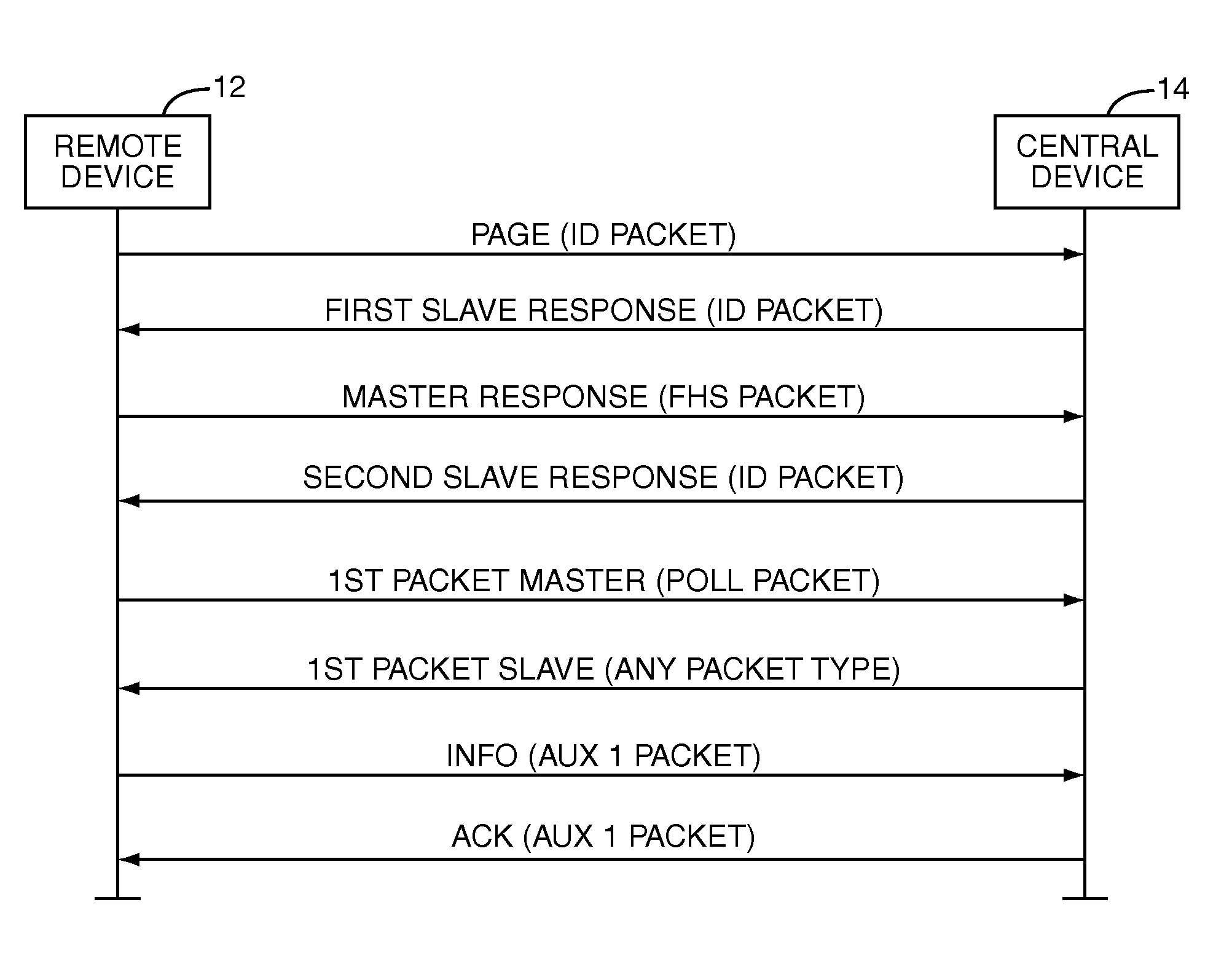
Figure 1 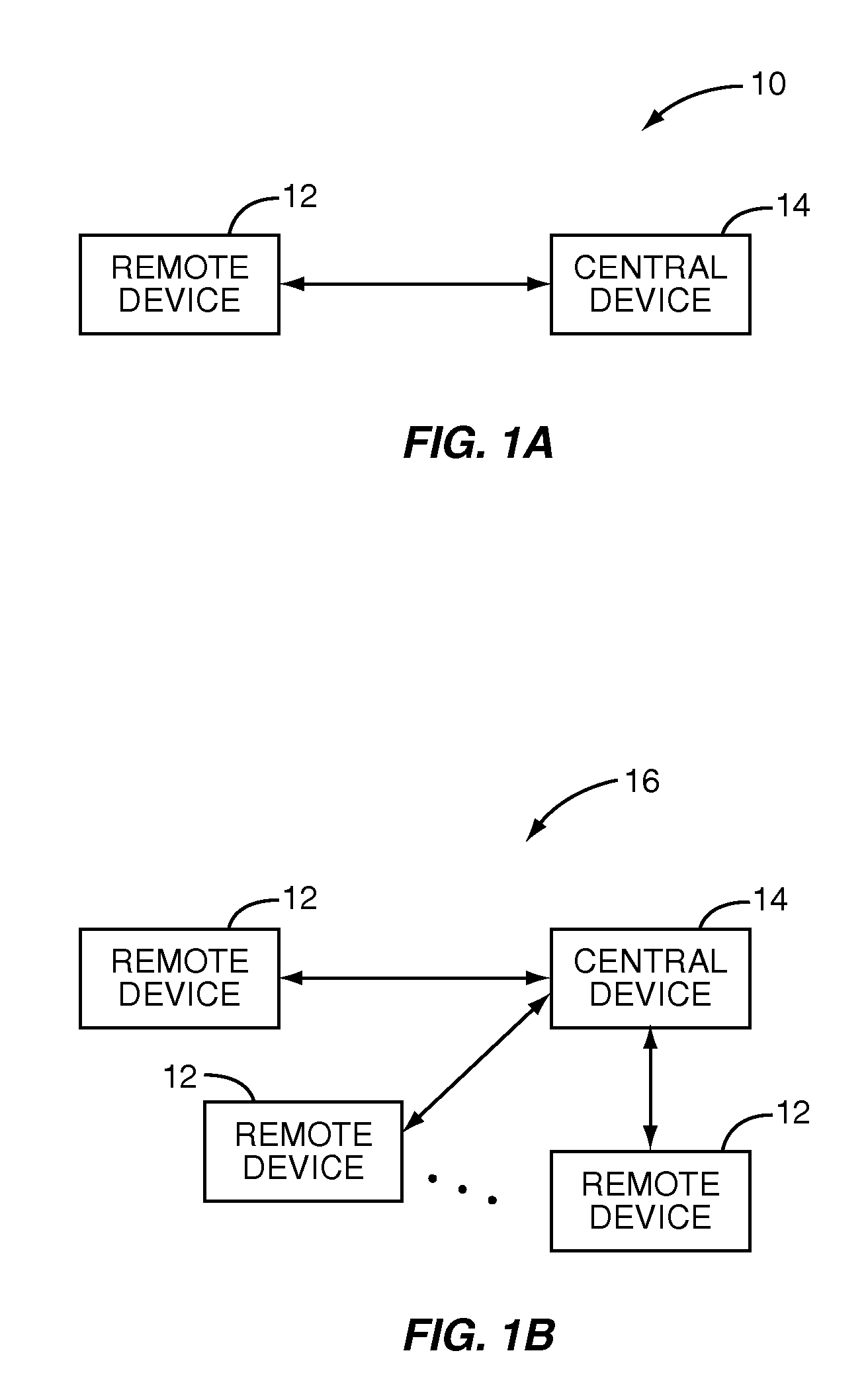
Figure 2 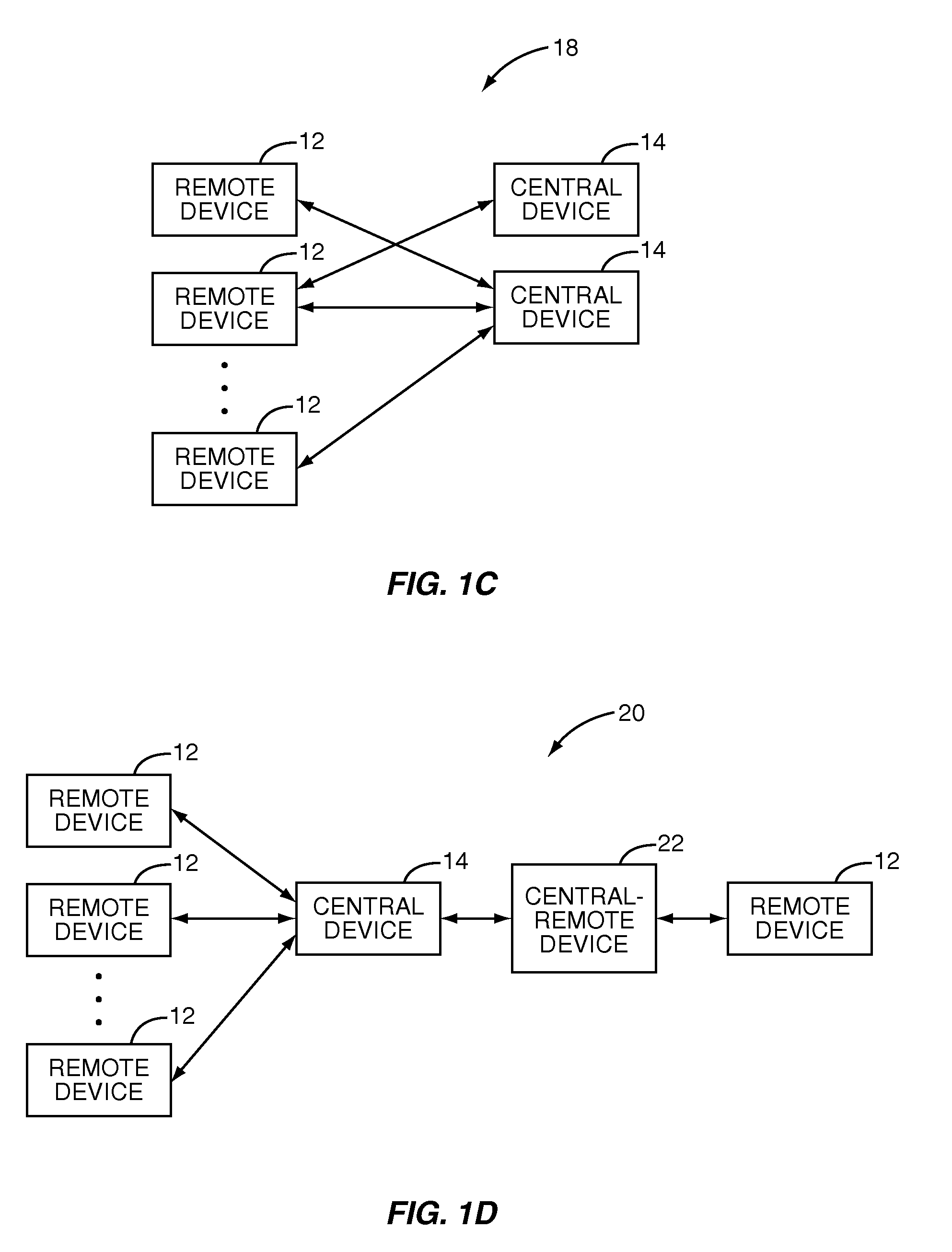
Figure 3
Abstract
Description
RELATED APPLICATIONS
[0001] This application is a divisional of application Ser. No. 11 / 039,207 filed Jan. 18, 2005 entitled “Method And Apparatus For Reduced Complexity Short Range Wireless Communication”, which application claims priority from provisional U.S. Patent Application Ser. No. 60 / 538,089, entitled “Method and Apparatus for a Reduced Complexity Short Range Wireless Communication System,” filed on Jan. 20, 2004, which is hereby incorporated herein by reference in its entirety.
[0002] This invention is related to commonly-assigned co-pending U.S. patent application Ser. No. 10 / 216,082, filed Aug. 8, 2002, entitled “Method and Apparatus for a Dual-Mode Radio in a Wireless Communication System”; and commonly-assigned co-pending U.S. patent application Ser. No. 10 / 235,090, filed Sep. 3, 2002, entitled “Method and Apparatus Implementing an Overlay Adaptive Frequency Hopping Kernel in a Wireless Communication System,” both of which are hereby incorporated herein by reference in...
Examples
Embodiment Construction
[0023] The embodiments set forth below represent the necessary information to enable those skilled in the art to practice the invention and illustrate the best mode of practicing the invention. Upon reading the following description in light of the accompanying drawing figures, those skilled in the art will understand the concepts of the invention and will recognize applications of these concepts not particularly addressed herein. It should be understood that these concepts and applications fall within the scope of the disclosure and the accompanying claims.
[0024] The method and apparatus of the present invention is referred to throughout the application as a reduced-complexity Bluetooth MAC. The requirements of the present reduced complexity Bluetooth protocol are: very low cost, very low power consumption, worldwide spectrum availability, and sufficient performance for the target applications. Target applications include, but are not limited to, devices that need only to infreque...