
Two biomarkers for diagnosis and monitoring of atherosclerotic cardiovascular disease
a biomarker and atherosclerosis technology, applied in the field of bioinformatics and atherosclerosis, can solve the problems of unrealized full benefits of primary prevention, high recurrence and mortality rates, and the primary cause of morbidity and mortality worldwid
Patent Information
- Authority / Receiving Office
- US · United States
- Patent Type
- Applications(United States)
- Current Assignee / Owner
- Publication Date
- 2008-12-04
- Estimated Expiration
- Not applicable · inactive patent
Smart Images
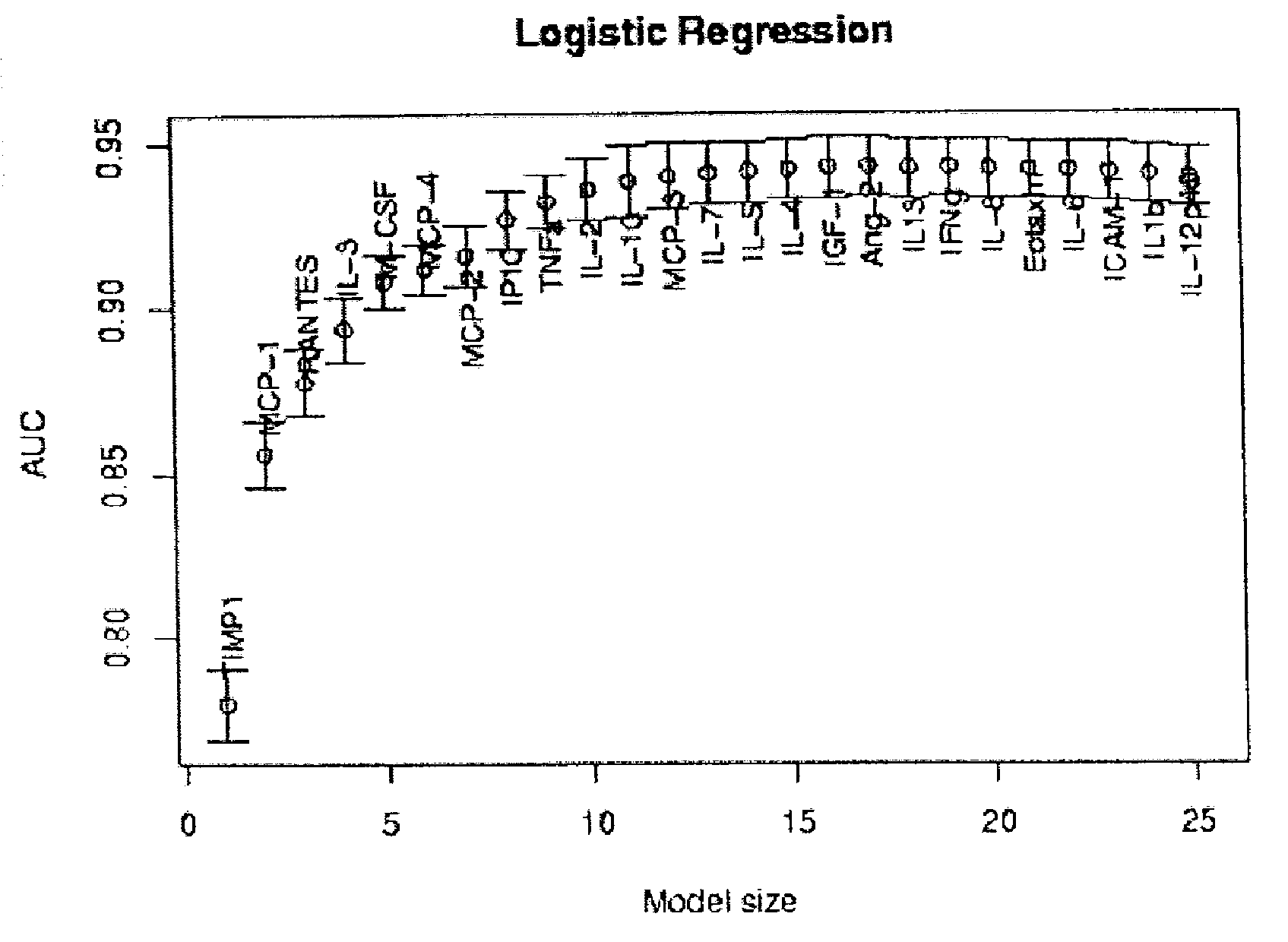
Figure 1 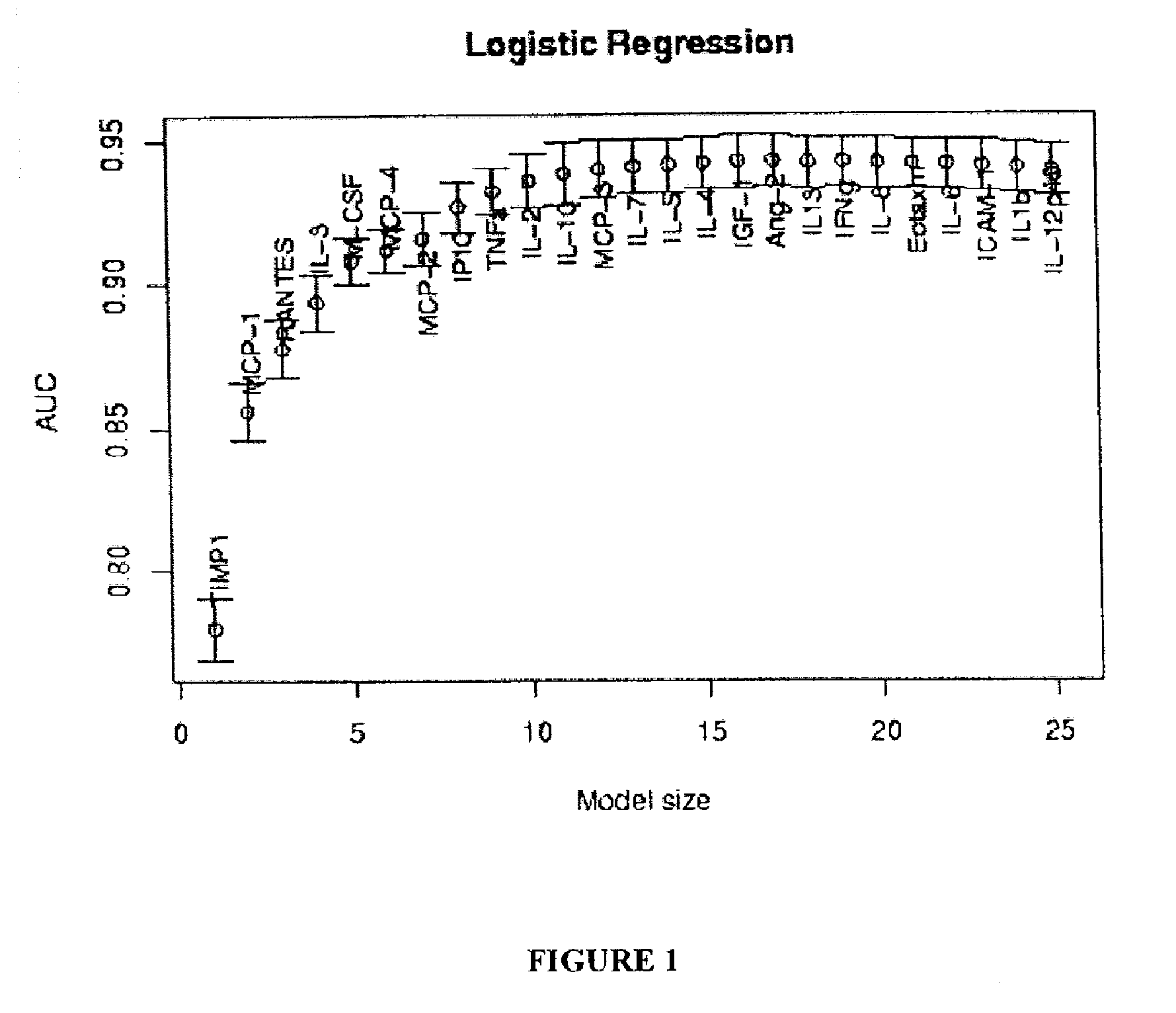
Figure 2 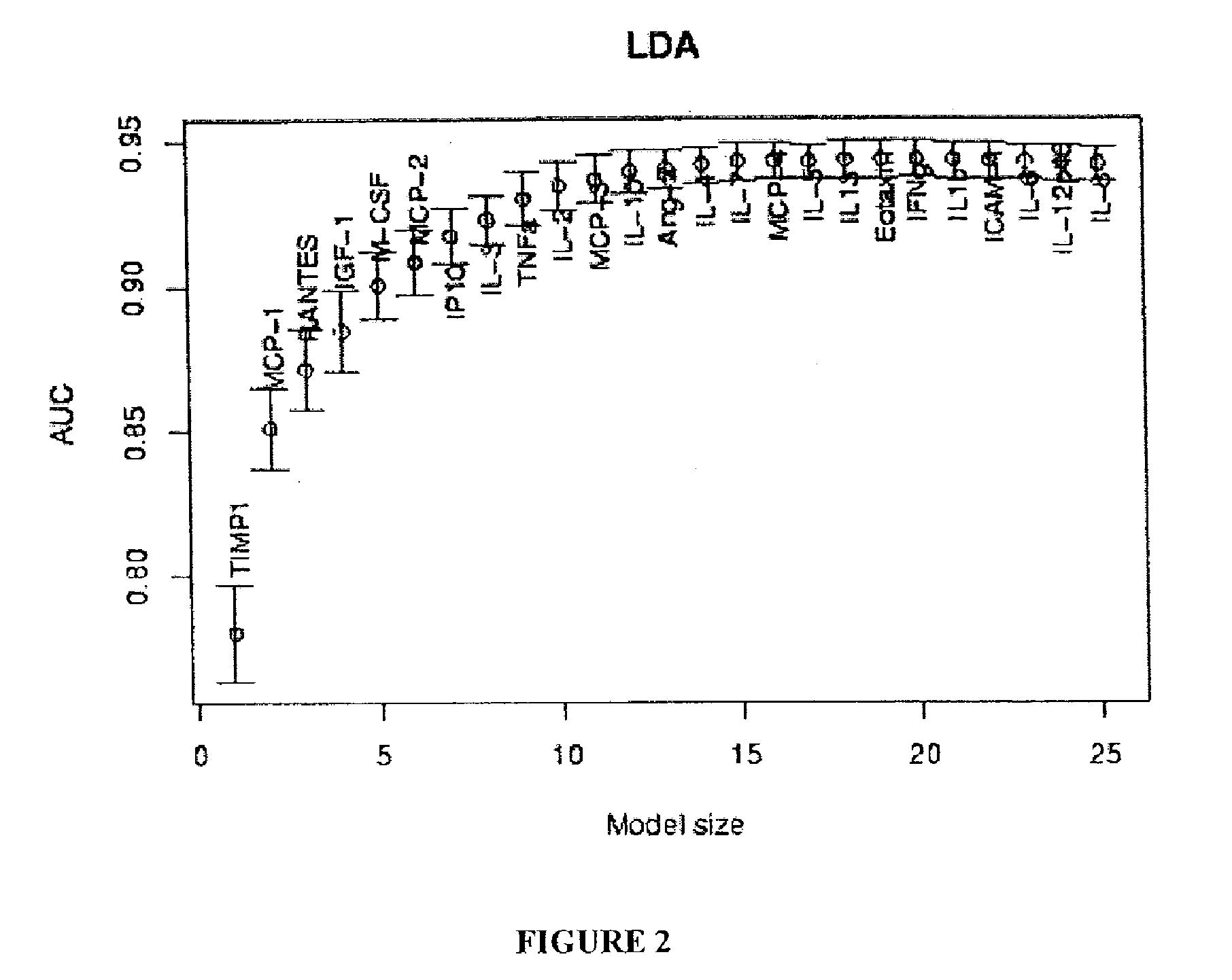
Figure 3
Abstract
Description
CROSS REFERENCE TO RELATED APPLICATION
[0001] This application claims the benefit of U.S. Provisional Application No. 60 / 876,614, filed Dec. 22, 2006, which is hereby incorporated by reference in its entirety.BACKGROUND OF THE INVENTION
[0002] 1. Field of the Invention
[0003] This application is directed to the fields of bioinformatics and atherosclerotic disease. In particular this invention relates to methods and compositions for diagnosing and monitoring atherosclerotic disease.
[0004] 2. Description of the Related Art
[0005] Because of our limited ability to provide early and accurate diagnosis followed by aggressive treatment, atherosclerotic cardiovascular disease (ASCVD) remains the primary cause of morbidity and mortality worldwide. Patients with ASCVD represent a heterogeneous group of individuals, with a disease that progresses at different rates and in distinctly different patterns. Despite appropriate evidence-based treatments for patients with ASCVD, recurrence and mortality rate...
Examples
example 1
Classification of “Healthy” vs. “Disease” using TIMP1 and RANTES Markers
[0280]To investigate the multimarker approach in distinguishing subjects with active coronary artery disease from those without disease, we utilized a large clinical epidemiological study which included 400 cases of clinically significant ASCVD and 930 control subjects. The study was designed to examine risk factors and other novel determinants of atherosclerosis. Serum samples collected at the time of enrollment were used for simultaneous measurement of multiple inflammatory markers using a protein microarray. The exact methodology used for the pilot studies was utilized here (discussed in details in examples in WO97 / 002677 “Methods and Compositions for Diagnosis and Monitoring of Atherosclerotic Cardiovascular Disease”). Concentrations of a subset of the analytes tested were significantly higher in case subjects. Classification algorithms using the serum expression profile of these markers accurately stratifie...
example 2
Classification of Patients with Coronary Calcium Score Above and Below Given Clinically Relevant Thresholds
[0286]Based on the literature, subjects with CCS400 are at high risk for adverse events. Based on these criteria we built classification models for these two populations to predict high and low pseudo-coronary calcium score. We assigned the label “upper” for the subjects with CCS>400 and the label “lower” for the subjects with CCS<10. We then used the AIC criterion to identify the terms of the Logistic Regression model that best separates the two groups. For this application, we allowed clinical variables to be included in the model if selected based on the AIC criterion. FIG. 3 shows the order in which terms were dropped. The clinical variables are the most significant predictors but the minimum of the selection path is obtained only when protein markers are included (MCP-1, IFNg.). FIG. 4 shows the selection process for the same classification problem using the cross-validati...
example 3
AIC Selection Criteria
[0288]As an example of a different selection criterion, we present the results obtained using the AIC criterion within the framework of a Logistic Regression model. This criterion is usually used in the context of selecting the optimum number of terms for a Logistic Regression model. The criterion balances the error increase due to the removal of a term with the reduction of the number of degrees of freedom that this term contributed to the model. Usually, the process of term elimination starts with the full model and terminates when the removal of a term increases the AIC value. The results of term elimination as a function of the AIC criterion are presented in FIG. 5a (the term elimination process is presented past the optimum point). The AUC predictions for a model incorporating increasing number of terms are presented in FIG. 5b. The addition of terms in the aforementioned model is performed in the reverse order of term removal from the complete model, i.e....