
White coated polyester film, process for production thereof and use thereof as a backside cover in solar modules
Patent Information
- Authority / Receiving Office
- US · United States
- Current Assignee / Owner
- Publication Date
- 2010-08-26
Smart Images
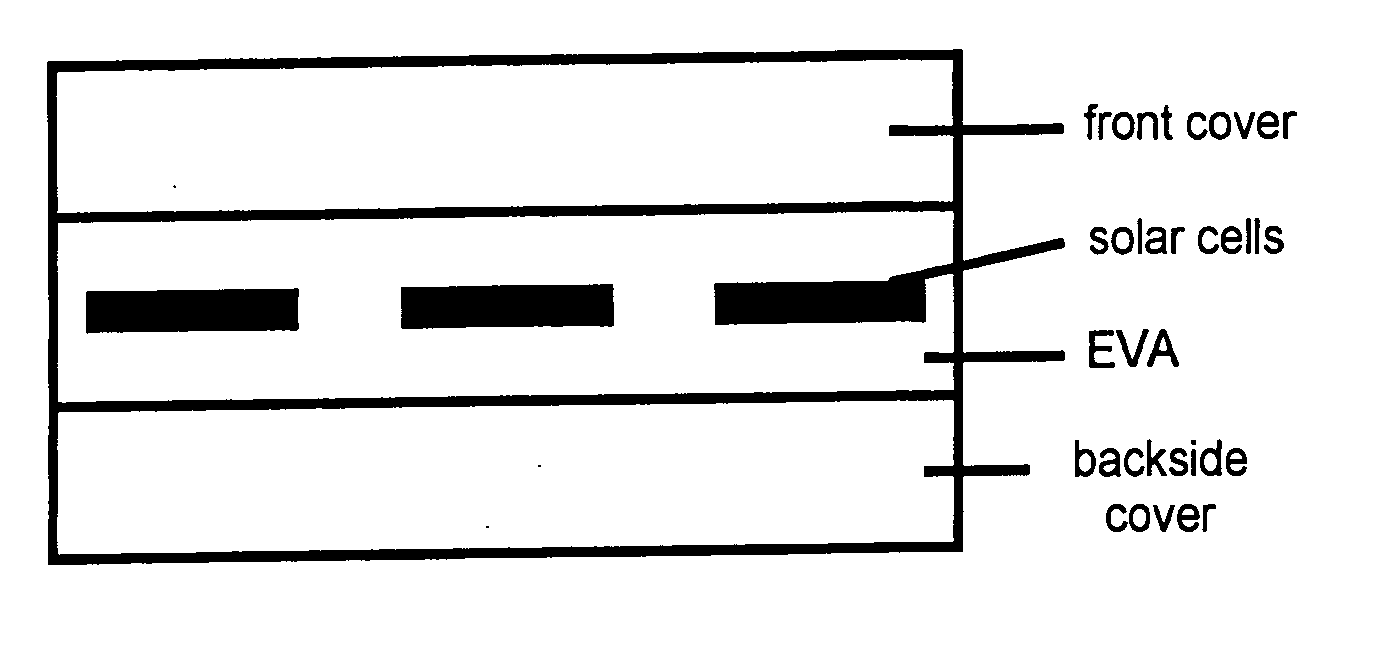
Figure 1 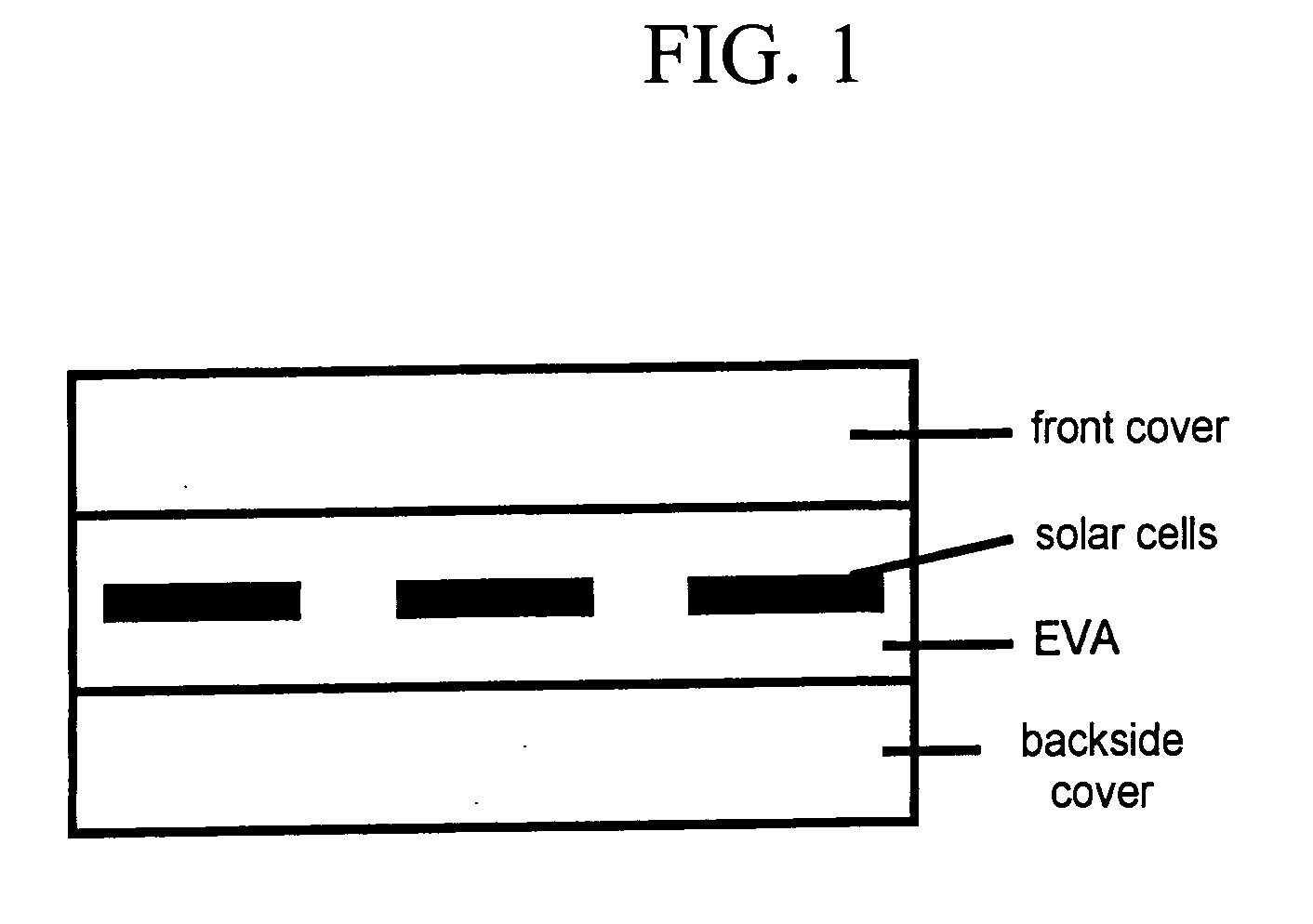
Figure 2 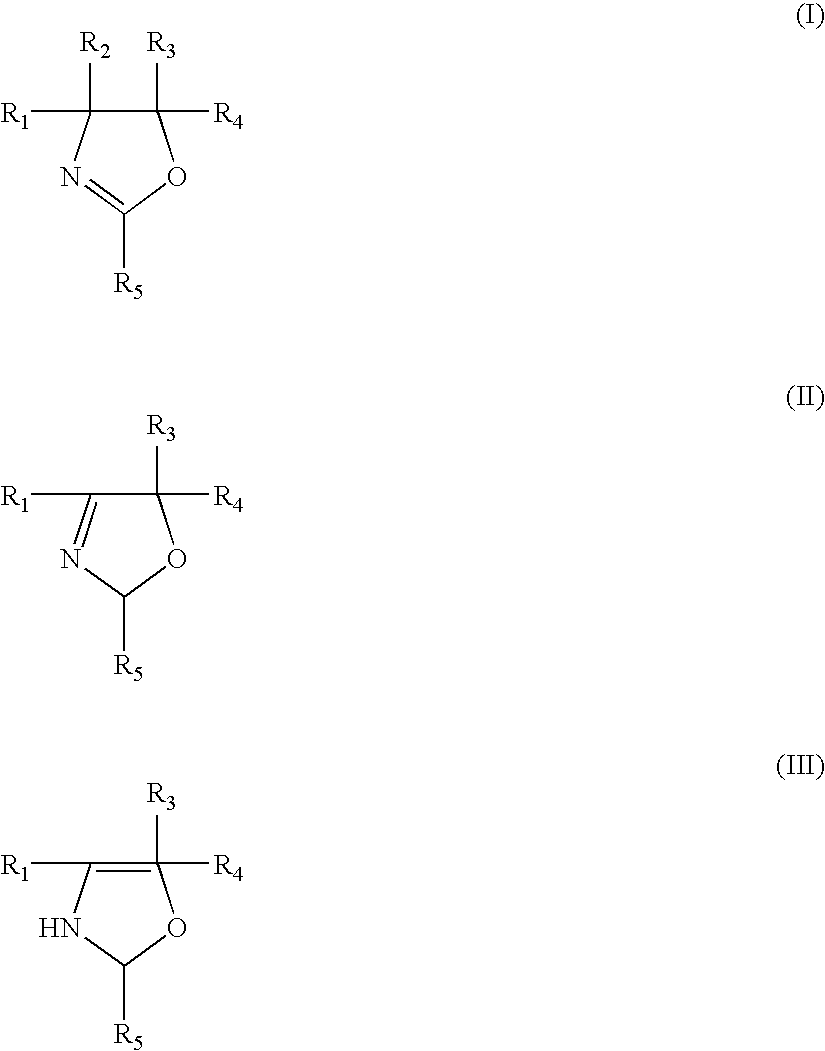
Figure 3
Abstract
Description
CROSS-REFERENCE TO RELATED APPLICATIONS
[0001] This application claims priority to German Patent Application 10 2009 009 791.0 filed Feb. 20, 2009 which is hereby incorporated herein by reference in its entirety.FIELD OF THE INVENTION
[0002] The invention relates to a white coated polyester film which has excellent adhesion to ethylene-vinyl acetate (EVA) which is typically used as an encapsulation material in solar modules. The good adhesion properties are achieved with a polymeric coating which comprises at least one polyurethane and a crosslinker.BACKGROUND OF THE INVENTION
[0003] Solar modules serve for direct conversion of sunlight to electrical energy. As the most important constituent, they contain groups of solar cells which are connected electrically to one another in a suitable manner within the solar module and are embedded in different materials. These arrangements fulfil the following purposes, among others:
[0004] transparent, radiation- and weathering-resistant coverage of th...
Examples
example 1
[0154]Polyester raw material M80 was used to produce a melt which was extruded through a slot die onto a casting roll kept at about 20° C., where it solidified to an amorphous preliminary film. The preliminary film was longitudinally stretched in a stretching ratio of 3.6:1 in the course of which it was kept at a temperature of 95° C. The longitudinally stretched film was subsequently coated by means of a Meyer bar in a thickness of 4.7 μm with an aqueous coating dispersion with a solids content of 5% by weight, which contained 50% by weight of NEOREZ®-600 and 50% by weight of EPOCROS® WS-700 based on the dried coating). The longitudinally stretched and coated film was dried at a temperature of 100° C. and then stretched transversely in a stretching ratio of 4.3:1, so as to obtain a biaxially oriented film. The biaxially stretched film was heatset at 230° C. The final film thickness was 250 μm. The thickness of the dried coating is calculated from the solids content of the coating f...
example 2
[0156]Example 1 was repeated, except that a melt of polyester raw material M67 was used to produce the film. The film was coated and then characterized analogously to example 1. It likewise featured low transparency, high whiteness, high gloss, good adhesion to EVA, even under the influence of humidity and heat. Laminates of the film with EVA and glass withstand 20 000 h of artificial weathering without delamination.
example 3
[0157]Example 1 was repeated, except that a melt of 70% by weight of M67 and 30% by weight of M80 was used to produce the film. The film was coated and then characterized analogously to example 1. It likewise featured low transparency, high whiteness, high gloss, good adhesion to EVA, even under the influence of humidity and heat. Laminates of the film with EVA and glass likewise withstand 20 000 h of artificial weathering without delamination.