
Method and apparatus for electrochemical treatment of contaminated water or wastewater
Patent Information
- Authority / Receiving Office
- US · United States
- Current Assignee / Owner
- Publication Date
- 2012-11-29
- Estimated Expiration
- Not applicable · inactive patent
Smart Images
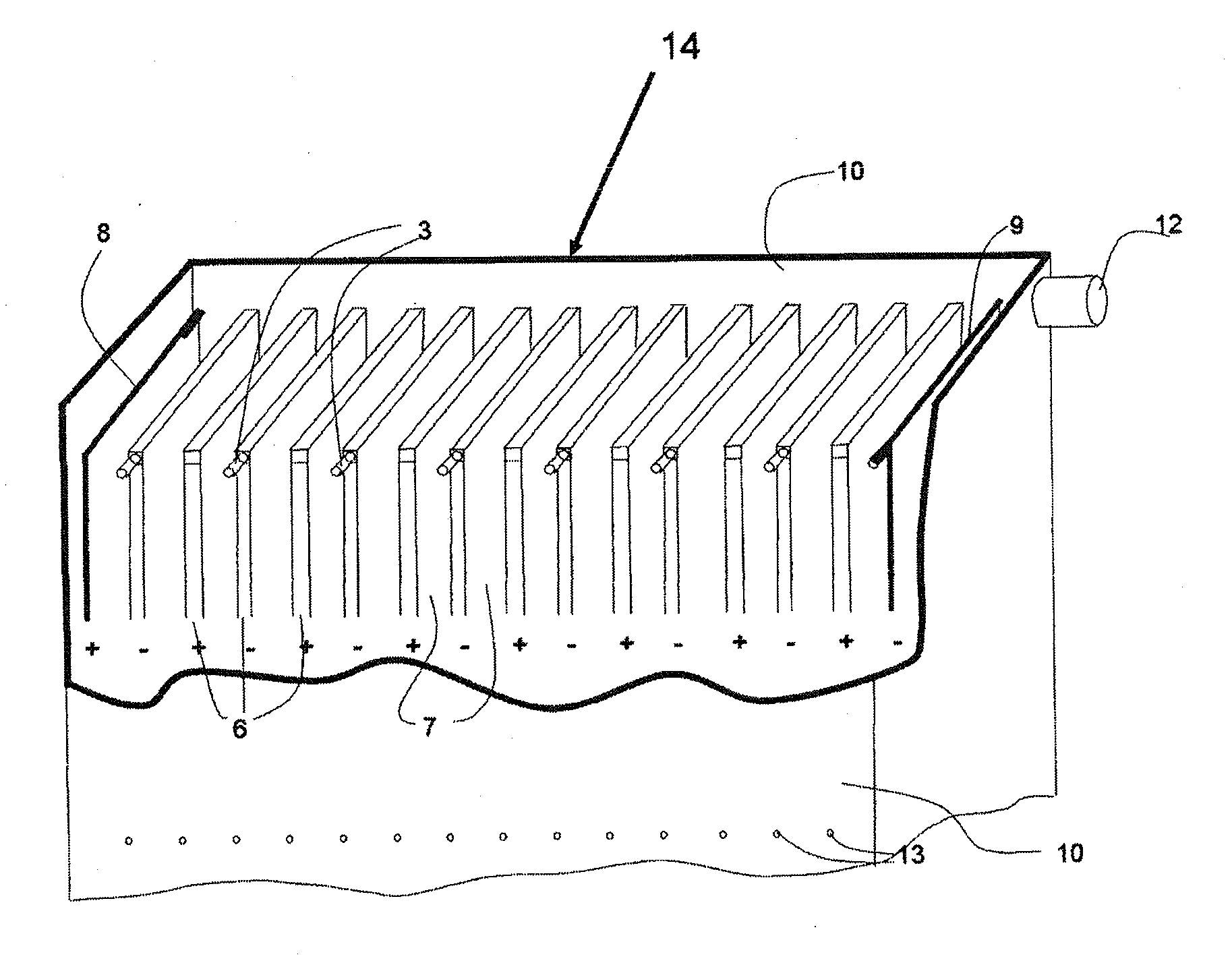
Figure 1 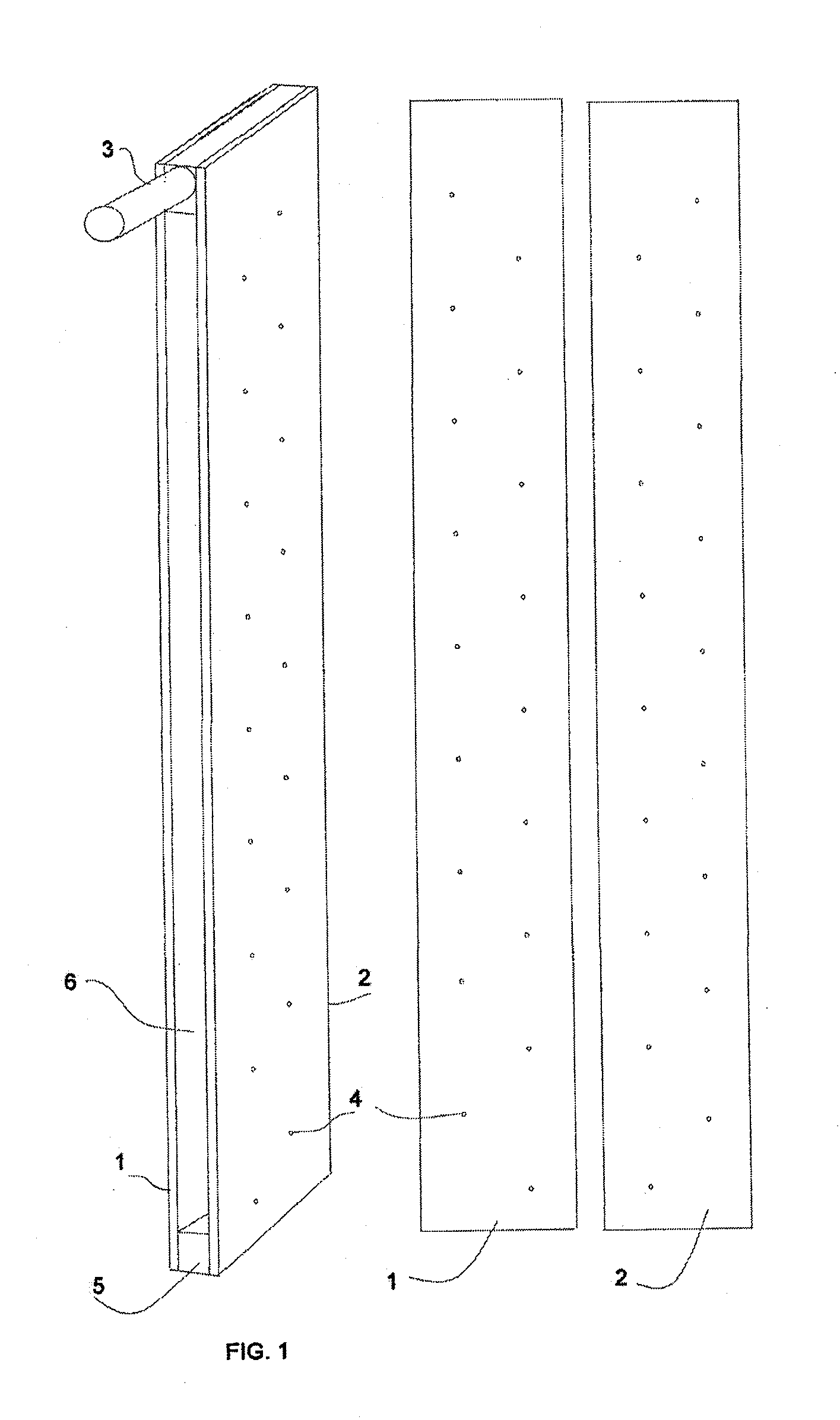
Figure 2 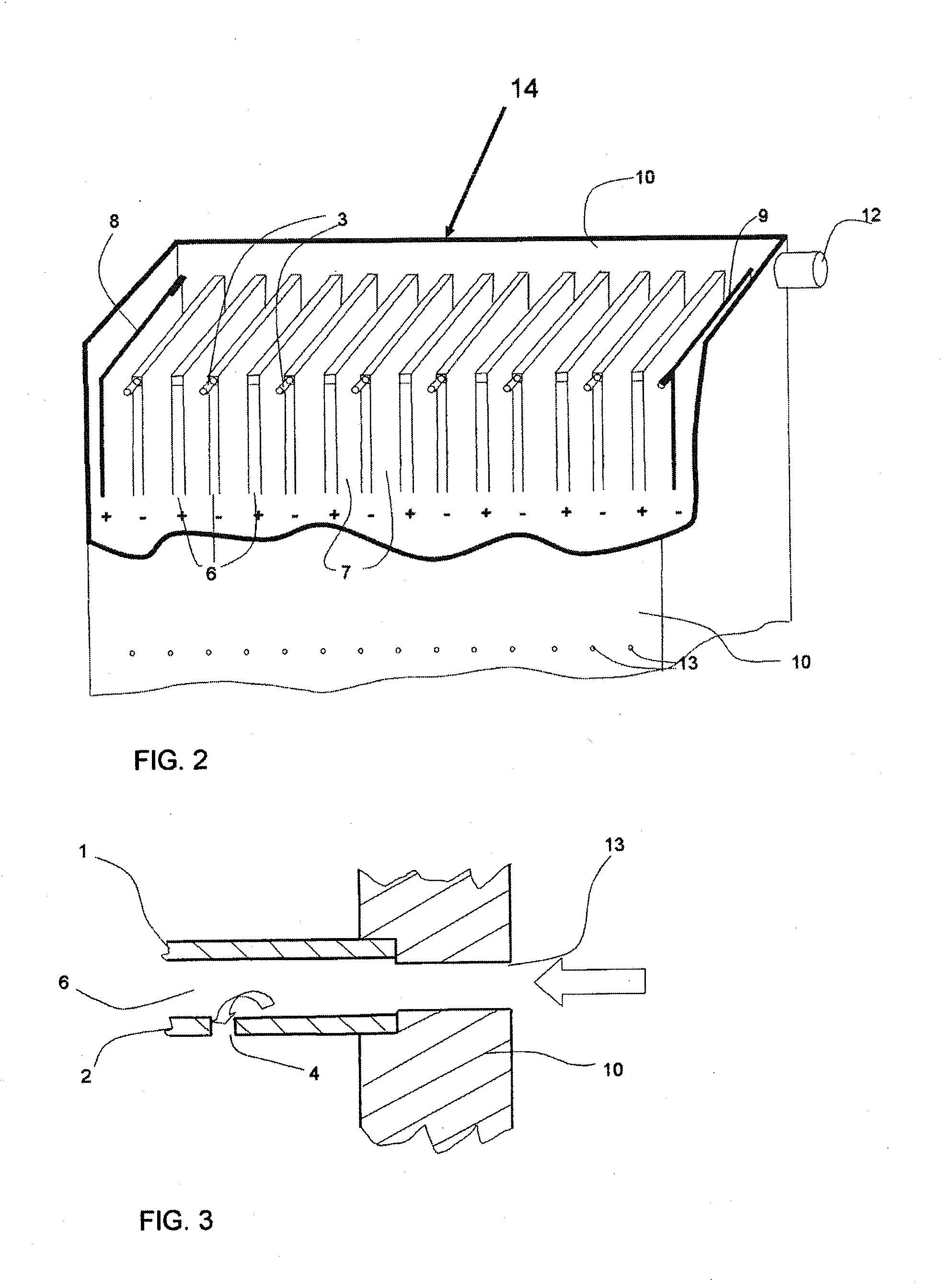
Figure 3
Abstract
Description
FIELD OF THE INVENTION
[0001] The present invention relates generally to the field of water and wastewater treatment systems, an in particular to systems utilizing an electrochemical cell to facilitate flocculation of particles in the water or wastewater to permit the discharge of treated wastewater to the environment or purification of potable water.
[0002] The invention relates to the method for electrolytic treatment of liquids, for example liquid containing reactants, such as wastewater containing solids or liquid to be separated from water and / or containing substances to be decomposed or to be made innocuous. This liquid is passed between two plate-like electrodes of opposite charge having their operative surfaces opposed to each other and forming a reaction area. The reaction area is effectively controlled with special and purposeful flowing arrangements. The invention relates also to an apparatus for carrying out such a method.BACKGROUND OF THE INVENTION
[0003] One of the major cha...
Examples
example
[0057]Waste water from a car wash operation, which contains oil and fat residues, suspended particles and metal residues as microparticles and in dissolved form, is treated with the apparatus of FIG. 2. The apparatus contains four electrodes of type in FIG. 1 made of iron. The dimensions were as follows: Width 150 mm, height 600 mm, hollow spacing in the electrode 8 mm and the interelectrode distance was 15 mm. The capacity used was 80 L / h (L=liter). Part of the purified water after the separation of the flock was circulated through the pockets 6 in the electrodes of FIG. 1. The amount of the circulated water was 10 L / h. The electrodes were connected in parallel and the current was 31 A which means 68.8 A / m2. Peristaltic pumps were used to meter the flows and to cause the pulsating effect for the flows. A hole for the semiconductor pressure detector was made to indicate the pressure variations in the pockets 6 in each of the electrodes. The pulsating pressure varied cyclically betwe...