
Compounds
Patent Information
- Authority / Receiving Office
- US · United States
- Current Assignee / Owner
- Publication Date
- 2015-01-29
Smart Images
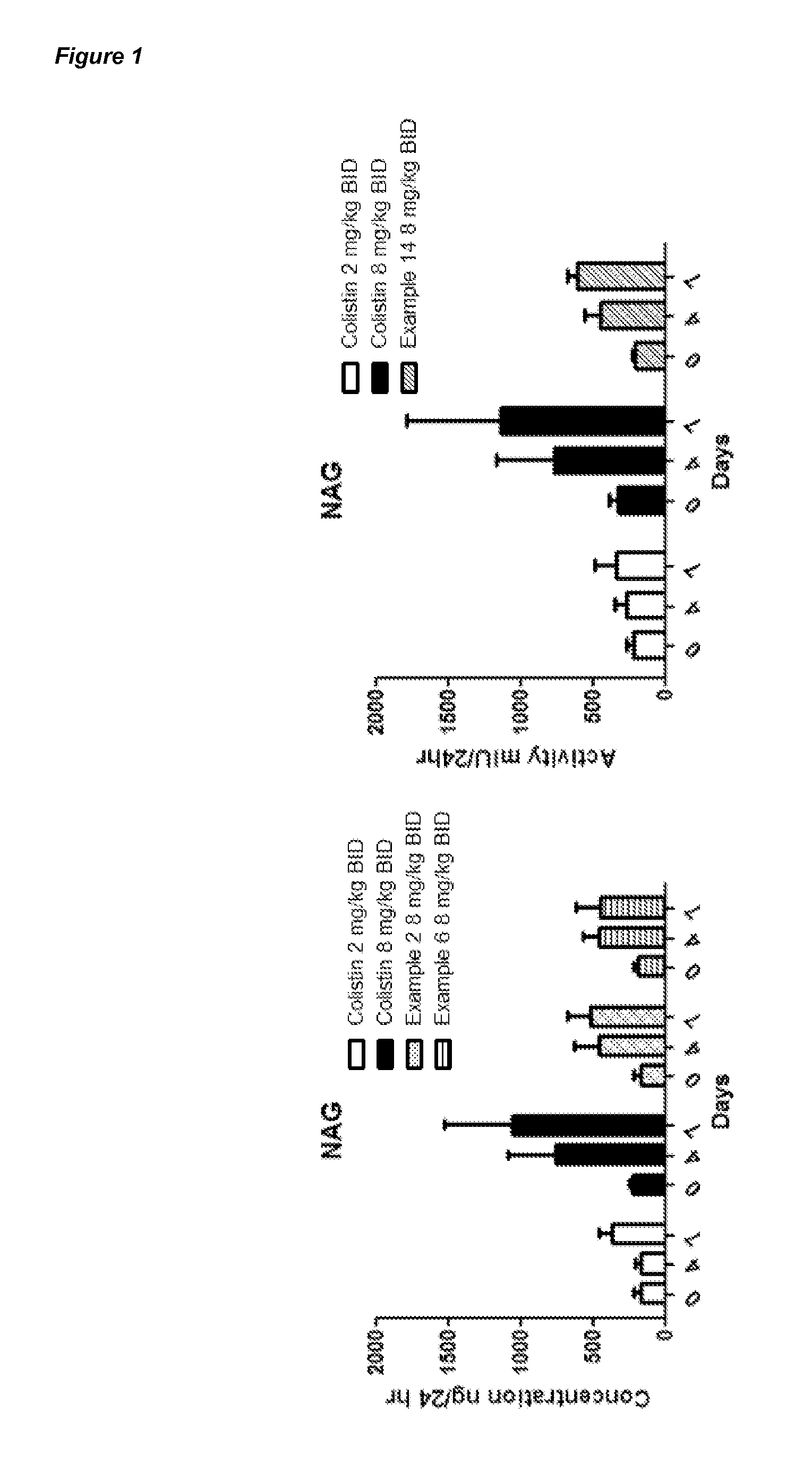
Figure 1 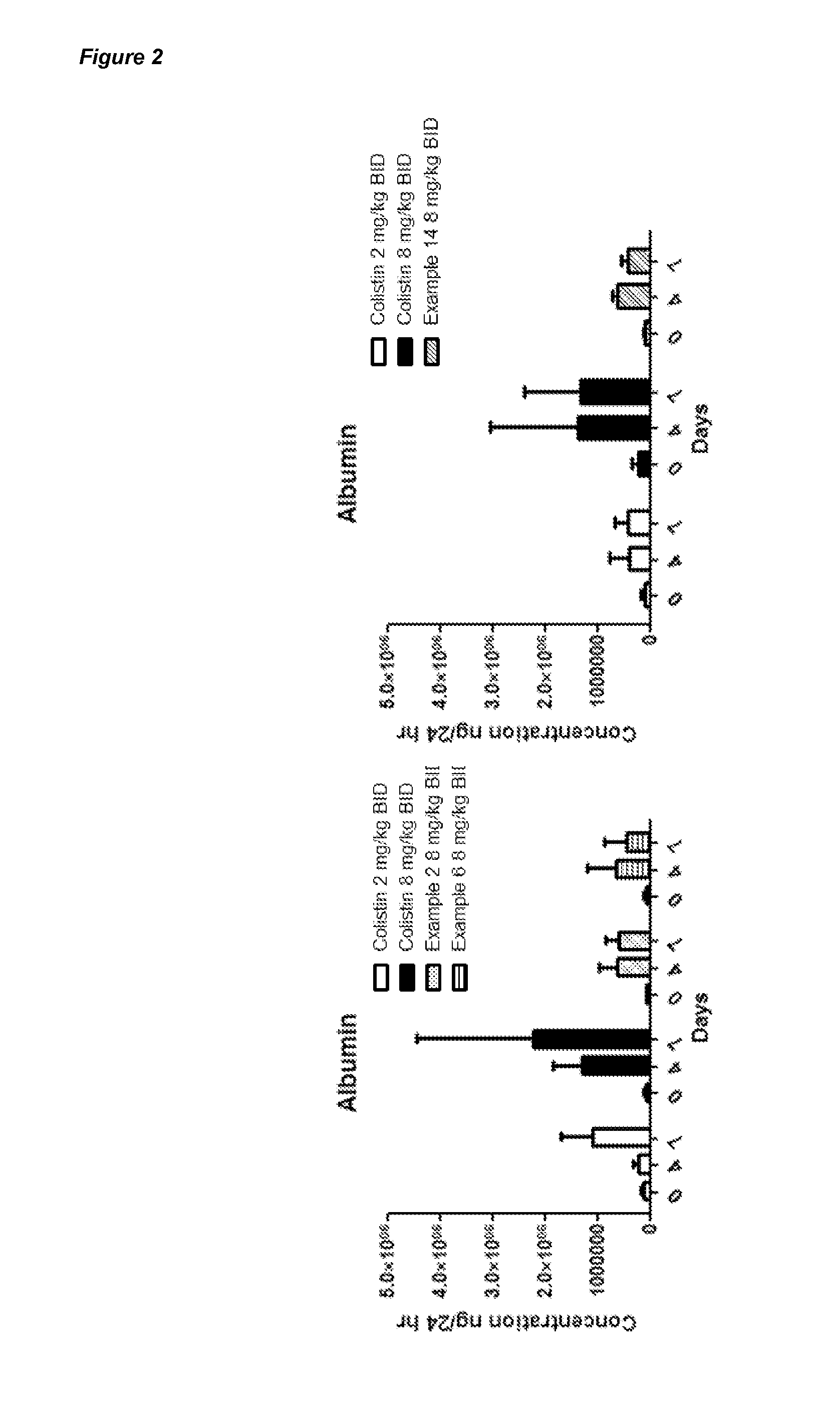
Figure 2 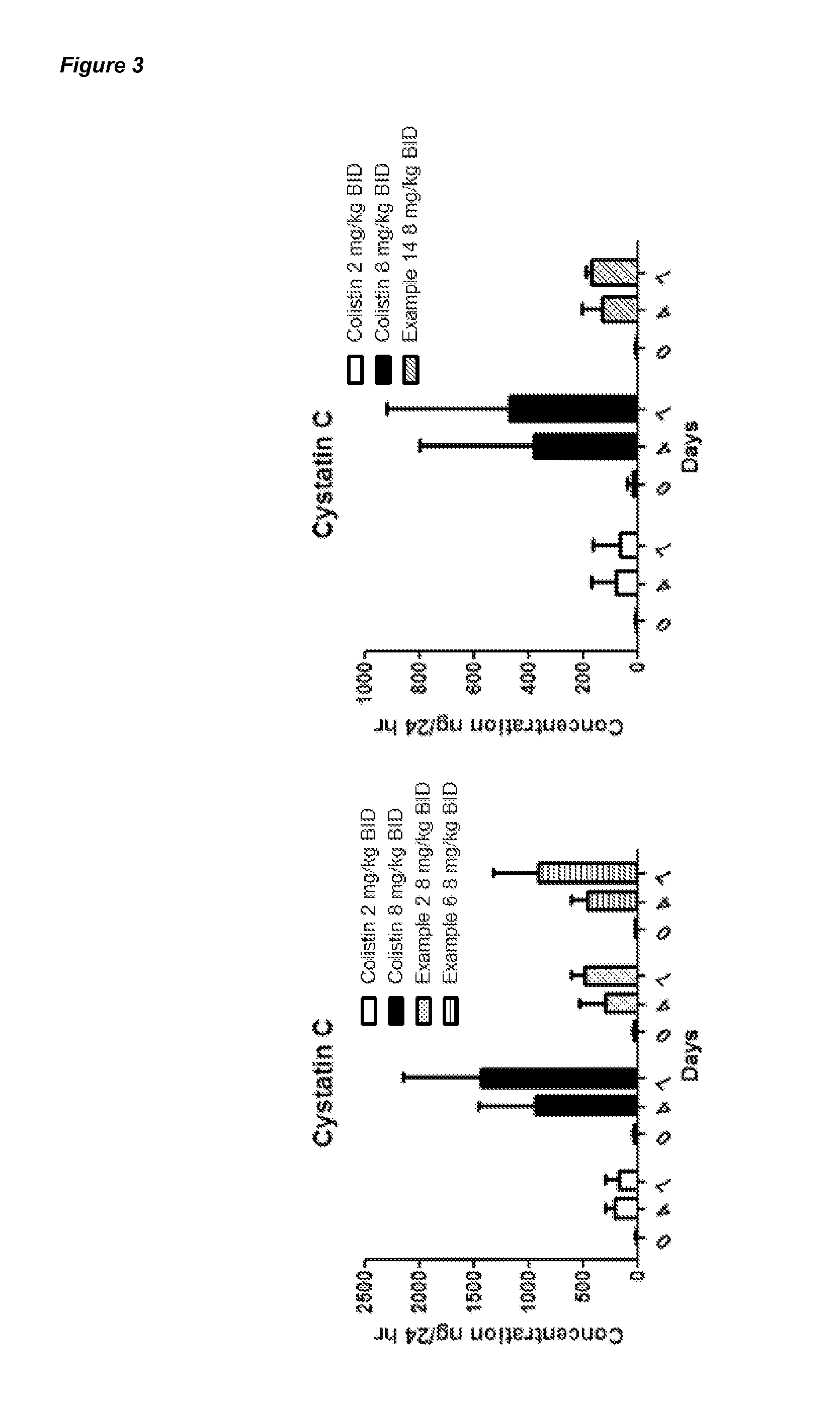
Figure 3
Abstract
Description
[0001] The present case claims the priority and benefit of U.S. 61 / 561,361 filed on 18 Nov. 2011 (18, Nov. 2011), the contents of which are incorporated by reference herein in their entirety.
[0002] The present disclosure relates to novel compounds, pharmaceutical compositions comprising said compounds and the use of the said compounds and pharmaceutical compositions for treatment, for example treatment of microbial infections, particularly by Gram negative bacteria.
[0003] In susceptible individuals, certain Gram negative bacteria can cause serious complications and infections, such as pneumonia, urinary tract infections, wound infections, ear infections, eye infections, intra-abdominal infections, oral bacterial overgrowth and sepsis. The treatment of serious bacterial infections in clinical practice can be complicated by antibiotic resistance. Recent years have seen a rise in infections by Gram negative bacteria which are resistant to many types of antimicrobials including broad spect...
Examples
example 1
[2(R,S)-2-Hydroxyoctanoyl]polymyxin B nonapeptide, trifluoroacetate
[0201]
a) [2-(R,S)-2-Hydroxyoctanoyl][tetra-(Boc)]-polymyxin B nonapeptide
[0202]
[0203]2-Hydroxyoctanoic acid (1.16 g, 7.34 mmol) was dissolved in dichloromethane (2 mL). N,N-Diisopropylethyalmine (1.19 mL, 7.34 mmol) and 2-(1H-7-Azabenzotriazol-1-yl)-1,1,3,3-tetramethyl uronium hexafluorophosphate (HATU) (2.79 g, 7.34 mmol) were then added to the reaction mixture. After 30 min stirring at room temperature compound of intermediate 2 (2.0 g, 1.47 mmol) was added. After 16 h the completion of the reaction was confirmed by LC-MS and the reaction mixture was evaporated to dryness and purified using column chromatography on silica gel (eluent 0-10% methanol in dichloromethane). The appropriate fractions were concentrated to leave [2(R,S)-2-hydroxyoctanoyl][tetra-(Boc)]-Polymyxin B nonapeptide as a colourless oil (1.28 g, 58%). TLC, Rf 0.6 (10% MeOH in dichloromethane). m / z 1527.5, [M+Na]+.
b) Title compound: [2(R,S)-2-Hydrox...
example 2
[2(R,S)-2-Hydroxyoctanoyl]polymyxin B nonapeptide, sulphate salt
[0205]
[0206]To the compound of Example 1 (1.3 g) was added water (1 mL) and the mixture was sonicated for 5 min. To the resulting suspension was added 1M NaHCO3 (20 mL) until the mixture reached pH 9. The mixture was then passed through a 10 g C18 SPE column, eluting sequentially with 0, 40, 50, 60, 70, 80 and 100% aqueous methanol. LC-MS analysis of each fraction showed that the desired product eluted in the 60, 70 and 80% aqueous methanol fractions. These fractions were pooled and evaporated to leave a white solid (0.5 g), to which was added 0.1 M H2SO4 (30 mL) until pH 7 was reached. tert-Butanol (10 mL) was added and the mixture was stirred for 16 h at room temperature and subsequently freeze-dried to leave [2(R,S)-2-hydroxyoctanoyl] Polymyxin B nonapeptide, sulphate salt as a white solid (0.52 g). Analysis by HPLC according to the conditions outlined in Table 2 gave a retention time of 5.93 minutes. m / z 1104.9 [MH]...
example 3
2-Aminoethanoyl polymyxin B nonapeptide, sulphate salt
[0207]
[0208]2-Aminoethanoyl polymyxin B nonapeptide, sulphate salt was prepared from tetra-(Boc) polymyxin B nonapeptide and 2-(tert-butoxycarbonylamino)-ethanoic acid following the sequence of reactions described for Examples 1 and 2. Retention time (HPLC) 4.99 min; m / z 1020.8 [MH]+.