
Apparatus and method for renaming a cache line
Patent Information
- Authority / Receiving Office
- US · United States
- Current Assignee / Owner
- Publication Date
- 2007-03-06
Smart Images
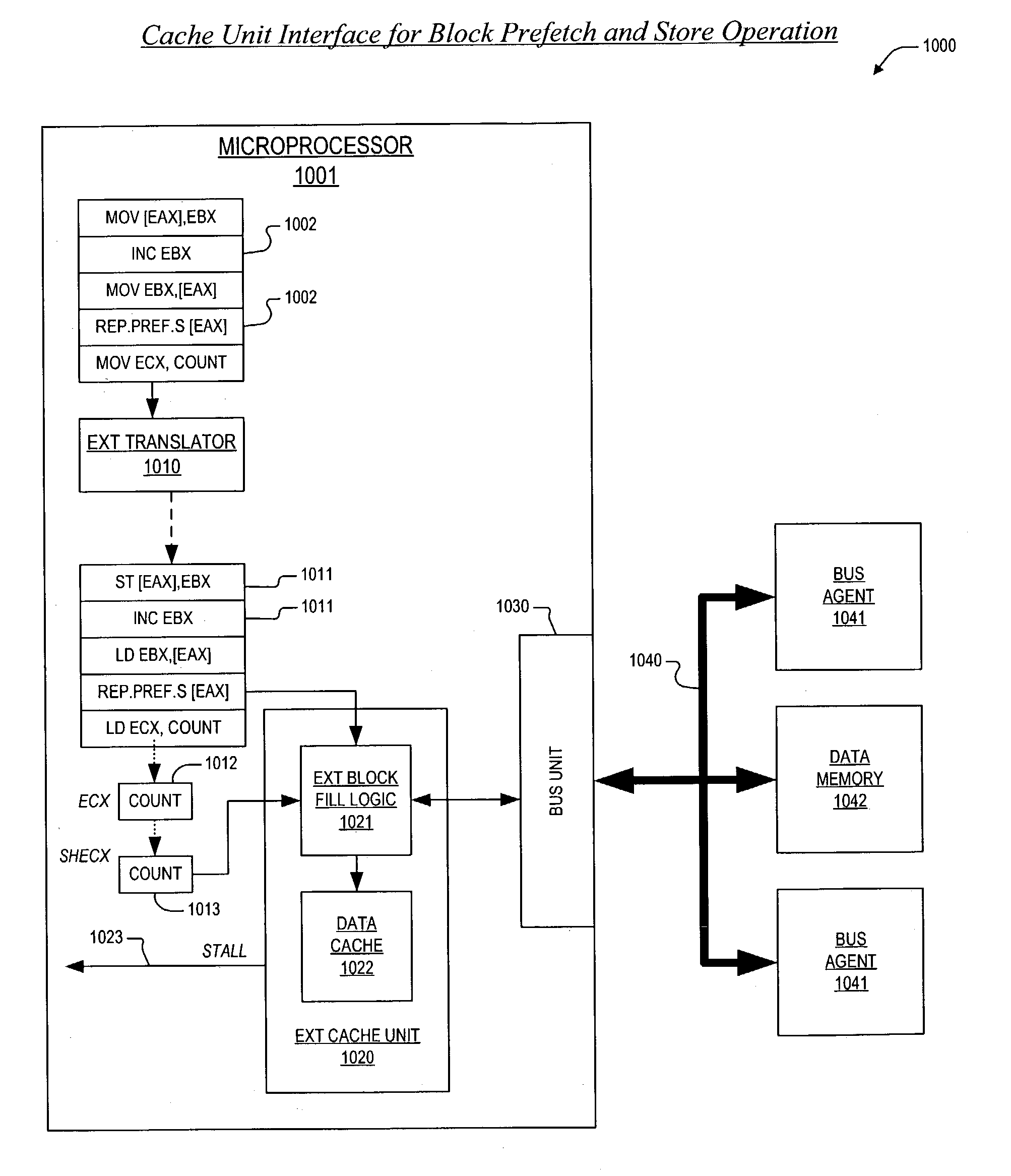
Figure 1 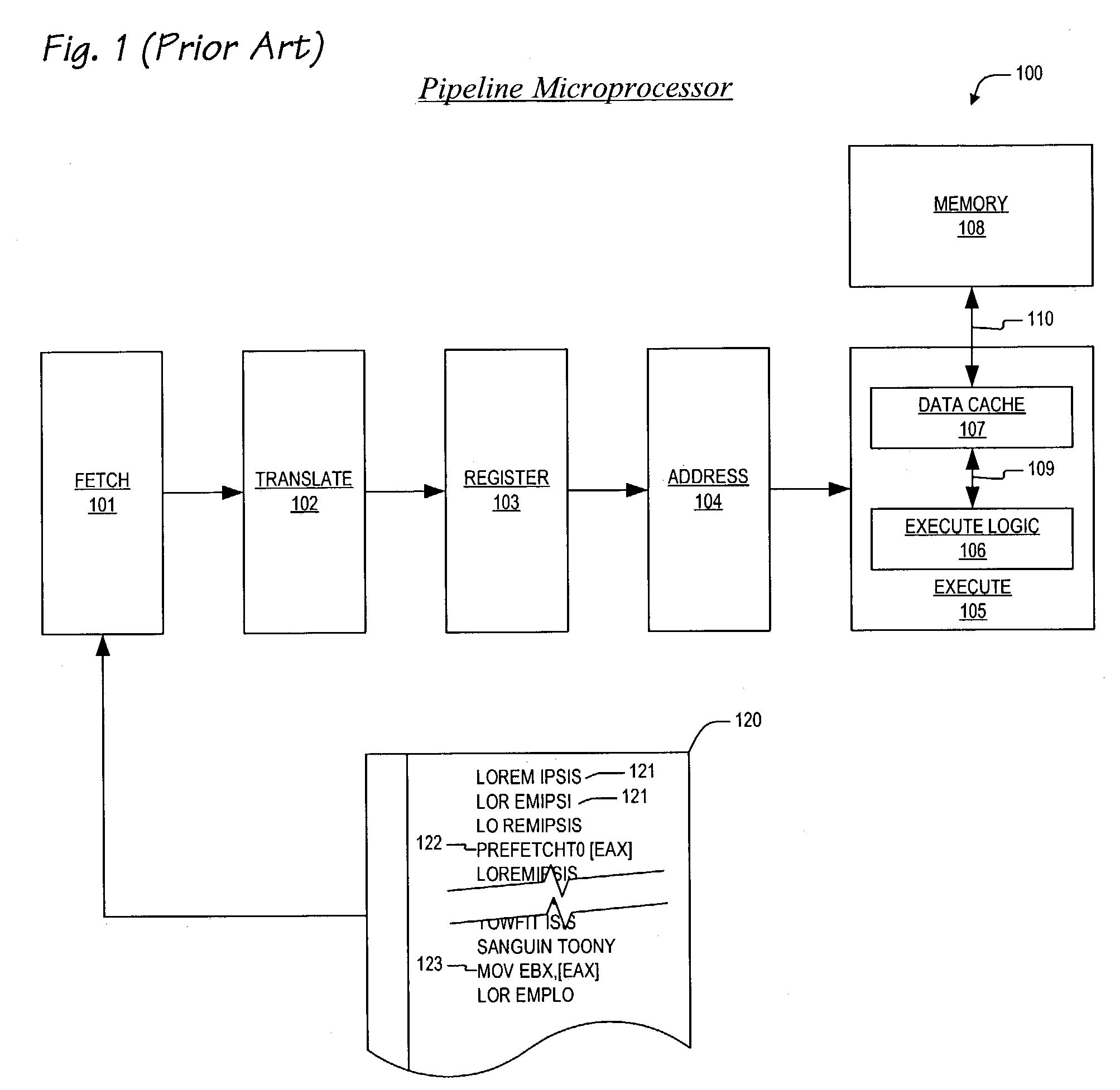
Figure 2 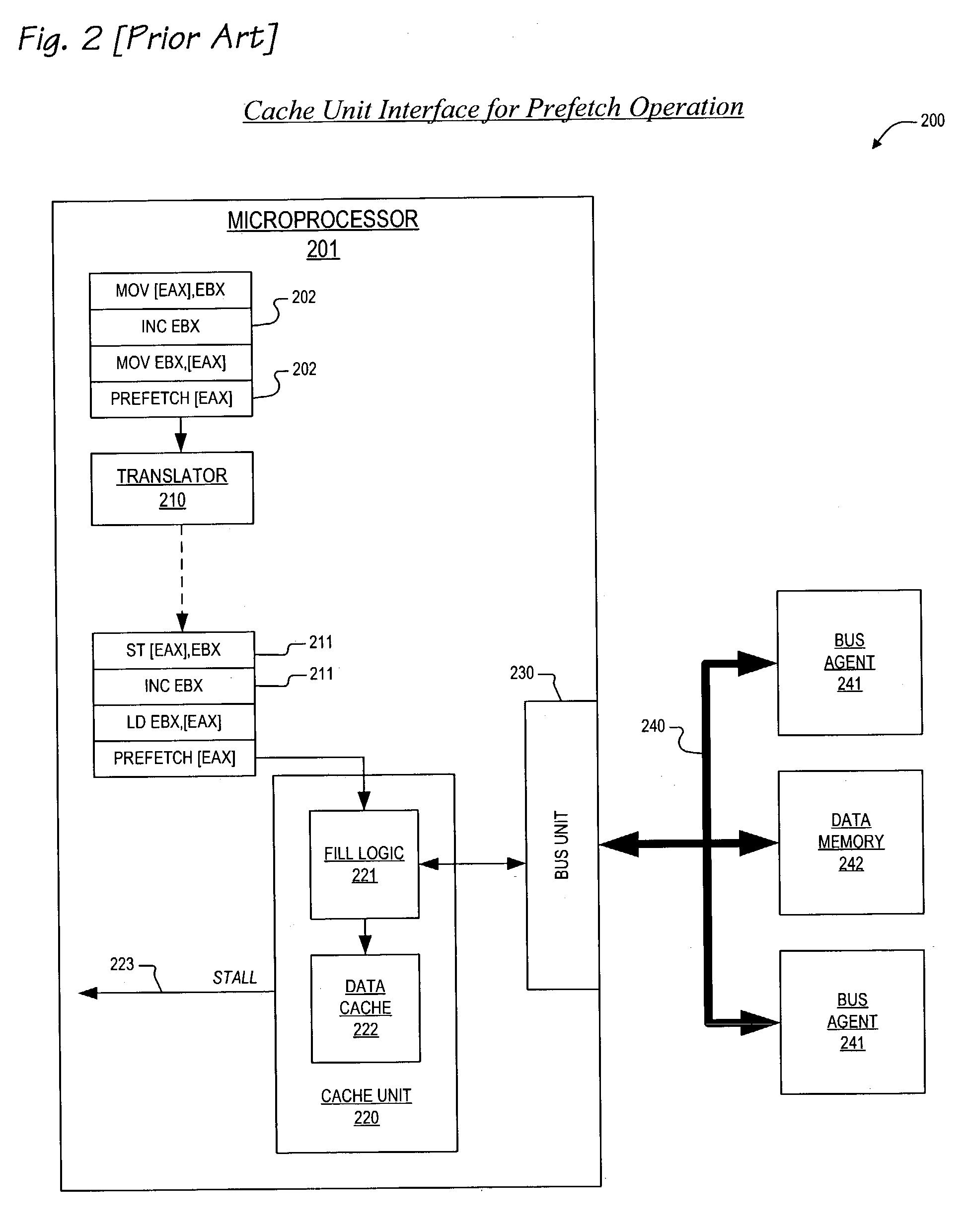
Figure 3
Abstract
Description
CROSS-REFERENCE TO RELATED APPLICATIONS
[0001] This application is related to the following co-pending U.S. Patent Applications, all of which have a common assignee and common inventors.
[0002] SERIALDOCKETFILINGNUMBERNUMBERDATETITLE10 / 364911CNTR.2157Feb. 11, 2003PREFETCH-WITH-INTENT-TO-STORE MECHANISM10 / 364919CNTR.2182Feb. 11, 2003PREFETCH-WITH-INTENT-TO-STORE MECHANISM FOR BLOCKMEMORY10 / 405980CNTR.2184Apr. 2, 2003APPARATUS AND METHOD FORRENAMING A DATA BLOCKWITHIN A CACHEBACKGROUND OF THE INVENTION
[0003] 1. Field of the Invention
[0004] This invention relates in general to the field of microelectronics, and more particularly to an apparatus and method that enable a programmer to direct a microprocessor to rename a cache line within in its internal cache.
[0005] 2. Description of the Related Art
[0006] In a present day microprocessor, the speed at which data can be transferred between internal logic blocks is an order of magnitude faster than the speed that external memory accesses exhibit. F...
Examples
Embodiment Construction
[0038]The following description is presented to enable one of ordinary skill in the art to make and use the present invention as provided within the context of a particular application and its requirements. Various modifications to the preferred embodiment will, however, be apparent to one skilled in the art, and the general principles defined herein may be applied to other embodiments. Therefore, the present invention is not intended to be limited to the particular embodiments shown and described herein, but is to be accorded the widest scope consistent with the principles and novel features herein disclosed.
[0039]In view of the above background discussion on how a present day pipeline microprocessor executes a prefetch operation, an example highlighting the limitations of present day prefetch techniques will now be presented with reference to FIGS. 1–3. Following this, a discussion of the present invention will be presented with reference to FIGS. 4–18. The present invention enabl...