
Ad-hoc network and method of routing communications in a communication network
Patent Information
- Authority / Receiving Office
- US · United States
- Current Assignee / Owner
- Publication Date
- 2008-03-25
Smart Images

Figure 1 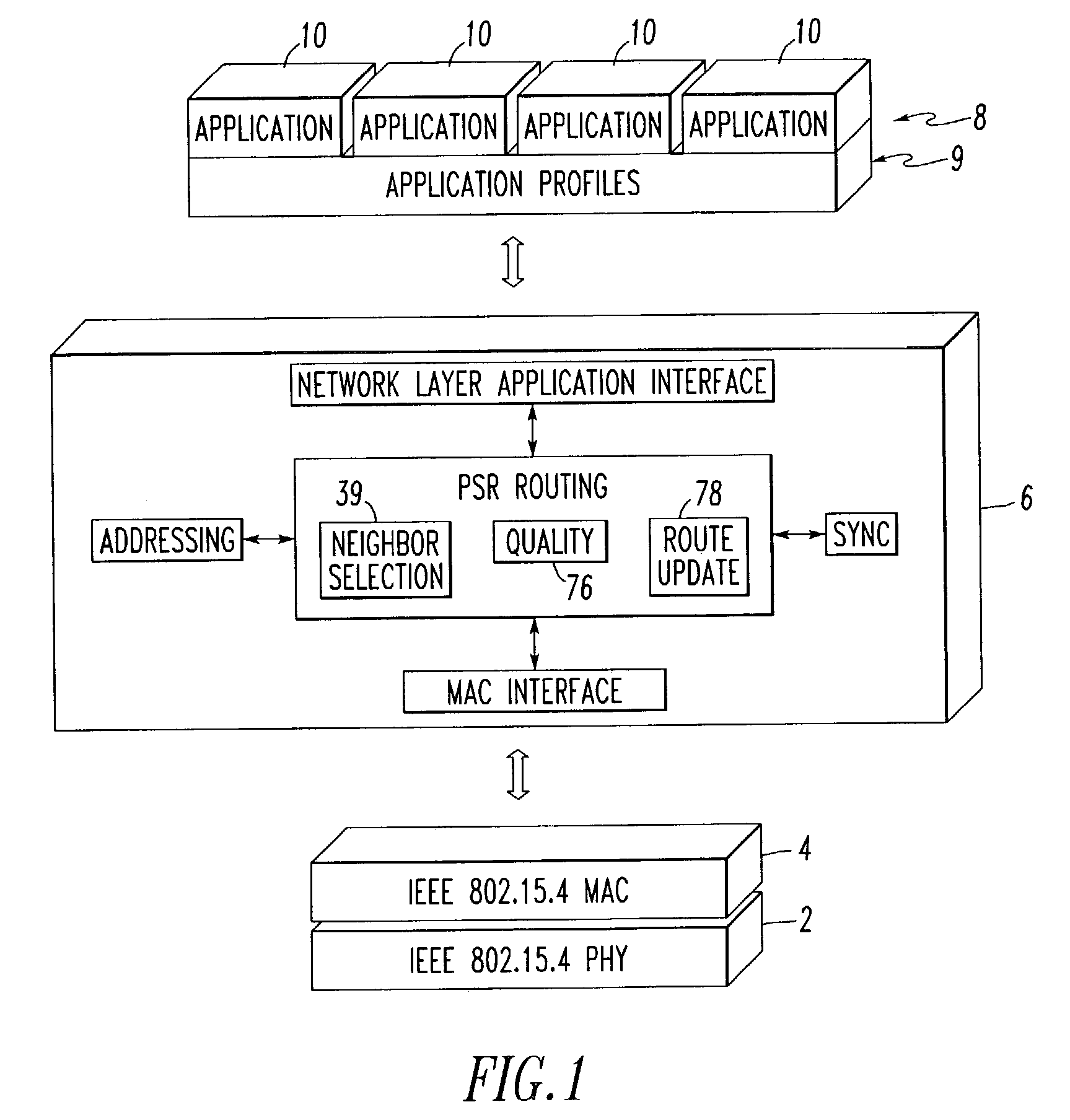
Figure 2 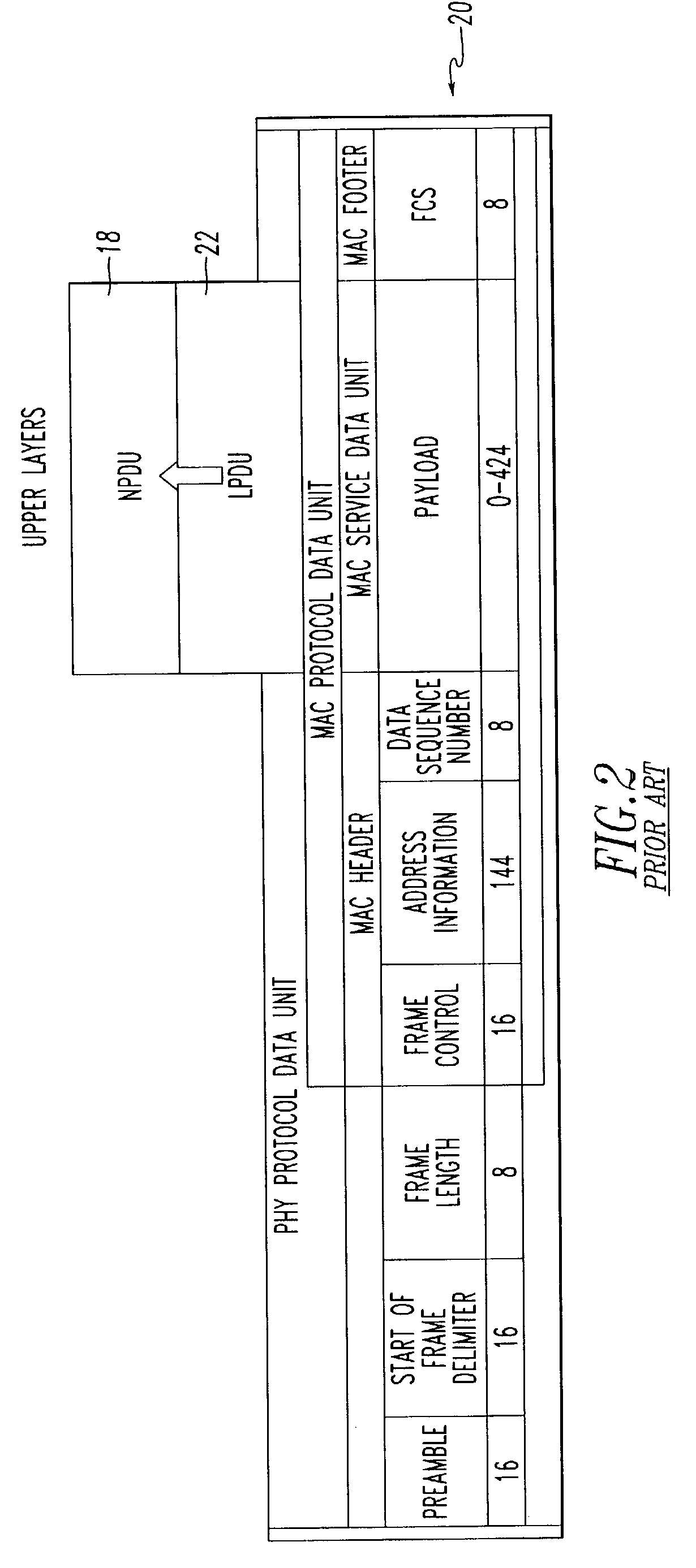
Figure 3
Abstract
Description
BACKGROUND OF THE INVENTION
[0001] 1. Field of the Invention
[0002] This invention relates generally to communication networks and, more particularly, to routing algorithms for ad-hoc networks, such as, for example, a multi-hop or a low rate-wireless personal area network (LR-WPAN). The invention also relates to methods of routing communications in a communication network, such as an ad-hoc network.
[0003] 2. Background Information
[0004] Wireless networks are an emerging new technology, which allows users to access information and services electronically, regardless of their geographic position. Wireless networks may be classified in two types: (1) infra-structured networks; and (2) infra-structureless (or ad-hoc) networks. Every ad-hoc network is infra-structureless, but the opposite is not true. A main characteristic of ad-hoc networks is self-configuration.
[0005] An infra-structured network includes a communication network with fixed and wired gateways. A mobile unit or host communicates...
Examples
example 1
[0177]The industrial market is a natural place for sensor networks. Using a combination of sensors and LR-WPAN devices, data is gathered, processed and analyzed to determine whether or when user interaction is required. Examples of wireless sensor applications include detecting emergency situations, such as hazardous chemical levels and fires, and monitoring and maintenance of rotating machinery. An LR-WPAN significantly reduces the installation cost of new sensor networks and simplifies expansion of existing network installations. Applications include monitoring applications with noncritical data where longer latencies are acceptable. Such industrial monitoring applications, in general, do not need high data throughput or constant updating. Instead, emphasis is placed on low power consumption in order to maximize the lifetime of the battery-powered devices that make up the network.
example 2
[0178]Wireless communication may also be applied to vehicles, such as cars, as driver comfort and the number of features increase. In a similar manner, the number of wires required in a car has grown significantly, having a great impact on installation cost. In contrast to the home or office environment, the automotive environment represents a relatively underdeveloped application field regarding the provision of new services or updating existing services. One of the key factors missing for accomplishing this task is an appropriate wireless delivery medium based on standard specifications. The wireless option introduces flexibility in installation and an advanced alternative to wired connections. A special challenge for automotive applications is meeting the harsh automotive environment with a solution low enough in cost to find volume applications. Some of the applications WPANs can address in a vehicle are control and monitoring of noncritical sensors.
example 3
[0179]One vehicle application example is a tire pressure monitoring system. The system consists of four pressure sensors (i.e., NDs), one mounted on each tire, and a central control unit or station (i.e., NC) to receive the collected data. Since the pressure sensors have to be mounted on the tires, this application does not permit the use of any communication wires or power cables. Therefore, sensors have to be battery-powered. Since it is impractical to replace the sensors or their batteries between tire changes, it is required that the sensor batteries last at least three, preferably up to five, years. This puts significant constraints on the power consumption of the electronic components and requires power management capabilities. The data that needs to be communicated is, in most cases, only a few bits in size and indicates the measured tire pressure. This information is transmitted about every 1 to 10 minutes under non-alarm conditions. Unless there is a fast loss of pressure, ...