
Familial correction with non-familial double bit error detection
a double-bit error detection and family technology, applied in the field of familial correction and detection errors, can solve the problems of wasting memory on error correction code, compromising the desire for perfect error correction and detection, and jeopardizing the reliability of the memory subsystem, so as to achieve less cycle time
Patent Information
- Authority / Receiving Office
- US · United States
- Patent Type
- Patents(United States)
- Current Assignee / Owner
- Publication Date
- 2009-12-15
Smart Images
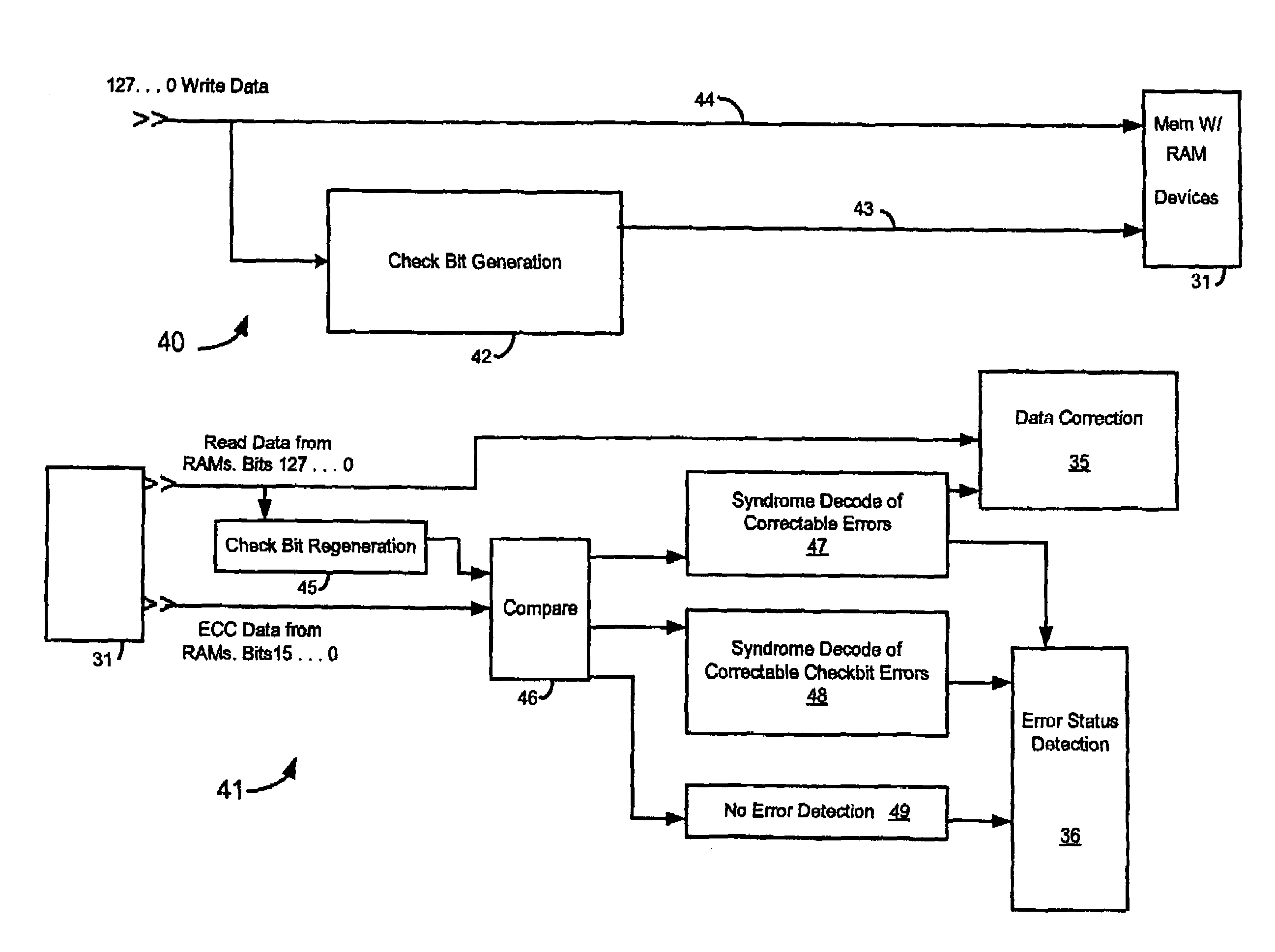
Figure 1 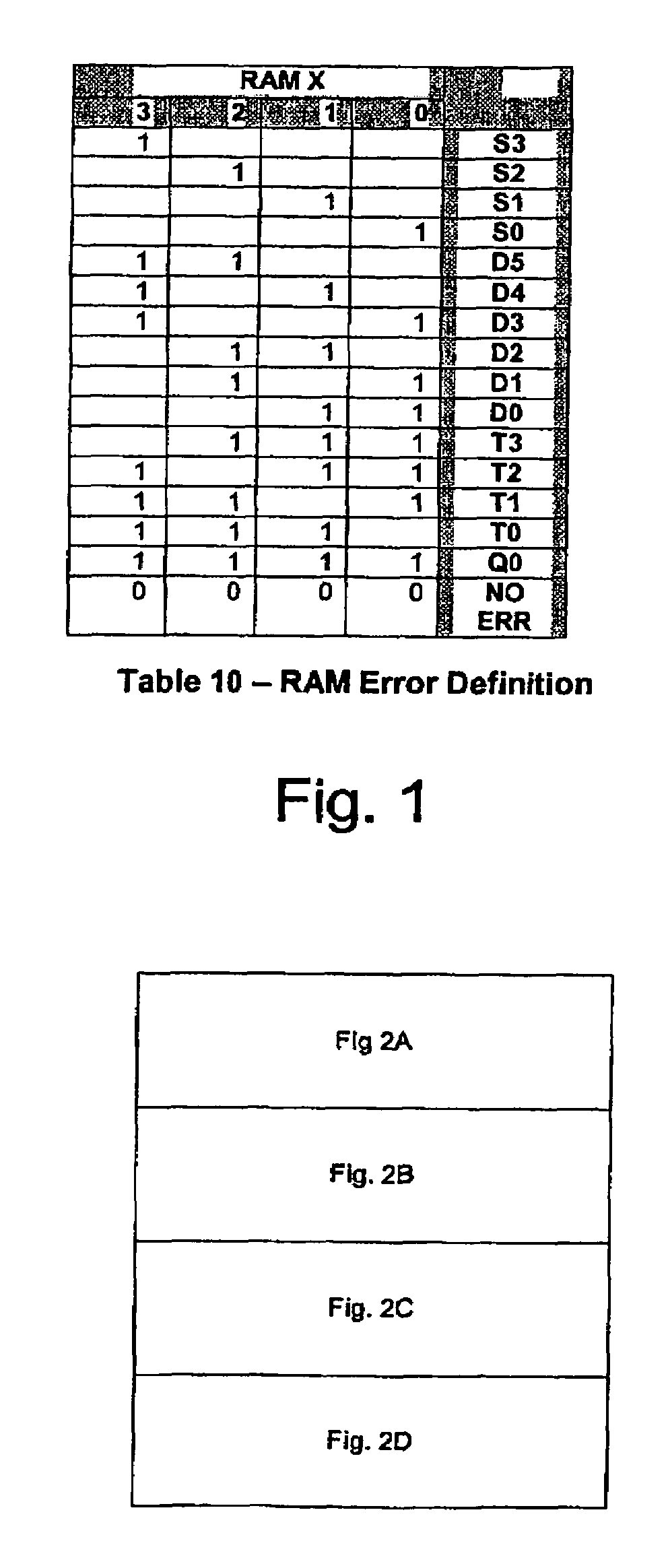
Figure 2 
Figure 3
Abstract
Description
BACKGROUND OF THE INVENTION
[0001] 1. Field of the Invention
[0002] This invention relates to correcting and detecting errors that may occur within a computer system particularly within a memory device, and more particularly to systems where a single bit correction supplemented with familial 1 through 4 bit correction and double bit word-wide detection are preferred, and even more particularly to 128 bit data words stored in 4 bit RAM devices.
[0003] 2. Background Information
[0004] It is expensive to dedicate memory to error correction code (ECC) space, therefore, compromises in the desire for perfect error correction and detection are needed. For sustainable commercial viability, one must still provide the largest computer systems particularly, and other RAM using data storage systems generally, with appropriate compromises in error detection and correction. Using some ECC to make memory subsystems more reliable by providing the capability to allow a single multi-bit RAM device to fail an...
Examples
Embodiment Construction
[0029]The preferred component concepts and parts are described first, and then the preferred functioning of the invention is described.
[0030]Please refer first to FIG. 1 in which the RAM error definition table 10 is illustrated, having five columns, the first four of which (R) indicate the DRAM or RAM bit number for each RAM under consideration. These four bits are said to be family bits or familial, because they are within a single RAM device. In some texts this is referred to as “adjacency,” but we find that term confusing since the last bit in one RAM might also be considered adjacent to the first bit in the next RAM. So, for purposes of discussion within this patent, we say that all bits within a DRAM or RAM device with be considered familial bits and those outside are not familial or are not part of the same family. We label the rows 0-16 of FIG. 1's table 10 for later reference.
[0031]Table 10 describes all possible error states (there are sixteen, including no error) in area S...