
Expedited module unloading for kernel modules that execute read-copy update callback processing code
a module and module technology, applied in the field of computer systems and other directions, can solve the problems of rcu_barrier( ) primitives that can delay module unloading, read-side lock acquisition would be quite burdensome, and require more read-side overhead
Patent Information
- Authority / Receiving Office
- US · United States
- Patent Type
- Patents(United States)
- Current Assignee / Owner
- Publication Date
- 2016-02-09
- Estimated Expiration
- Not applicable · inactive patent
Smart Images
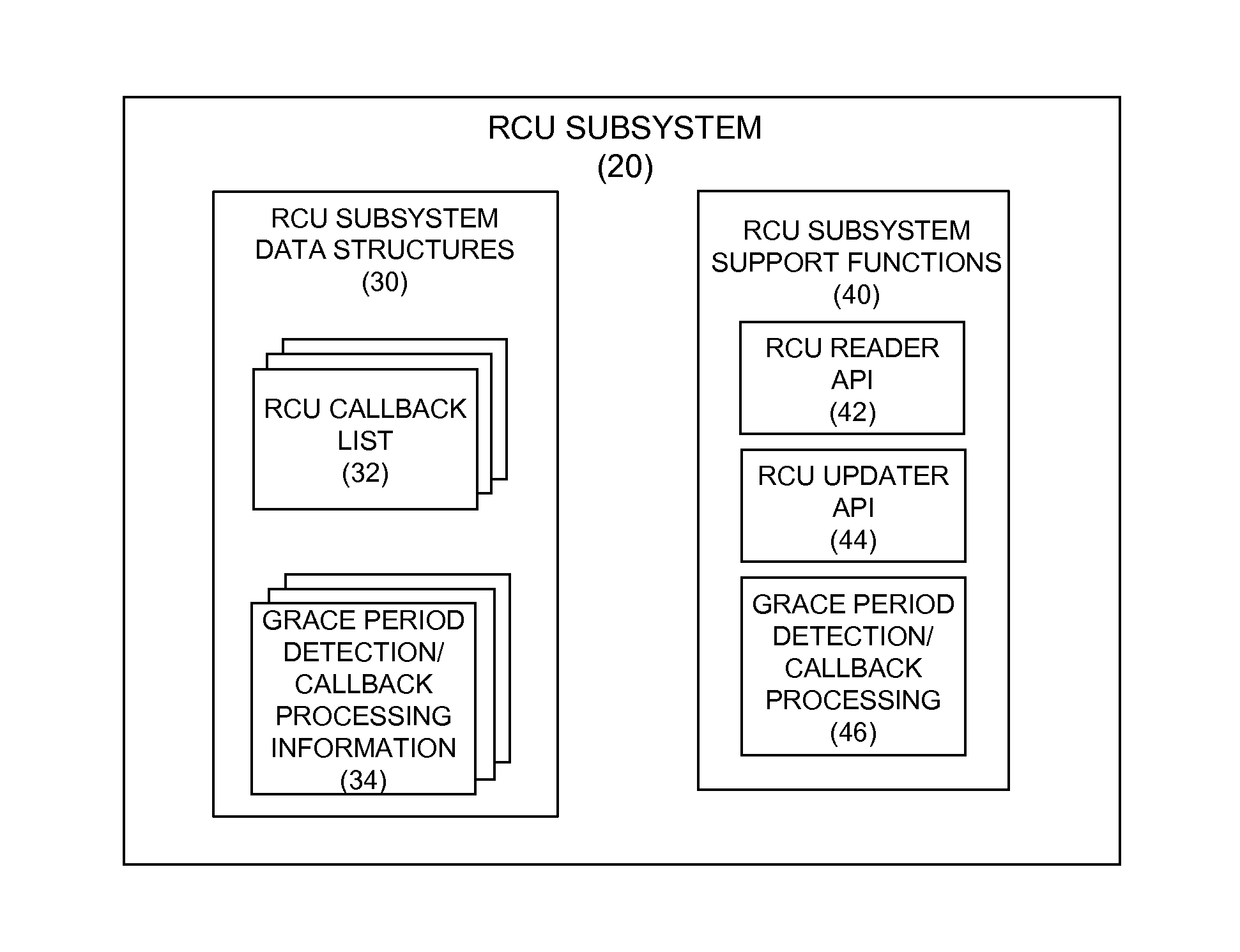
Figure 1 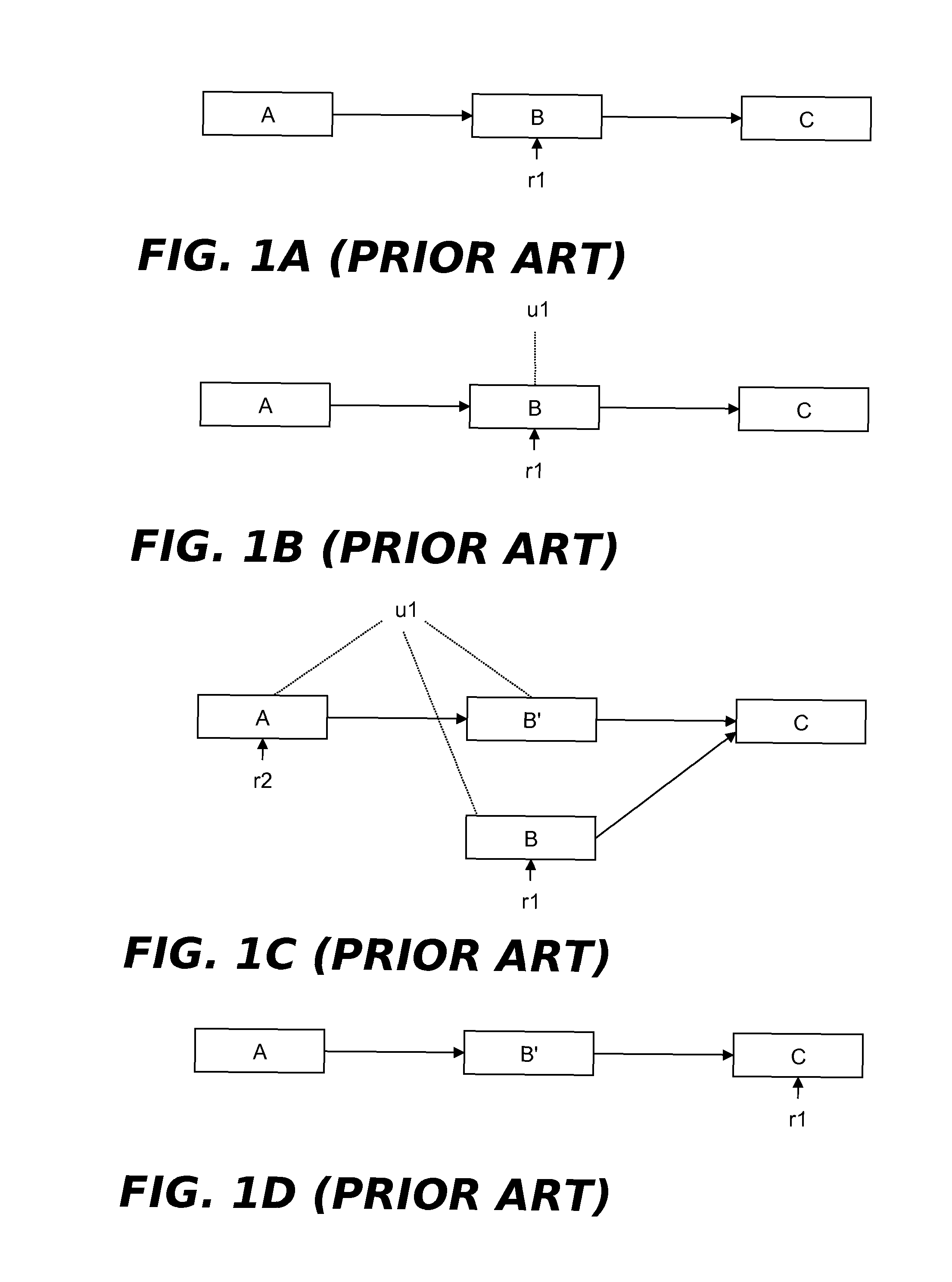
Figure 2 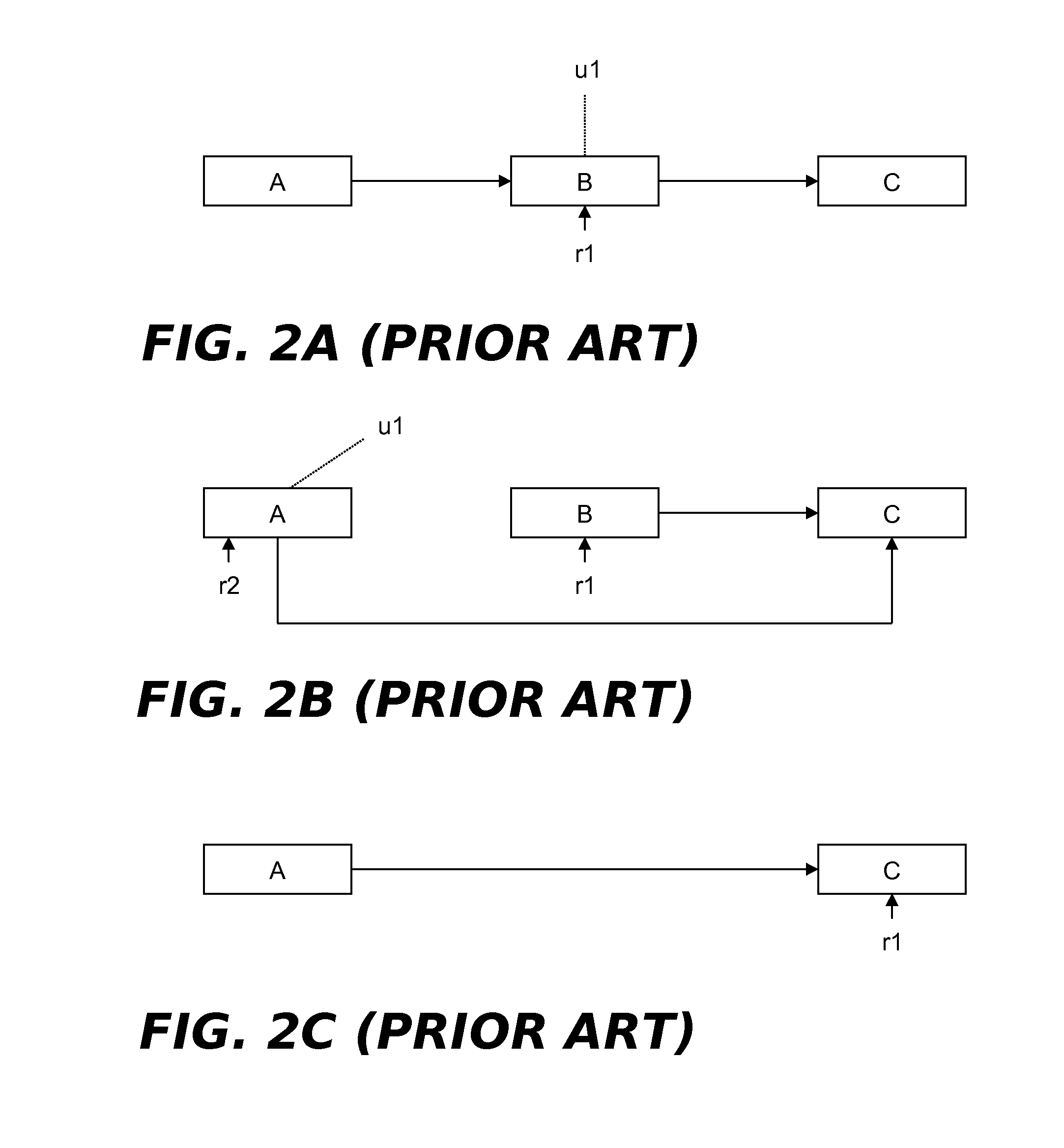
Figure 3
Abstract
Description
BACKGROUND
[0001] 1. Field
[0002] The present disclosure relates to computer systems and methods in which data resources are shared among data consumers while preserving data integrity and consistency relative to each consumer. More particularly, the disclosure concerns an implementation of a mutual exclusion mechanism known as “read-copy update” in a computing environment wherein loadable modules contain code that is used to process read-copy update callbacks.
[0003] 2. Description of the Prior Art
[0004] By way of background, read-copy update (also known as “RCU”) is a mutual exclusion technique that permits shared data to be accessed for reading without the use of locks, writes to shared memory, memory barriers, atomic instructions, or other computationally expensive synchronization mechanisms, while still permitting the data to be updated (modify, delete, insert, etc.) concurrently. The technique is well suited to both uniprocessor and multiprocessor computing environments wherein the n...
Examples
Embodiment Construction
[0038]Turning now to the figures, wherein like reference numerals represent like elements in all of the several views, FIGS. 4 and 5 respectively illustrate example uniprocessor and multiprocessor computing environments in which the expedited module unloading technique disclosed herein may be implemented. In FIG. 4, a uniprocessor computing system 2 includes a single processor 4, a system bus 6 (or other interconnection pathway) and a program memory 8. A conventional cache memory 10 and a cache controller 12 are associated with the processor 4. A conventional memory controller 14 is associated with the memory 8. As shown, the memory controller 14 may reside separately from processor 4 (e.g., as part of a chipset). Alternatively, the memory controller 14 could be integrated with the processor 4 (as is known in the art). In FIG. 5, a multiprocessor computing system 2A includes multiple processors 41, 42 . . . 4n, a system bus 6, and a program memory 8. There are also cache memories 10...