
A joint method for reducing OFDM signal peak flat ratio
A signal peak and fusion method technology is applied in the joint field of reducing the peak-to-average ratio of OFDM signals, which can solve the problem of high computational complexity and achieve the effect of suppressing the peak-to-average ratio.
- Summary
- Abstract
- Description
- Claims
- Application Information
AI Technical Summary
Problems solved by technology
Method used
Image

Examples
Embodiment Construction
[0028] The technical solution of the present invention will be further described through specific implementation below.
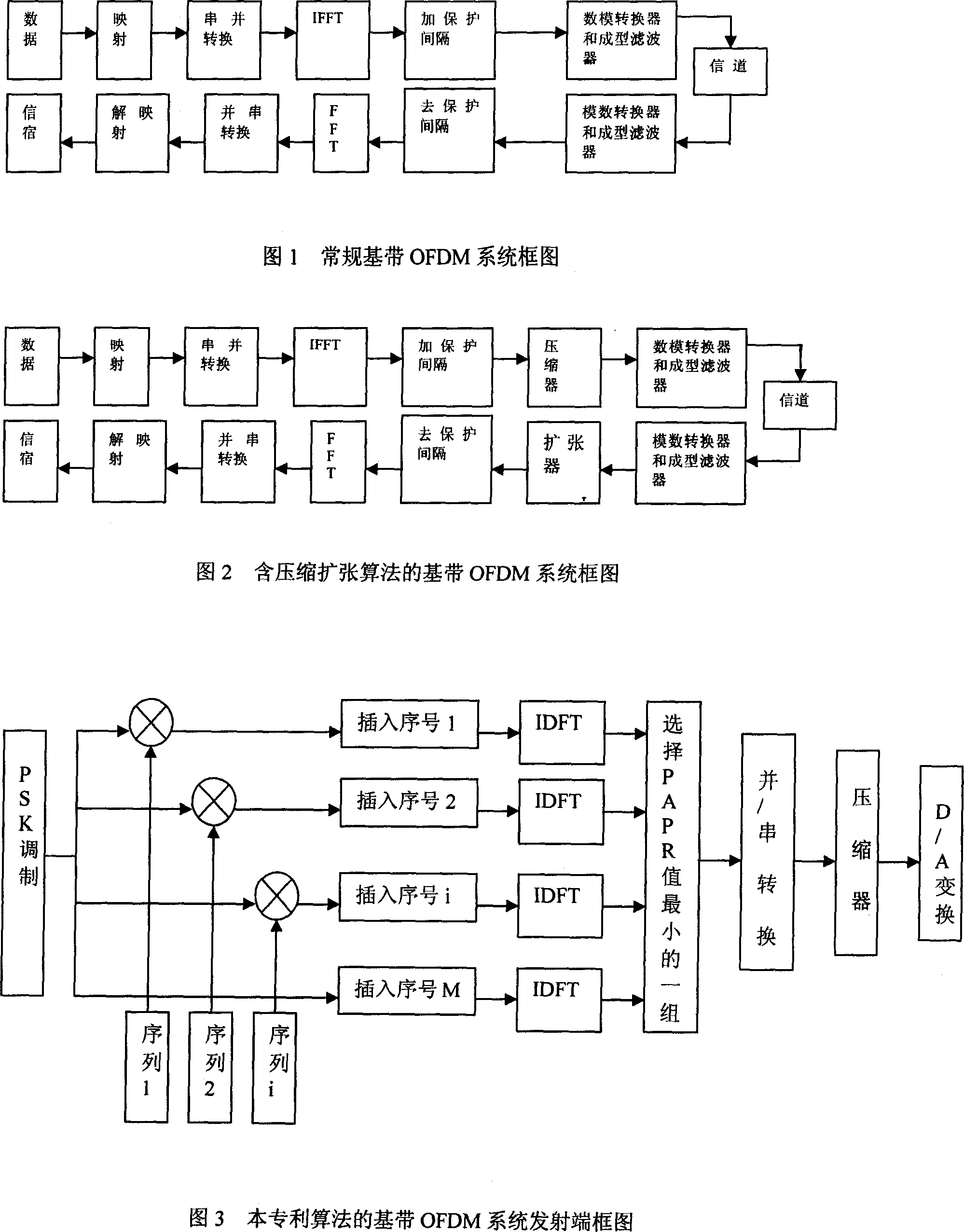
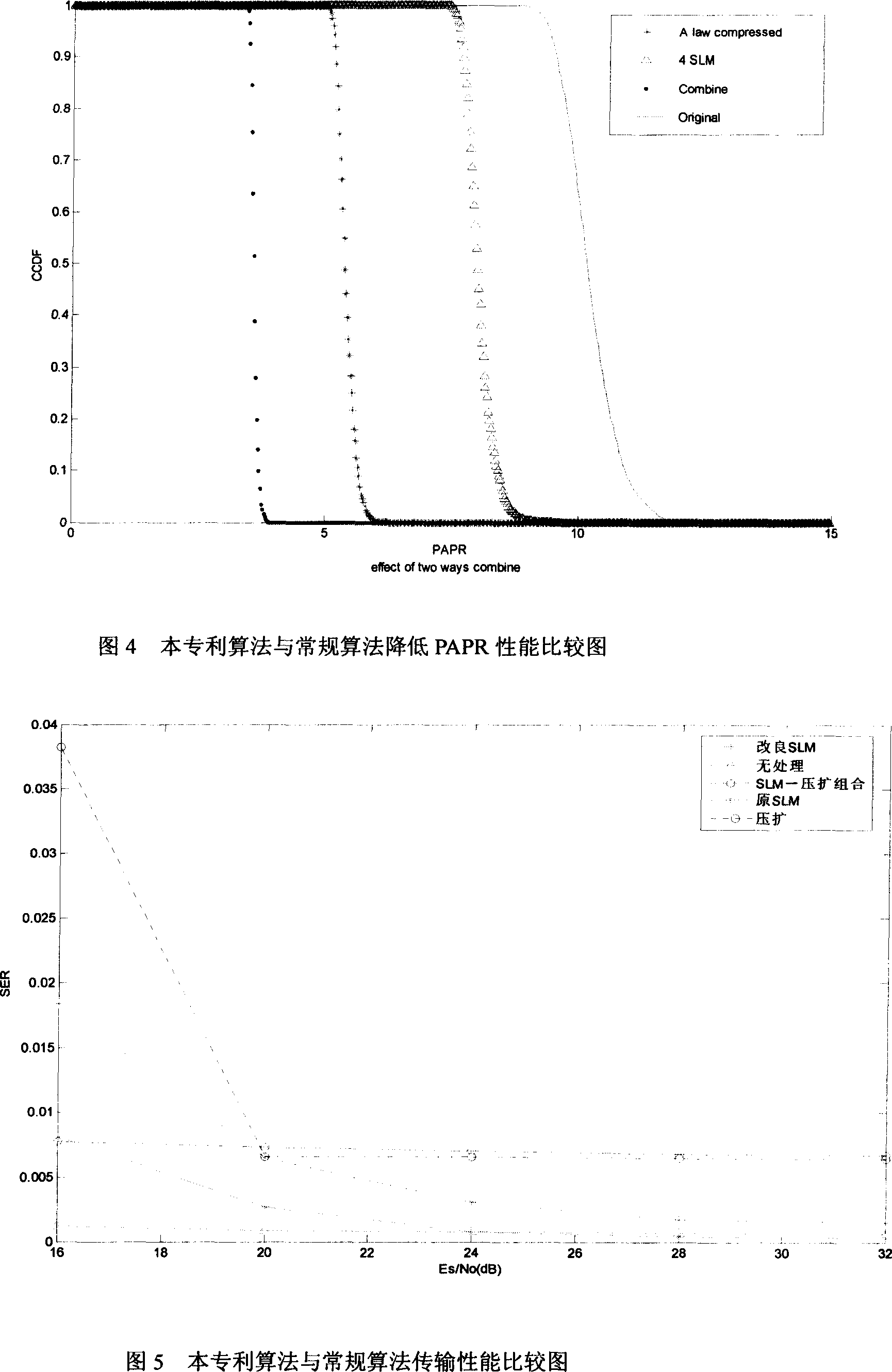
[0029] The present invention is applied to OFDM systems. The system adopts QPSK modulation, the number of sub-carriers is 128, SNR=10dB, AWGN channel. The specific steps are:
[0030] 1. The sender copies the input sequence to multiple data blocks;
[0031] 2. Obtain a phase-rotated data block by multiplying the multiple data blocks by M different phase sequences generated by a specific method;
[0032] 3. Inserting auxiliary information for marking the phase-rotated data block into a predetermined position of the phase-rotated data block;
[0033] 4. Performing a fast Fourier transform on the phase-rotated data block containing auxiliary information;
[0034] 5. Select the data block with the smallest PAPR from the data blocks that have undergone fast Fourier transform;
[0035] 6. The selected data blocks are converted to parallel and serial, and the...
PUM
 Login to View More
 Abstract
Description
Claims
Application Information
 Login to View More