
Terminal access method for TDD system
A terminal access and terminal technology, which is applied in the field of communication and can solve problems such as inconvenience of terminal access to downlink spectrum.
- Summary
- Abstract
- Description
- Claims
- Application Information
AI Technical Summary
Problems solved by technology
Method used
Image

Examples
Embodiment Construction
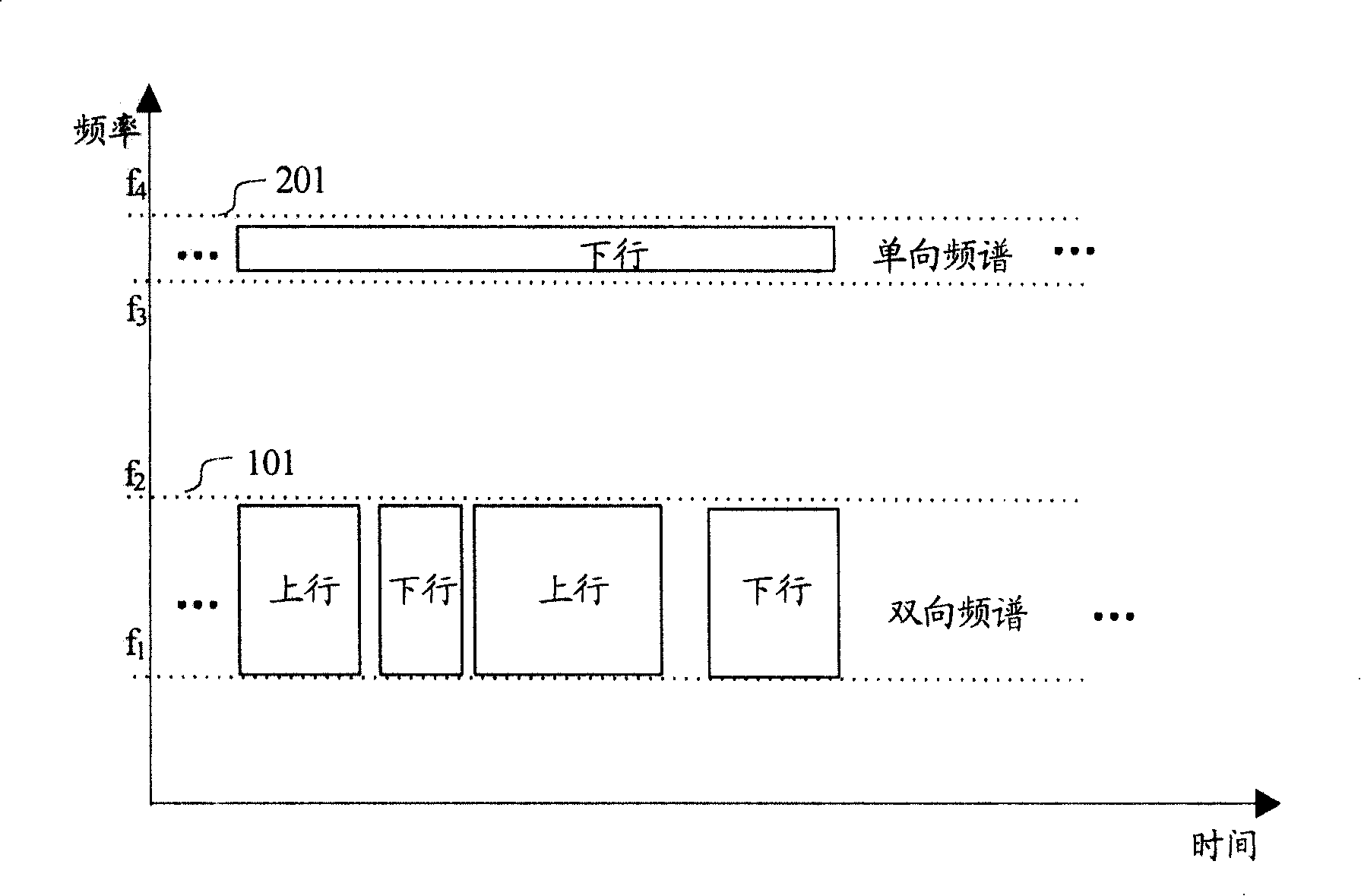
[0028] According to an embodiment of the present invention, there is provided a terminal access method for a time division duplex (TDD) system (may be referred to as a TDD feedback enhanced system) using two frequency spectrums.
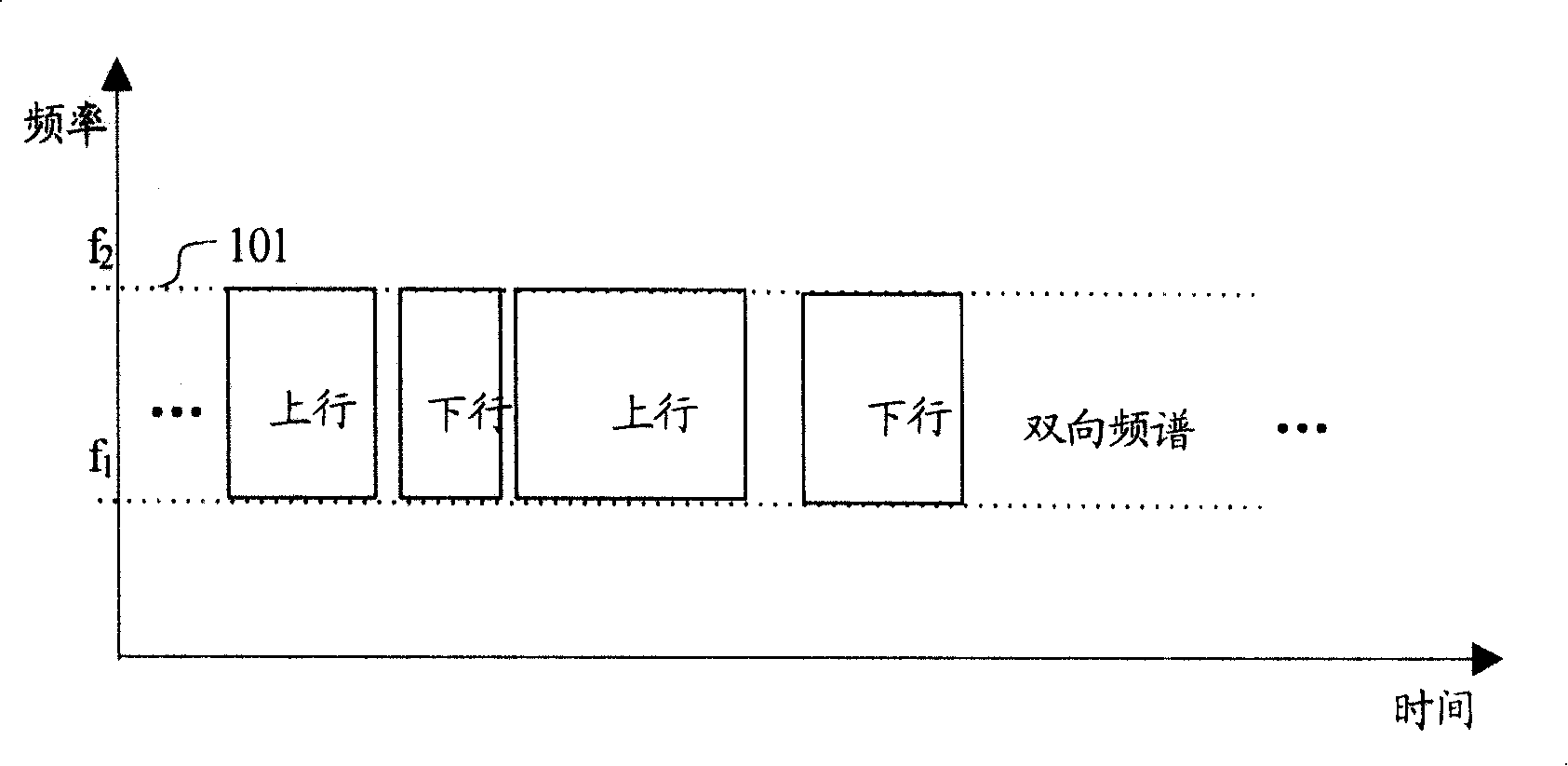
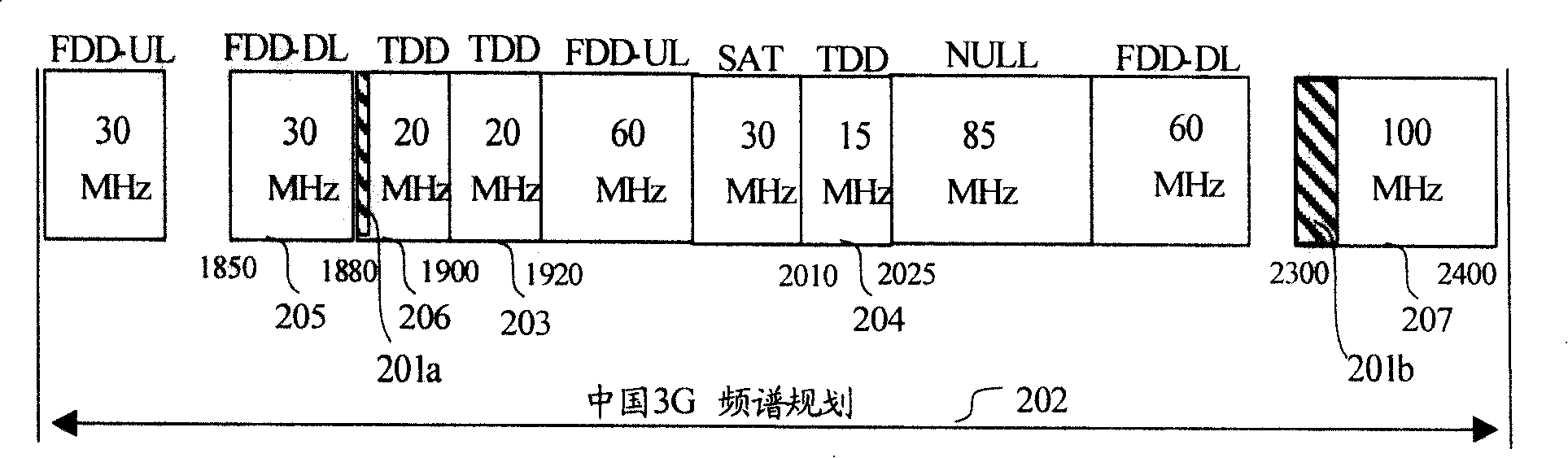
[0029] First, the method provided by the embodiment of the present invention is applicable to a TDD system composed of at least one base station and at least one terminal. In this TDD system, in addition to using a section of bidirectional spectrum to transmit and receive in a time-division manner, the base station can also implement downlink transmission on another section of unidirectional spectrum; and the terminal can use a section of bidirectional spectrum to transmit and receive in a time-division manner It is also possible to receive signals on another unidirectional spectrum, where the terminal transmits and receives on one bidirectional spectrum and receives on another unidirectional spectrum in a time-division manner. In addition, the recep...
PUM
 Login to View More
 Abstract
Description
Claims
Application Information
 Login to View More