
Time-sharing scheduling method for air conditioners based on demand response
A time-sharing scheduling and air-conditioning technology, applied in the field of smart grid, to achieve the effect of small time complexity, promotion of local consumption, and easy implementation
- Summary
- Abstract
- Description
- Claims
- Application Information
AI Technical Summary
Problems solved by technology
Method used
Image

Examples
Embodiment Construction
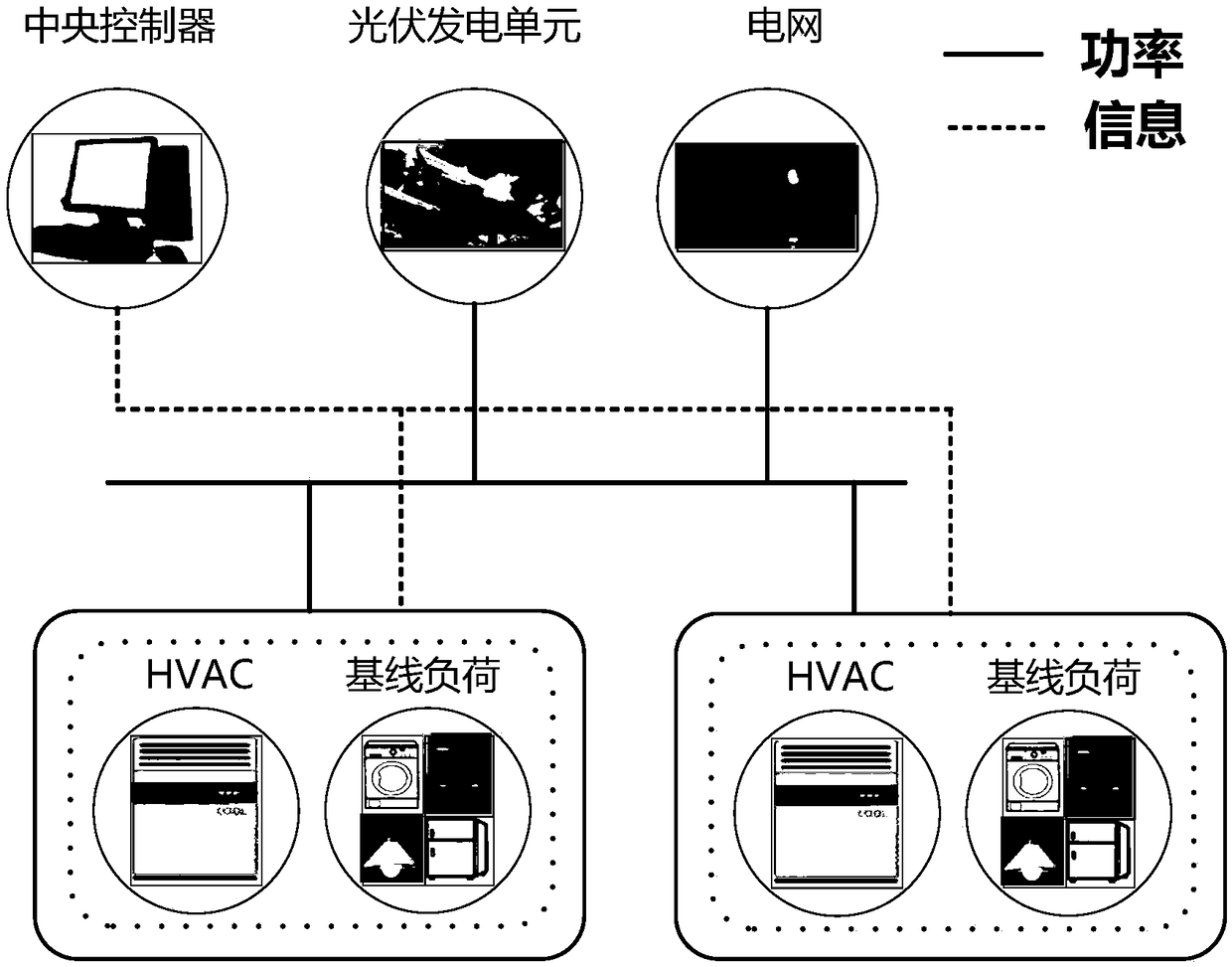
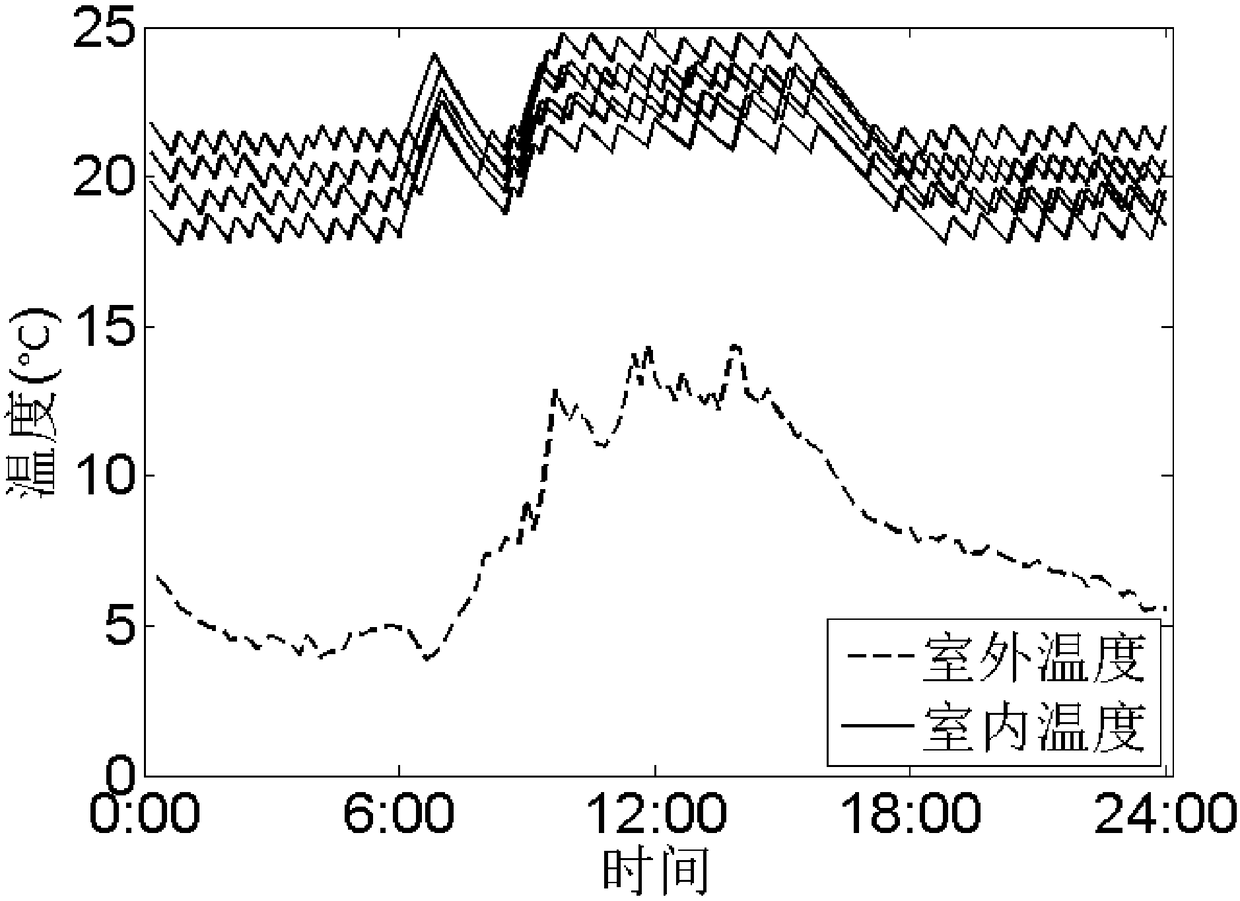
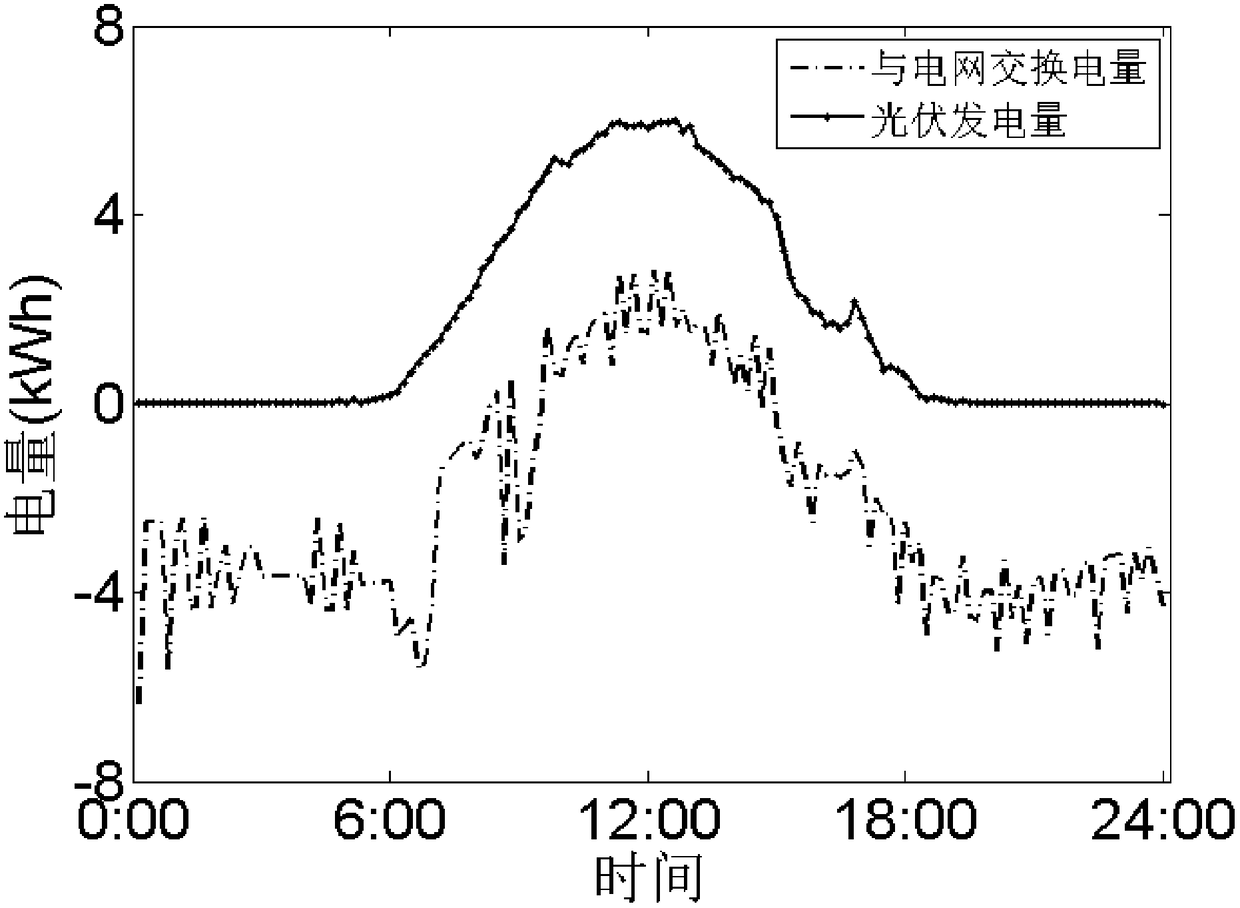
[0019] The embodiments will be described in detail below in conjunction with the accompanying drawings. The invention proposes a method for time-sharing scheduling of air conditioners based on demand response. figure 1 It is a structural diagram of the system, mainly composed of commercial users, photovoltaic power generation units, central controller and other elements. Among them, the load of each user mainly includes the load of air conditioners and other electrical appliances. The central controller will collect the energy information of each unit, and directly control the start and stop of each user's air conditioner, so that the electricity cost of the entire alliance is the lowest. Operators purchase and install photovoltaic power generation devices for users, and make profits through policy subsidies for photovoltaic power generation and income from alliances. The load is powered by photovoltaic power generation first. When the total load in the community is greater...
PUM
 Login to View More
 Abstract
Description
Claims
Application Information
 Login to View More