
Incision protection device of implanted type cardiac pacemaker
A technology for cardiac pacemakers and protective devices, applied in the direction of tourniquets, etc., can solve the problems of inaccurate pressure adjustment, unfavorable patient recovery, local skin damage, etc., to achieve wide application range, good protection effect, and prevent wound split effect
- Summary
- Abstract
- Description
- Claims
- Application Information
AI Technical Summary
Problems solved by technology
Method used
Image

Examples
Embodiment
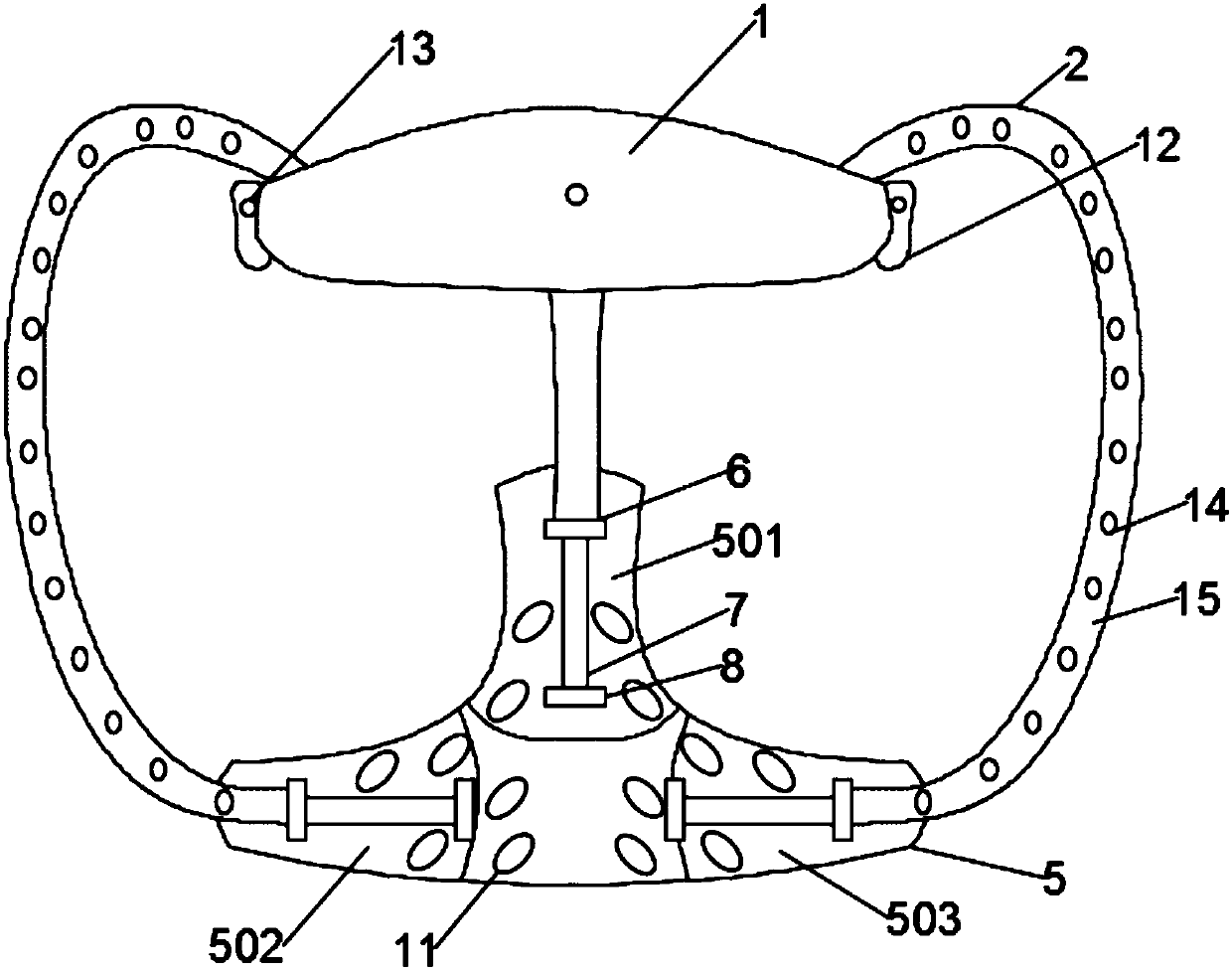
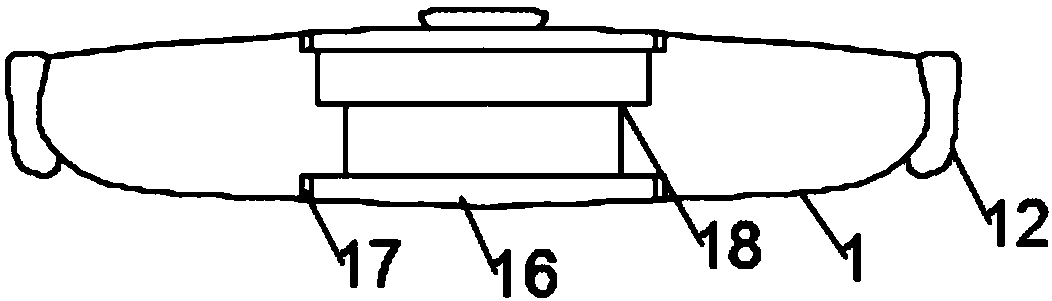
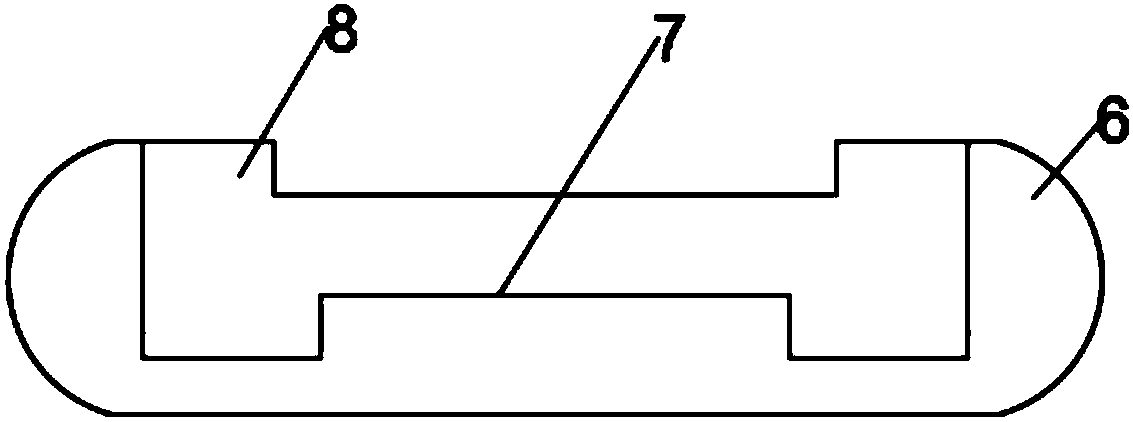
[0020] Such as Figure 1 to Figure 4 As shown, the present invention provides an incision protection device for an implantable cardiac pacemaker, comprising a compression airbag 1 and a take-up reel 5, the surface of the compression airbag 1 is connected with several groups of connection straps 2, and the connection straps 2 ends are connected with the winding roller 3, and the connection belt 2 is wound up by the winding roller 3, so that the degree of tightness of the connection belt 2 can be adjusted, thereby adjusting the pressure during compaction. The two ends of the winding roller 3 A telescopic rod 4 is connected, and the diameter of the telescopic rod 4 is greater than the diameter of the winding roller 3, preventing the connecting belt 2 from being wound on the telescopic rod 4 during rewinding, thereby ensuring the stability of the rewinding;
[0021] Both ends of the telescopic rod 4 are vertically connected with a plastic rod 9 through a connecting rod 10, and the...
PUM
 Login to View More
 Abstract
Description
Claims
Application Information
 Login to View More