
Naked eye 3D image processing method, device and equipment
An image processing device and image processing technology, applied in the field of image processing, can solve the problems of high hardware cost, visual fatigue, dizziness, etc., and achieve the effect of improving the rendering effect and reducing the feeling of dizziness
- Summary
- Abstract
- Description
- Claims
- Application Information
AI Technical Summary
Problems solved by technology
Method used
Image

Examples
Embodiment Construction
[0041] In order to make the object, technical solution and advantages of the present invention clearer, the present invention will be further described in detail below with reference to the accompanying drawings and embodiments.
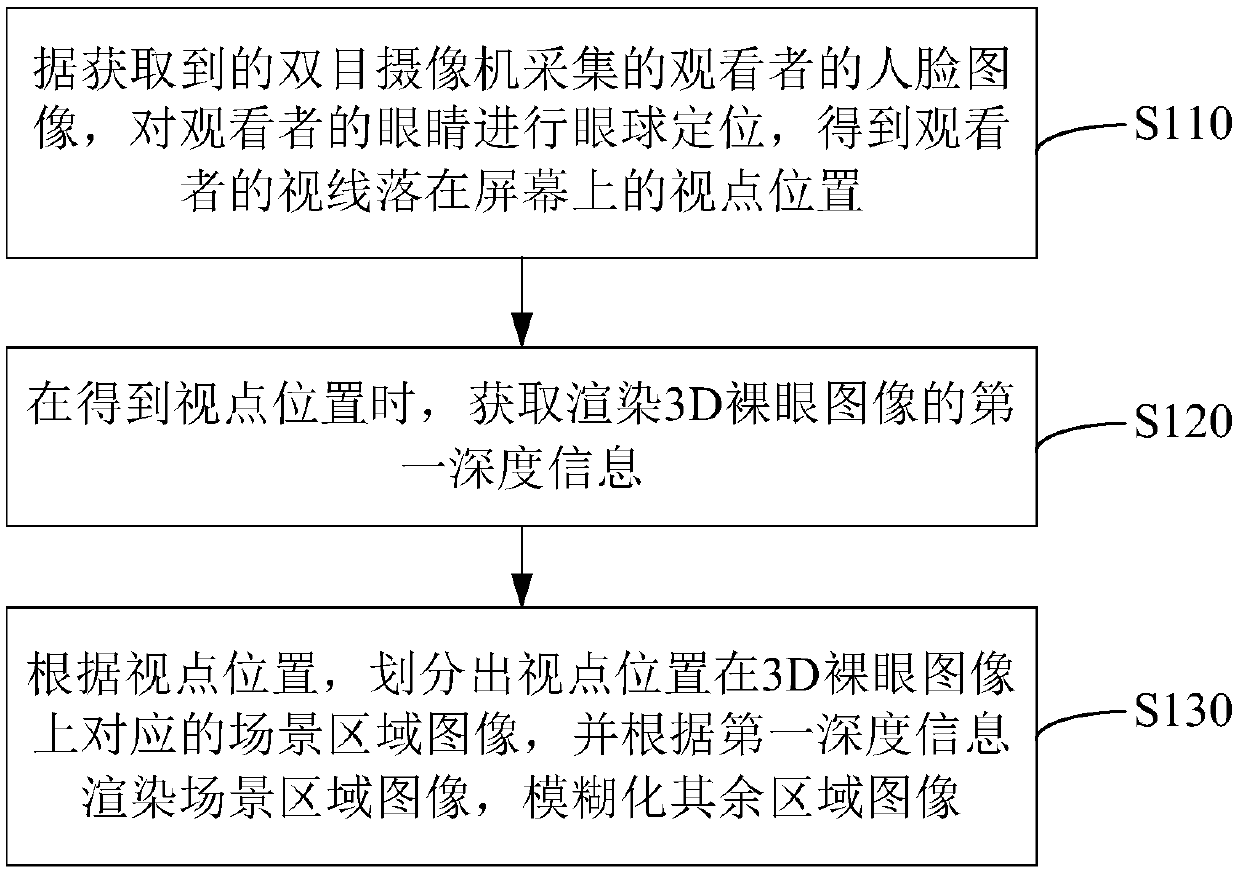
[0042] see figure 1 , In one embodiment, the present invention provides a naked-eye 3D image processing method, comprising:
[0043] Step S110 : According to the acquired face image of the viewer collected by the binocular camera, perform eyeball positioning on the eyes of the viewer, and obtain the viewpoint position where the viewer's line of sight falls on the screen.
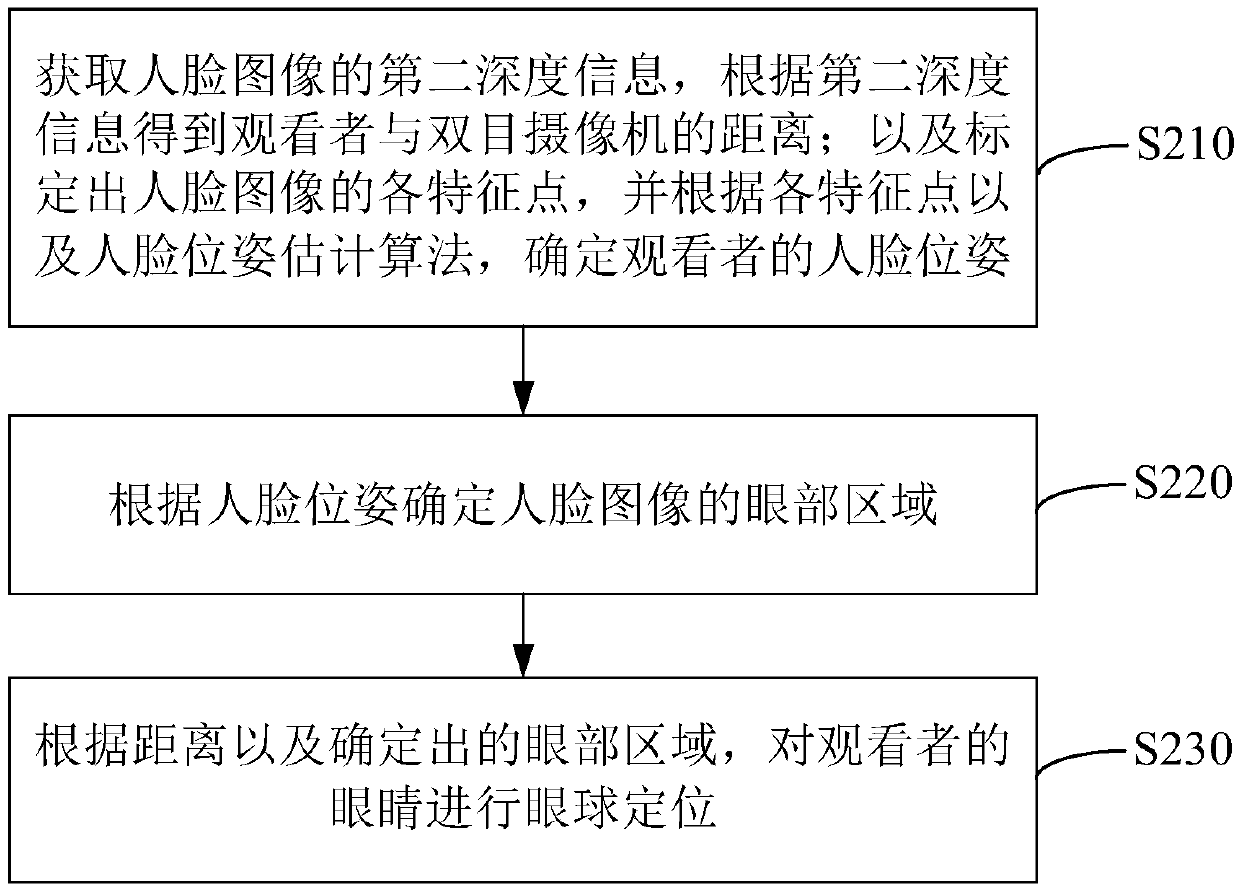
[0044] Specifically, a binocular camera may include two high-speed positioning camera lenses. Specifically, when the face image of the viewer is acquired, preprocessing such as binarization processing is performed on the face image to extract an eye region image. For the eye image, the closer to the center of the eye, the lower the gray value, and the gradient includes the magnit...
PUM
 Login to View More
 Abstract
Description
Claims
Application Information
 Login to View More