
Pharmaceutical composition for preventing or treating dentin-dental pulp diseases or periodontal disease including CPNE4 protein
a technology of dentin-dentin-dental pulp and pharmaceutical composition, which is applied in the direction of drug composition, peptide/protein ingredients, genetic material ingredients, etc., can solve the problems of loss of entire pulp tissue, periapical diseases or disorders of the entire tooth, dentin-dentin-dental pulp diseases, etc., and achieve excellent effects and promote regeneration of hard tissu
- Summary
- Abstract
- Description
- Claims
- Application Information
AI Technical Summary
Benefits of technology
Problems solved by technology
Method used
Image

Examples
example 1
nd Materials
Example 1-1. Cell Culture and Differentiation
[0104]Cells were cultured in humidified air containing 37% about CO2 at 37° C. and used in the experiment. MDPC-23 cells, a mouse odontoblast line, and human bone marrow mesenchymal stem cells (hBMSCs) were used. MDPC-23 cells were provided by Dr. J. E. Nor (University of Michigan, Ann Arbor, Mich.), and human bone marrow mesenchymal stem cells (hBMSCs) were purchased from Lonza (LONZA, Switzerland).
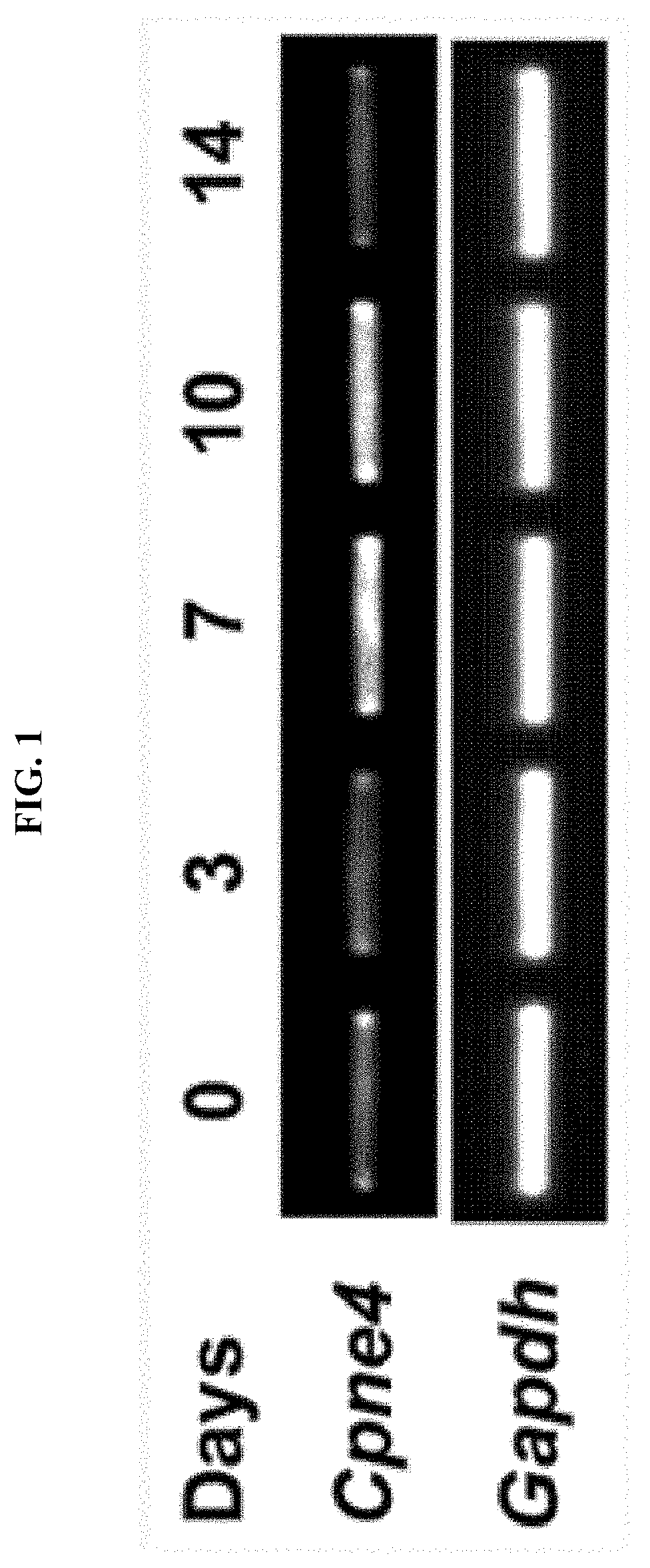
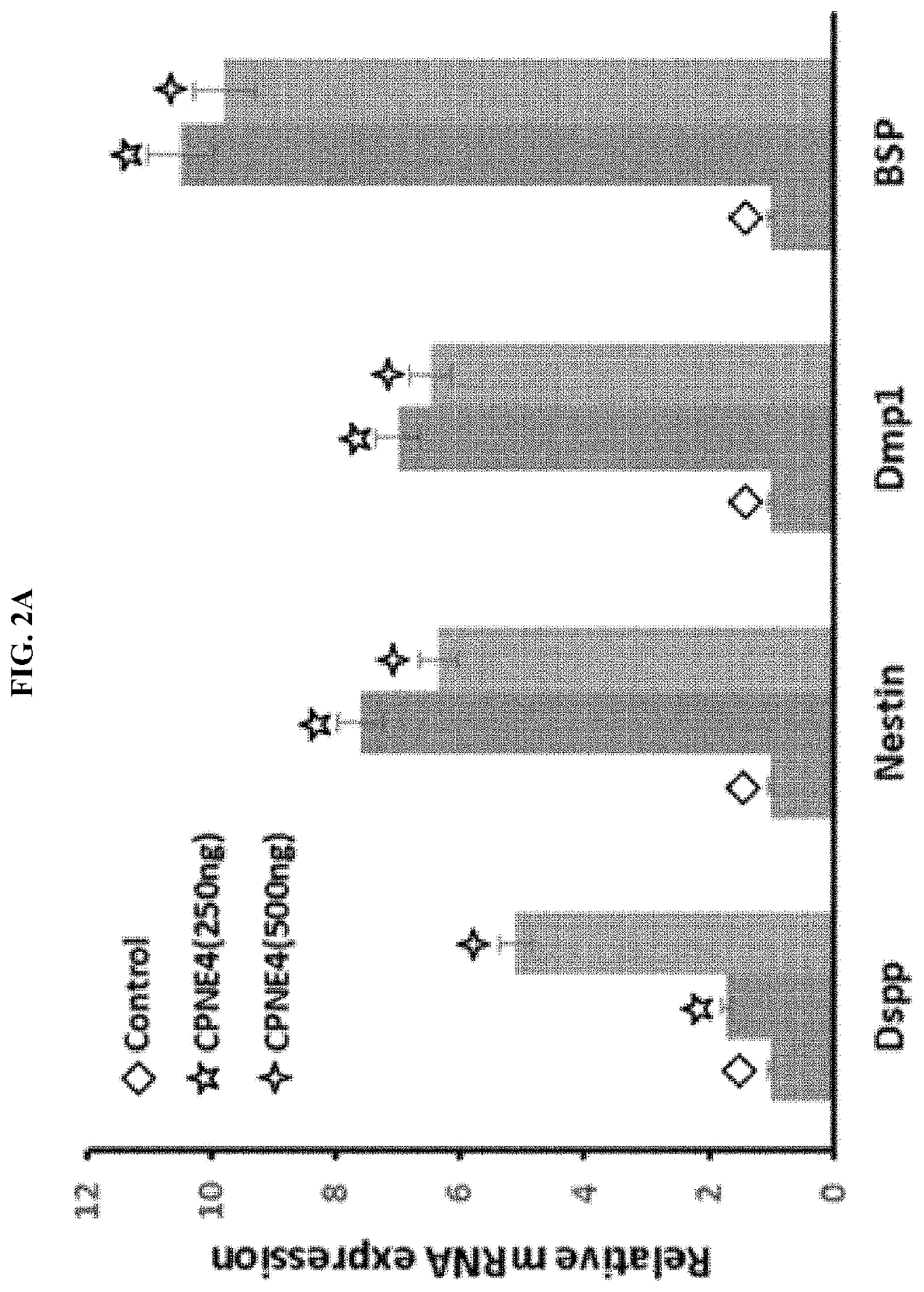
[0105]MDPC-23 cells were cultured in Dulbecco's modified Eagle's medium (Invitrogen) supplemented with 10% heat-inactivated bovine serum. The odontoblasts were differentiated for 14 days using a differentiation medium containing 50 mg / ml ascorbic acid and 10 mM beta-glycerophosphate. Human bone marrow mesenchymal stem cells were cultured in a culture of alpha-m (α-MEM, Invitrogen) supplemented with 10% heat-inactivated bovine serum. CPNE4 recombinant protein (250 ng / ml, 500 ng / ml) was added and cultured.
example 1-2
nd Culture of Human Dental Pulp Cells (hDPCs)
[0106]Human dental pulp cells (hDPCs) (i.e. human dental pulp derived cells) isolated from wisdom teeth of 10 adults (aged 18-22) at the School of Dentistry, Seoul National University. In detail, all experiments were performed after the approval of the Institutional Review Board and the informed consent from patients. Wisdom teeth were fractured according to a method of Jung H S et al. (J Mol Histol. (2011)) to expose the dental pulps, and dental pulp tissues were separated with forceps. Each of the separated dental pulp tissues was cut into small pieces with a razor blade, put in a 60-mm dish, covered with a coverslip, and then cultured in a Dulbecco's modified Eagle's medium. It has been known that human dental pulp cells can differentiate into odontoblast, osteoblast, cementoblast, and periodontal ligament cells under various conditions (Tissue Eng Part A. 2014 April; 20 (7-8): 1342-51).
example 1-3
Reverse Transcription-Polymerase Chain Reaction (RT-PCR) and Real-Time PCR
[0107]Total RNA was extracted from mouse odontoblast line MDPC-23 cells, human dental pulp cells (hDPCs), and human bone marrow mesenchymal stem cells (hBMSCs) with TRIzol reagent. 2 μg of the total RNA, 1 μl of reverse transcriptase, and 0.5 μg of oligo (oligo; dT) were used to synthesize cDNA of MPC-23 cells. RT-PCR of synthesized cDNA of MDPC-23 cells was performed using the primers of the mouse in Table 1 below. Polymerase chain reaction was 94° C., 5 minutes; 95° C., 30 seconds; 60° C., 30 seconds; 72° C., 30 seconds were performed under the conditions of repeating 32 cycles. PCR products were analyzed by electrophoresis on a 2% agarose gel.
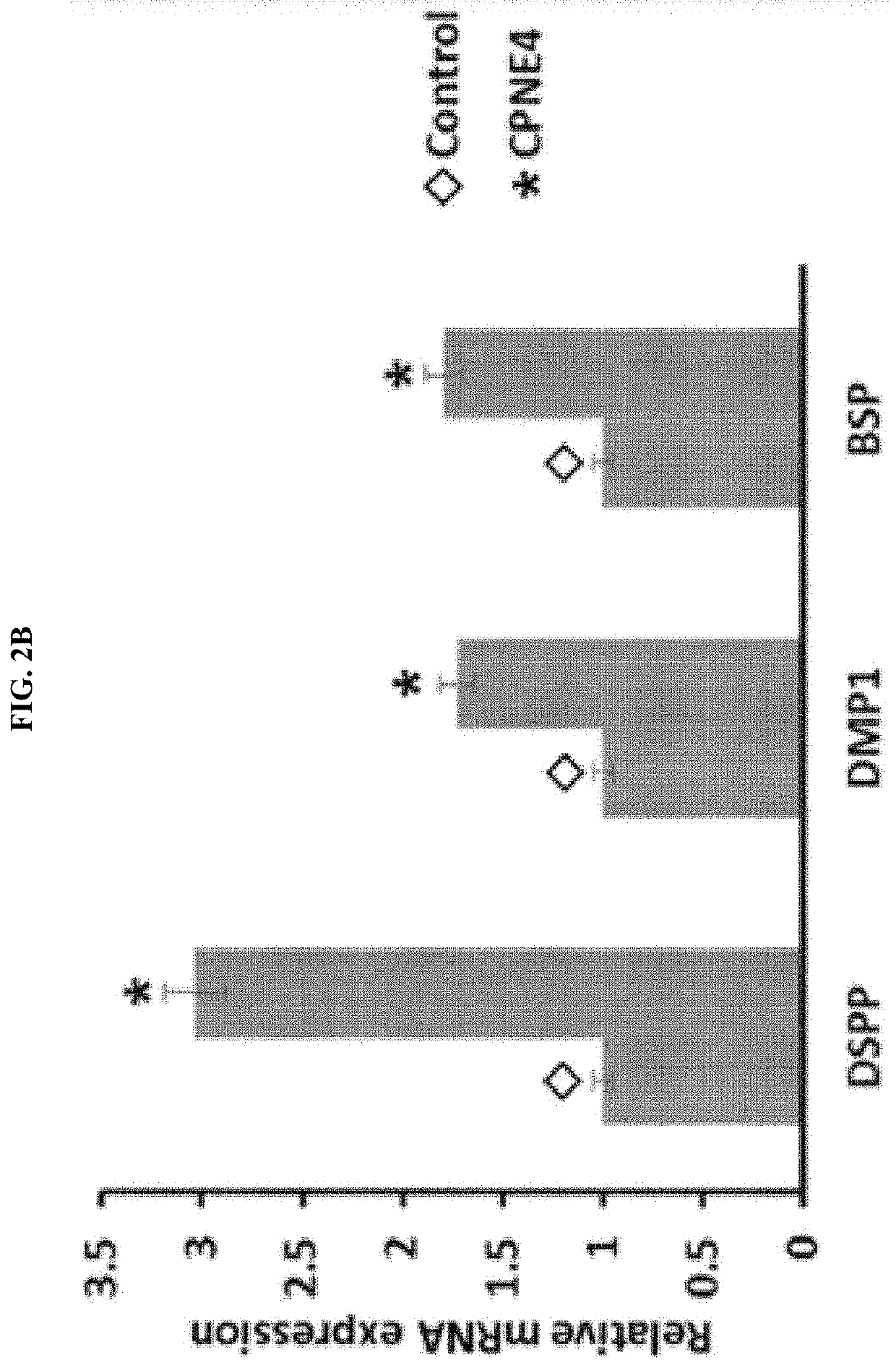
[0108]The synthesized cDNA of human dental pulp cells (hDPCs) and human bone marrow mesenchymal stem cells (hBMSCs) were used in a real-time polymerase chain reaction. The real-time polymerase chain reaction was performed on an ABI PRISM 7500 sequence detection system ...
PUM
| Property | Measurement | Unit |
|---|---|---|
| pH | aaaaa | aaaaa |
| concentration | aaaaa | aaaaa |
| concentration | aaaaa | aaaaa |
Abstract
Description
Claims
Application Information
 Login to View More