
Method of using temporal context for image classification
a technology of image classification and temporal context, applied in the field of digital image processing, can solve the problems of unavailability unreliable use of absolute time information, and still very much open problem of scene classification, and achieve the effect of increasing the accuracy of image classification
- Summary
- Abstract
- Description
- Claims
- Application Information
AI Technical Summary
Benefits of technology
Problems solved by technology
Method used
Image

Examples
Embodiment Construction
[0019] The present invention will be described as implemented in a programmed digital computer. It will be understood that a person of ordinary skill in the art of digital image processing and software programming will be able to program a computer to practice the invention from the description given below. The present invention may be embodied in a computer program product having a computer readable storage medium such as a magnetic or optical storage medium bearing machine-readable computer code. Alternatively, it will be understood that the present invention may be implemented in hardware or firmware.
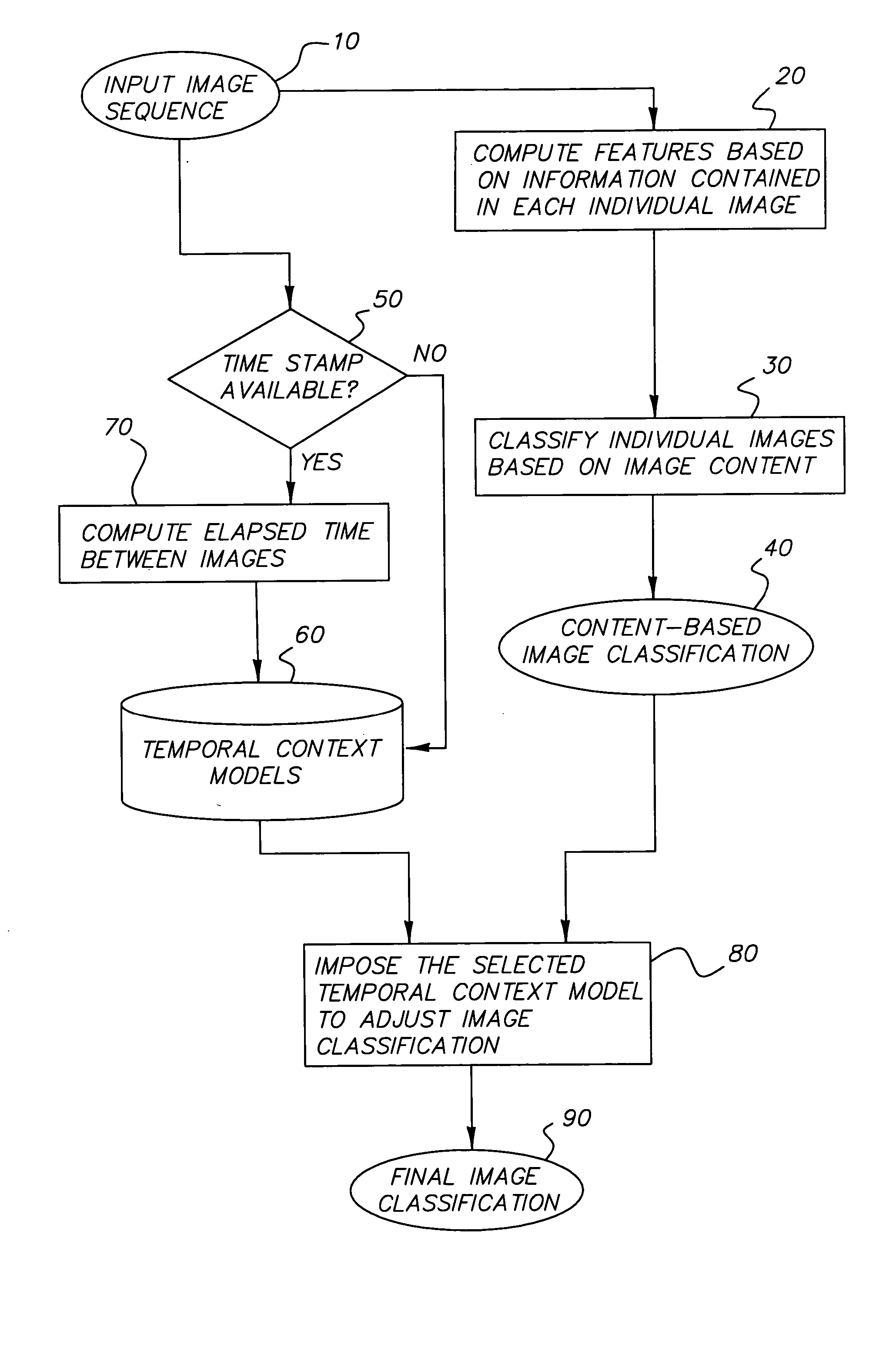
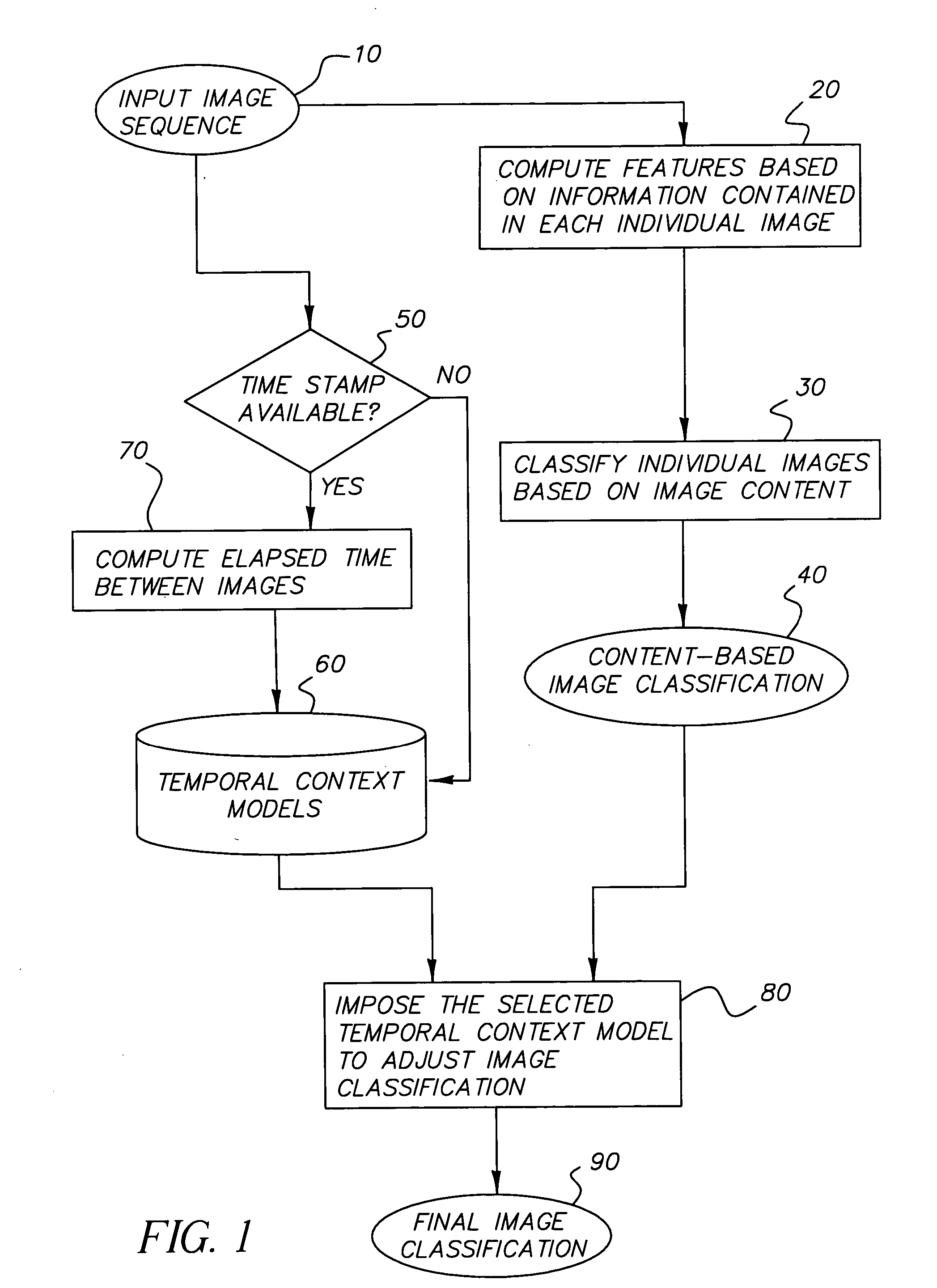
[0020] In a preferred embodiment of the present invention, a specific image and scene classification problem is that of indoor-outdoor classification. Such classification is useful as part of a hierarchical approach, which classifies images into “indoor” or “outdoor” at the top level and then further classifies them within each subcategory.
[0021] According to the invention, a tempo...
PUM
 Login to View More
 Abstract
Description
Claims
Application Information
 Login to View More