
Assessing electronic image quality
a technology of electronic image and quality, applied in the field of analyzing the quality of electronic images, can solve the problem that conventional methods do not analyze image quality using different image quality thresholds
- Summary
- Abstract
- Description
- Claims
- Application Information
AI Technical Summary
Problems solved by technology
Method used
Image

Examples
Embodiment Construction
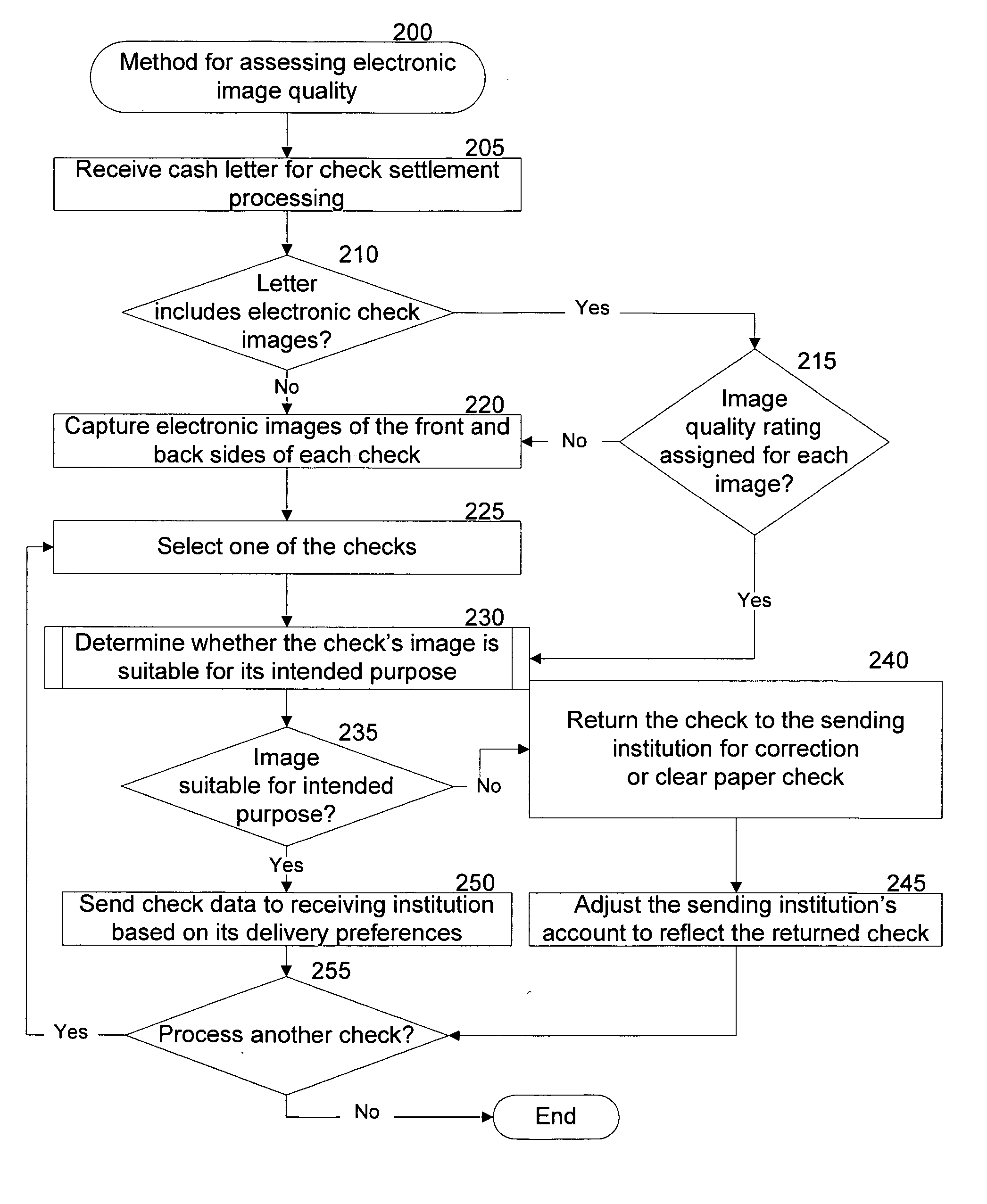
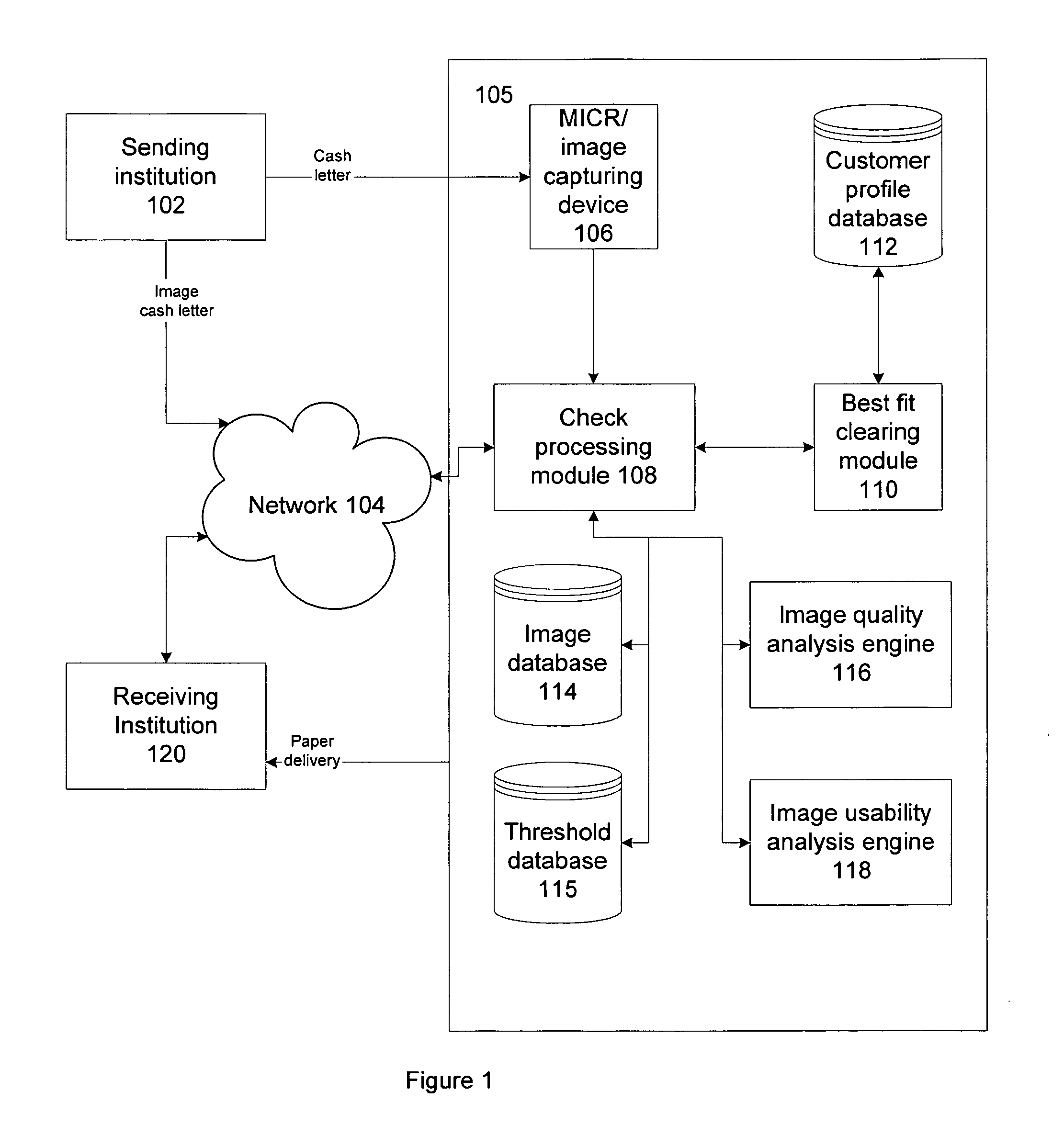
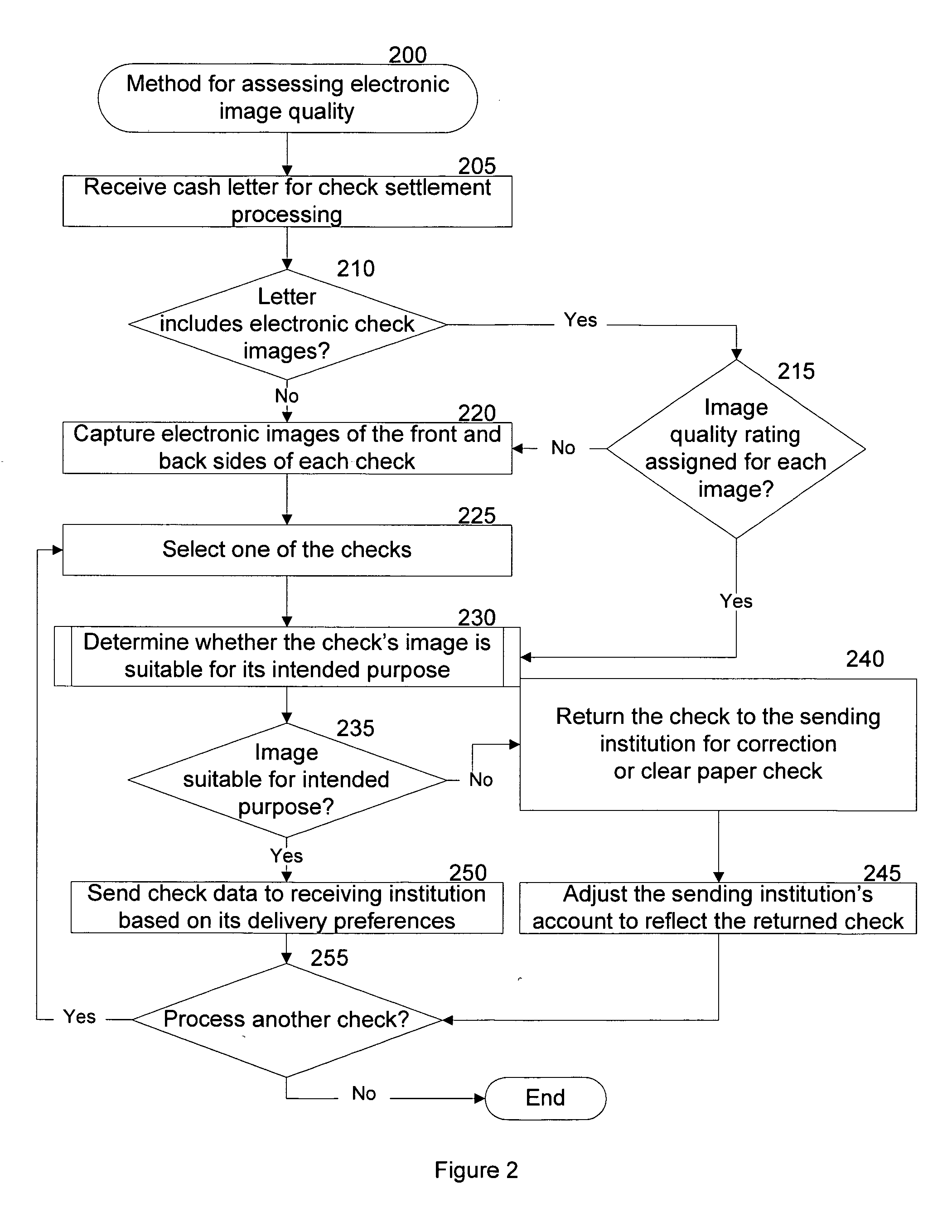
[0019] The present invention can assess the quality of electronic images captured from a variety of sources, including paper documents, such as checks or other financial documents. The quality level required to accept an electronic image can be based on a purpose of the electronic image. The purpose can comprise a destination, intended use, or other purpose of the electronic image. According to an exemplary embodiment, image quality thresholds can be associated with multiple purposes for electronic images. To assess the quality of a particular electronic image, a quality rating indicating a quality of the electronic image is generated, the purpose of the image is identified, the image quality threshold associated with the purpose is identified, and the quality rating is compared to the image quality threshold. The electronic image is acceptable if the quality rating meets the image quality threshold. In exemplary embodiments, the quality rating can comprise an image quality value pr...
PUM
 Login to View More
 Abstract
Description
Claims
Application Information
 Login to View More