Use of browser history file to determine web site reach

a history file and web site technology, applied in the field of browser history file to determine the reach of web sites, can solve the problems of not being able to achieve such widespread industry cooperation, little information about the reach of other web sites, and not being able to logging the title of windows containing internet conten

US20050216581A1Inactive Publication Date: 2005-09-29THE NIELSEN CO (US) LLC
77 Cites 64 Cited by

Patent Information

Authority / Receiving Office
US · United States
Current Assignee / Owner
Publication Date
2005-09-29
Estimated Expiration
Not applicable · inactive patent

Smart Images

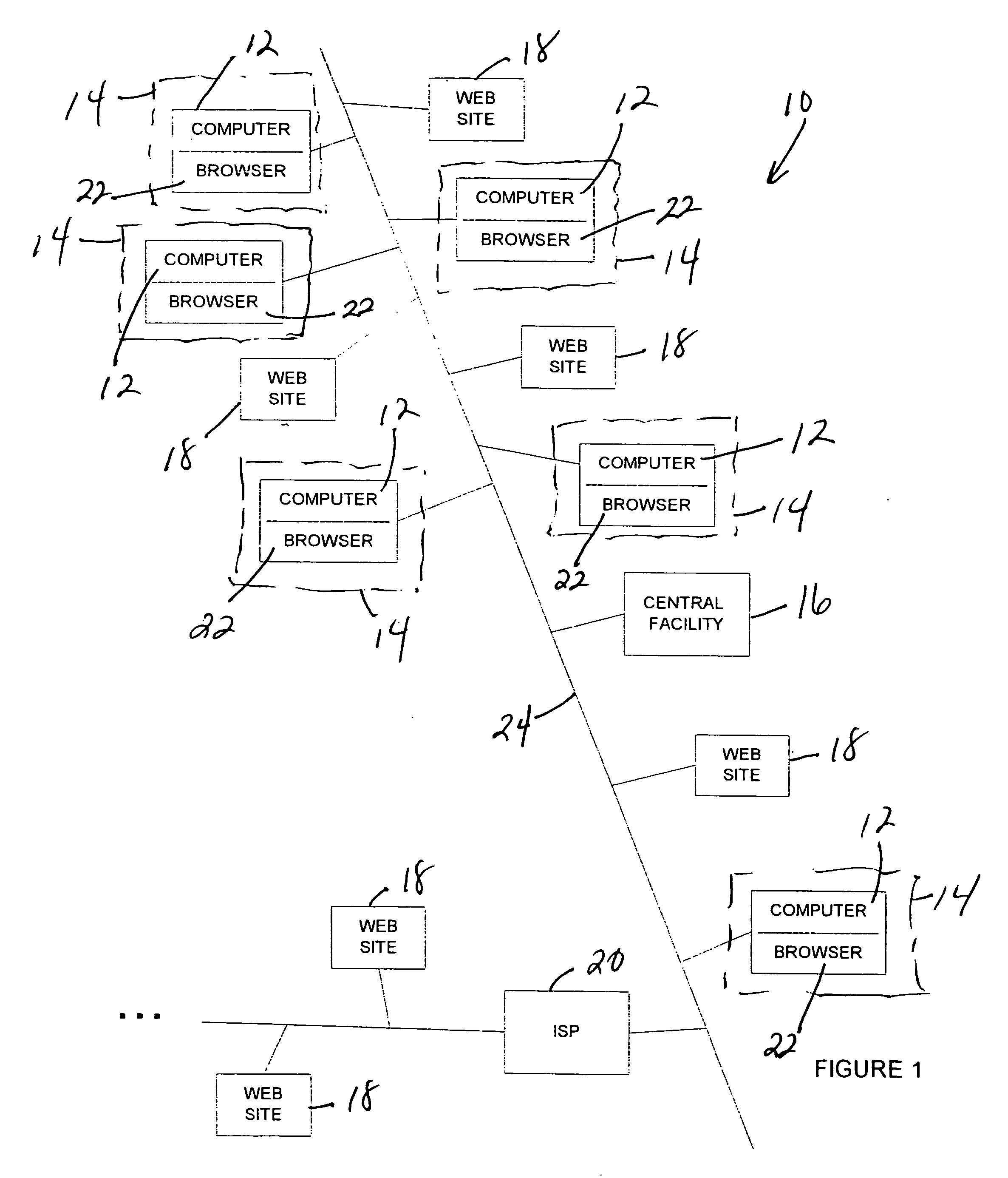
  • Figure 1
    Figure 1
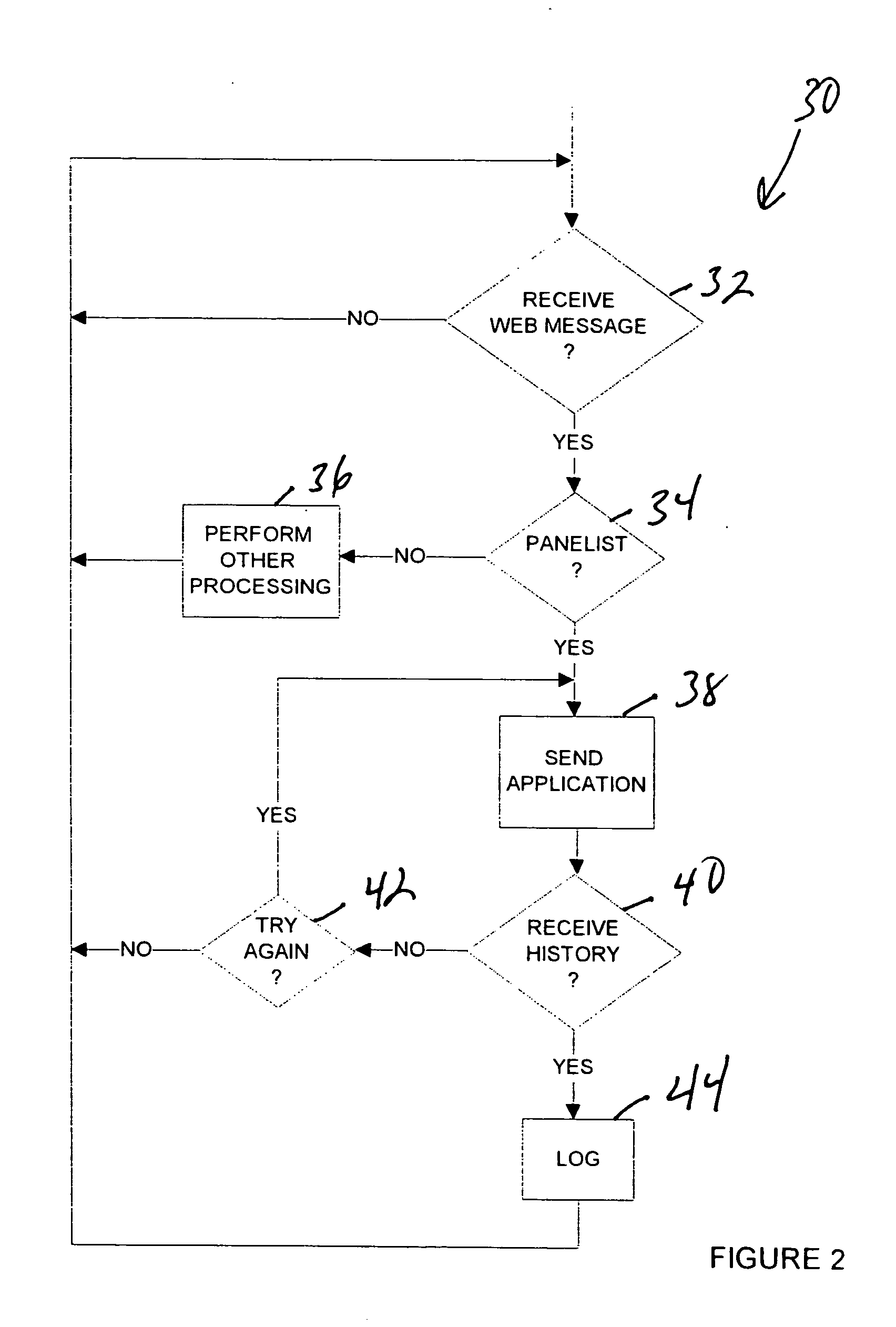
  • Figure 2
    Figure 2
  • Figure 3
    Figure 3
Patent Text Reader

Abstract

In a method of metering Web usage, a collection program is downloaded from a server to a metered computer in response to a message transmitted from the metered computer to the server, and the collection program is executed on the metered computer in order to collect Web usage history information stored in a history file by a browser running on the metered computer. The collected Web site usage history information is transmitted by the metered computer to the server. The Web site usage history information is stored in the server along with Web site usage history information from other metered computers.
Need to check novelty before this filing date? Find Prior Art

Description

TECHNICAL FIELD OF THE INVENTION

[0001] The present invention relates to an arrangement whereby Web site reach is determined from the history files of browsers. BACKGROUND OF THE INVENTION

[0002] The Internet has proven to be an efficient and popular mechanism for the dissemination of information from content providers to content recipients. Content providers in many cases are organizations, such as businesses, governmental agencies, educational institutions, and the like, who operate Web sites in order to provide information that can be downloaded by content recipients. The content recipients are often consumers who use computers typically located in their dwellings to access the content provided by content providers. However, content recipients may also be other businesses, governmental agencies, educational institutions, and the like. In many cases, a content provider is also a content recipient.

[0003] The operators of Web sites, as well as those who create and place content (su...

Examples

Embodiment Construction

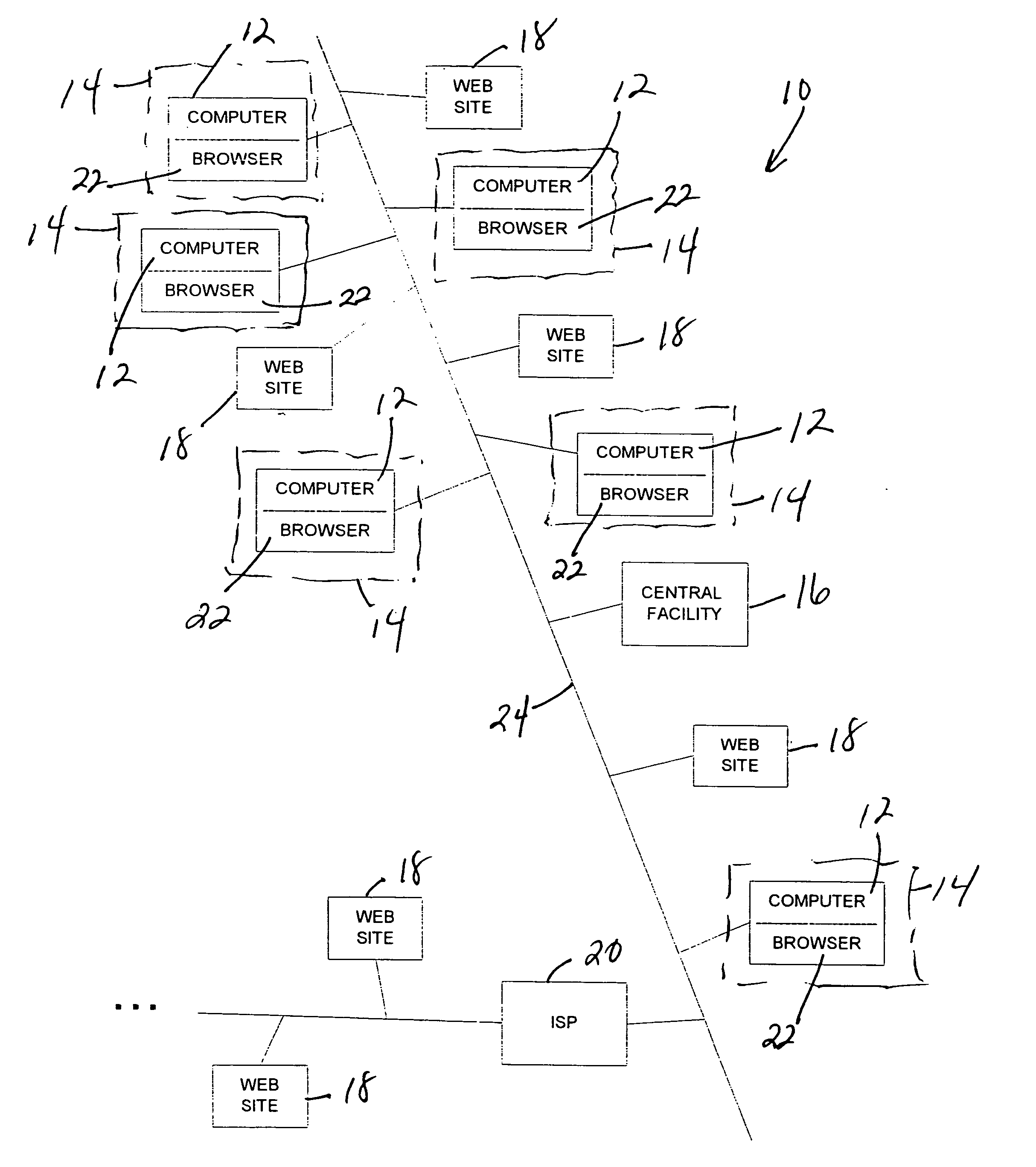
[0016] A metering system 10 is shown in FIG. 1 as an exemplary application of the present invention. The metering system 10 includes a plurality of computers 12 each of which is located at a corresponding panelist location 14. The computers 12 may be referred to herein as metered computers. The panelist locations 14 are statistically selected, such as by a central facility 16, in order to participate in a Web site reach survey. For example, personnel at the central facility 16 or elsewhere may implement random digit dialing in order to find the users of the computers 12 for participation in the Web site reach survey.

[0017] The purpose of the Web site reach survey is to determine the reach of one or more Web sites 18 to the users of the computers 12. The Web site reach survey may provide such information as the number of users reached by the Web sites 18, the demographics of the users reached by the Web sites 18, and the like.

[0018] As shown in FIG. 1, one or more of the Web sites ...